E-Paper



Caste and EWS quota: The political calm, the legal storm and what we don’t know
Two years on, a series of legal moves have led to renewed churn about EWS quotas – their utility and rationale

 Prefer HTon Google


In January 2019, with months to go for the general elections, the National Democratic Alliance (NDA) government announced a major move. For the first time since independence, the Union government decided to push for reservations of seats in education and government jobs on the basis of economic status.
This new quota, aimed at the economically weaker sections (EWS), moved away from constitutionally mandated reservations for the scheduled caste/ (SC) and scheduled tribes (ST), based on historical oppression and lack of opportunity, and the later instituted quotas for other backward classes (OBC) through the Mandal Commission report in a series of decisions between 1990 and 2006.
At the time, parties could ill afford to oppose a decision billed as welfare for the poor, so the bill passed with minuscule opposition in Parliament. But two years on, a series of legal moves have led to renewed churn about EWS quotas – their utility and rationale.
This is the second in three major issues redefining what we think of caste and government policy in India today – the others being the Supreme Court case on reservation in promotion and the political mobilisation around the caste census.
The context and critique
First the context. EWS quota was the government’s weapon to blunt upper-caste anger against growing Dalit assertion, especially after spontaneous nationwide protests had forced the NDA to effectively bypass a Supreme Court judgment diluting provisions of the Scheduled Caste and Scheduled Tribe (Prevention of Atrocities Act) the previous year.
Upper-caste groups have always grudged the SC/ST Act for attempting to upend caste power structures, and the government’s decision to restore stringent provisions of the law sparked anger from the Bharatiya Janata Party (BJP)’s traditional constituents.
Three aspects of the 10% quota – which were given to people with less than ₹8 lakh annual income, or land under 5 acres — were immediately apparent, and pointed out by anti-caste scholars.
One, despite the rhetoric about helping the poor, the EWS quota was effectively an upper-caste quota because it barred recipients from availing any other existing caste-based quota. It was implemented over and above existing quotas, so other communities wouldn’t lose seats and jobs, but this was the first time that affirmative action had been designed specifically for forward castes – remember that the so-called general categories are meant for everyone, not just upper-castes. Research has consistently shown that SC, ST and OBC communities make up the biggest chunk of India’s poor.
Two, the manner in which the quota was implemented was very different to how the country has witnessed reservation policy decisions in the past.
SC/ST reservations were written into the Constitution but continue to be indifferently implemented and treated with hostility. The implementation of the OBC reservation, both in 1990 and 2006, sparked violent protests by upper-caste groups despite years of groundswell from lower-caste communities. Yet, upper-castes didn’t have to hit the streets for the government to mollify them nor was there widespread protest to protect “equality” and “merit”. This demonstrated that upper-caste control and power remained intact in India’s social and political sphere, despite 70 years of affirmative action.
Three, it made constitutional and anti-caste scholars to question whether the aim and meaning of reservation had been diluted from what it had aimed to achieve in the Constitution. Reservation was not thought of as a economic tool to alleviate poverty and was a more incisive instrument working against centuries of social oppression and barriers, they argued. This tied in with dominant communities demanding quotas in recent years to reverse their economic hardships and regain social power.
The legal challenge and unanswered questions
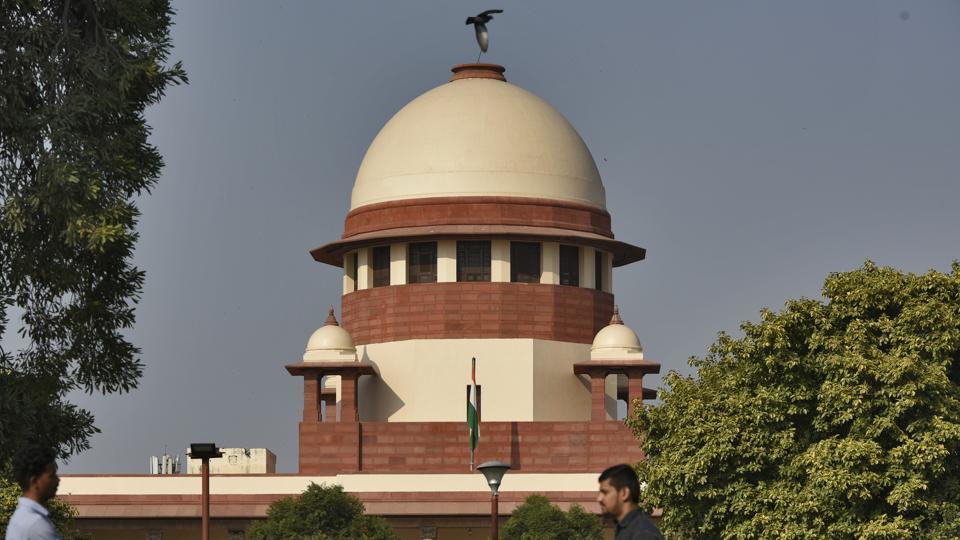
Earlier this year, the Madras high court nixed EWS reservation in medical education – ironically while hearing a case on implementing OBC reservation for the same sector. The Supreme Court later set aside those observations but it led to a new round of debate on the efficacy of EWS quotas.
Then, in October, the Supreme Court questioned the ₹8 lakh cap and asked the government to explain the rationale behind it – again while hearing petitions against the decision to implement reservations for OBC and EWS in medical education.
It is unclear what will come out of these judicial proceedings. But one hopes that the courtroom arguments, and the debate it sparks, answers these two key questions about EWS quota.
One, what kind of preparation did the government take before implementing EWS? Was there a survey – like the courts have insisted be done before implementing caste-based quotas? Did the government receive inputs from states, or representations from groups? How did it come up with the criteria of who gets to represent EWS? Was there any worry about breaching the 50% cap on caste-based quotas?
And two, exactly which communities have been benefitted by EWS quota in these two years? Are more upper-caste students availing this reservation meant for the poor? Are EWS quotas being implemented efficiently, or are they befalling the fate of SC/ST/OBC quotas that remain vacant sometimes for decades? And, are EWS students facing the same discrimination, hostility and derision reserved for the so-called “quota students”, or are their upper-caste background acting as a shield?
India’s Constitution was amended for the 103rd time to implement EWS quotas. It’s high time we get some clarity about this important move.
(For further reading, please see the recent book, EWS: The quota to end all quotas, by Shared Mirror Publication)
dhrubo.jyoti@htlive.com
The views expressed are personal
India is unequal, and inequality cuts across the axis of caste, class, region, gender and more. Dhrubo Jyoti brings his keen observational skills, immersion in social movements and reportage to show a mirror to society, in his column for HT Premium.