
 E-Paper



DPT: the original student hero, a true democrat
He was a rare politician, a remarkably warm and generous human being, a leader with empathy and a committed democrat and constitutionalist

 Prefer HTon Google


When I last met DP Tripathi — or DPT as he was popularly known — at his ground floor residence in Delhi’s Vasant Kunj in November, he offered, as usual, an insightful analysis of both politics in India and Nepal, a country I come from and he was deeply invested in. But he was most excited about his birthday celebrations, which he planned to hold in early January in one of his favourite haunts, the India International Centre (IIC). “Our generation does not have much time,” he said to me poignantly.
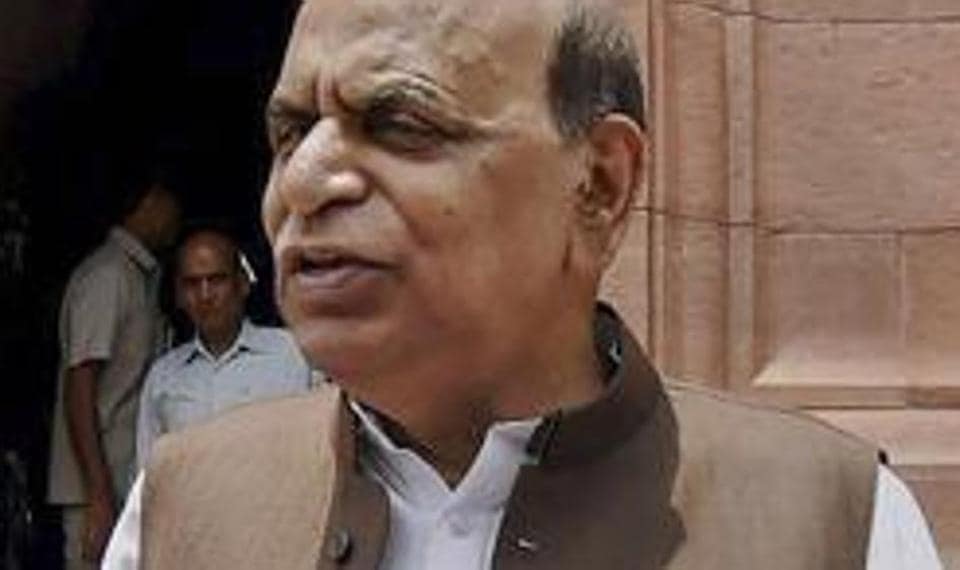
The time came too soon. The IIC celebration will not happen. DPT passed away on Thursday, after a battle with cancer over the past few years. With him ended a remarkable story in Indian politics.
DPT truly emerged as a public figure when he came to Delhi’s Jawaharlal Nehru University (JNU) in 1973, became a part of the Students Federation of India (SFI), and eventually the president of the JNU Students Union. The police came into JNU right after the Emergency was declared on June 25, 1975, knocking on every door, looking for DPT — as he hid in hostel rooms and then in a washermen colony in central Delhi. He evaded arrest and led the student movement. But then, in September 1975, he urged the then PM Indira Gandhi’s daughter-in-law, Maneka Gandhi — who had come to the university to attend a class — to respect the strike of the students. She was furious, the police intensified its search yet again for DPT, he went underground, but was eventually arrested in November. But through this, he became a true hero of the resistance.
DPT eventually moved away from the Communist Party of India (Marxist). In the 1980s, he became a close advisor of Rajiv Gandhi, whose mother he had fought just a decade earlier. In the late 1990s, he eventually joined the Nationalist Congress Party, and eventually became a Rajya Sabha MP from the party earlier this decade.
But there were three threads that made his political life unusual.
The first was his deep empathy for democratic struggles elsewhere in the region, particularly Nepal. This was in the great tradition of leaders like Jayaprakash Narayan and Ram Manohar Lohia. He attended a historic meeting in Kathmandu in 1989-1990, which was a turning point for a pro-democracy movement. When the country was engaged in a civil war with Maoist rebels, he did his bit to find a political solution. This opening came on February 1, 2005 — when King Gyanendra took over absolute power. Nepali political activity shifted to Delhi. And DPT became a key convenor of the democratic front to express solidarity with the Nepali people. He also encouraged the efforts of Nepali political parties, Maoists and the Indian establishment to come together against the king. When the Nepali Parliament has its first session in 2006 after a People’s Movement forced Gyanendra to cede power, DPT was honoured as a guest on the floor of the house.
The other constant in his life was a commitment to the world of ideas. He engaged with academics, writers and poets. He edited journals. He constantly thought of ways where socialism and democracy could coexist. He had left the communist fold, but still had deep admiration for the Left. He was opposed to the Hindutva project — but could understand its roots. This immersion in the world of ideas and ideology meant that for DPT, political differences were political, never personal. And that is why DPT could pick up the phone and speak to any minister in any government, irrespective of the party in power, and make a request. It was why dinners at his home saw leaders from across the spectrum in attendance, all sharing a deep affection for the host.
And finally, DPT always remained committed to the idea of protest, dissent and the power of students and their right to express themselves. His house was open to all JNU students. He was deeply disappointed at what he saw as recent efforts to change the culture of JNU.
As DPT passed away, thousands of people whose lives he touched grieved. A rare politician, a remarkably warm and generous human being, a leader with empathy and a committed democrat and constitutionalist. We will all miss you DPT.


