
 E-Paper



How Indian aircraft and helicopters helped Maldives in disaster & medical relief
President elect Mohamed Muizzu should reconsider his political decision on Indian troop removal as disaster and medical relief in Maldives will be hit.

 Prefer HTon Google


Maldives President-elect Mohamed Muizzu has gone on record with international media on negotiations with New Delhi for the removal of Indian troops and equipment from Male.
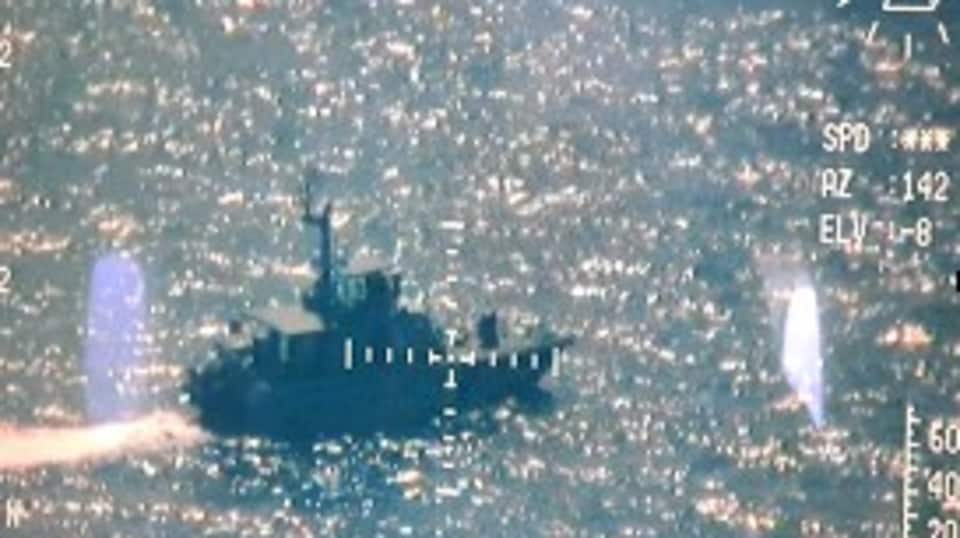
Muizzu was elected to head the Maldivian government on “Out India” political plank and has decided to strike strident notes with New Delhi despite the yeoman role played by India, which gifted one Dornier 228 maritime patrol aircraft and two HAL Dhruv helicopters in search and rescue missions as well as medical evacuation for the island nation.
Politics aside, in the ever-evolving dynamics of the Indian Ocean Region, capacity building plays a crucial role in enhancing the capabilities of neighbouring nations. The Maldives, with its scattered islands and a small land area, is highly vulnerable to natural disasters, climate change, and external challenges.
ALSO READ: India to continue disaster relief even after Muizzu takes over Male
The Indian aircraft (ALHs and Dornier) have been at the forefront of capacity building efforts in the Maldives, contributing significantly to maritime security, surveillance, and operational efficiency. In the past five years, the aircraft have been used by Maldives National Defence Force (MNDF) for conducting maritime surveillance and patrol operations in the Maldivian Exclusive Economic Zone (EEZ) and surrounding waters.
These aircraft have logged considerable flying hours, ensuring that the Maldivian waters remain secure and free from illegal activities. Aerial surveillance missions are instrumental in countering transnational threats, such as illegal fishing and smuggling.
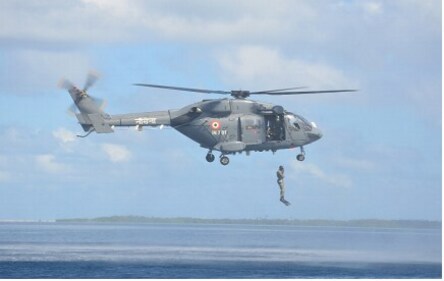
Real-time data sharing has contributed to the overall situational awareness and security of Maldivian waters. Effective coordination through joint exercises has ensured that resources are utilized optimally and knowledge is transferred effectively.
The aircraft are extensively used for Search and Rescue Operations (SAR) and have enabled MNDF to effectively operate them in remote and challenging locations. Valuable SAR real time training has also been provided to the MNDF personnel. This training encompasses various aspects of SAR operations, including search techniques, medical assistance, and disaster response. These training programmes empower Maldivian authorities to conduct effective search and rescue missions.
The skills acquired in these programmes has saved lives during maritime emergencies and natural disasters. The impact of these assets on civil aviation is also significant. Recently, assistance was rendered to Kadhdhoo (Laamu Atoll) airport authorities in recovering a Maldivian aircraft on 05 May 22.
The aircraft had overshot the runway in bad weather at night and was stuck off the runway shoulder causing not only a closure of runway but also a life-threatening situation for passengers and staff.
Despite marginal weather conditions, the Indian team rose to the challenge and utilized their aircraft handling skills in close liaison with the Maldivian flight engineers for towing the aircraft to safety, clear of the runway onto the dispersal overnight and make the runway usable for other flights.
Indian aircraft have also been instrumental in providing timely and life-saving medical evacuation services. The remoteness of many islands and limited healthcare poses significant challenges for the Maldivian population. In these moments, Medevac missions, as they are called, are the difference between life and death, where every second is invaluable.
These aircraft are equipped with advanced medical equipment and trained medical personnel, which are capable of swiftly evacuating critically ill or injured individuals to the mainland for specialised treatment. This capability ensures that medical emergencies can be addressed promptly, thus saving lives and mitigating suffering.
Over 500 lives have been saved in the last five years from all across Maldives. Medical evacuation missions executed by these aircraft in the Maldives are more than just duties--they are lifelines.
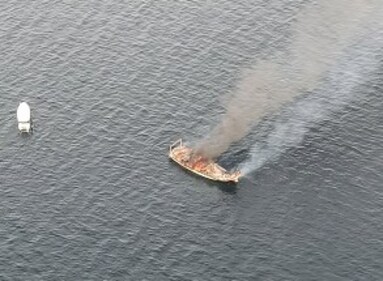
It is worth underlining here that tasking for all these operations was done by MNDF and not India. Over the years, specialised aviation training has also been given to MNDF personnel. These aircraft also participate in various bilateral and multilateral exercises showcasing the cooperation between the both nations towards the bigger objective of safeguarding the IOR.
Beyond the immediate impact, these initiatives have represented bilateral trust and cooperation. This partnership has served as a testament to the strong bond between India and the Maldives, and needs to be nurtured for the future. Perhaps politics can wait for another day.


