
 E-Paper



Every Delhi wall has a story to say

 Prefer HTon Google


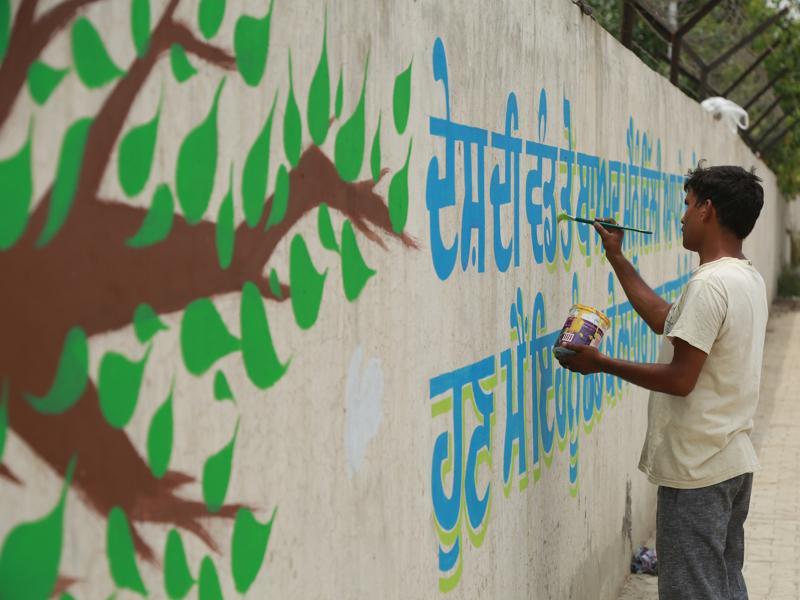
Delhi’s streets are getting an artistic makeover like none other. Under a project by Delhi, I Love You, the city’s streets are being painted with poems and couplets in languages such as Hindi, Urdu and Punjabi. Executed mostly by signboard painters, the project serves a dual purpose – along with reviving the city’s native languages, it is also giving a chance to many signboard painters to showcase their art.
Delhi has long enjoyed the title of being not only India’s national capital, but also its cultural capital. The city has been home to a number of cultural initiatives, and the latest to join this list is an art-cum-poetry project called #MyDilliStory by Delhi, I Love You (DILY). An independent socio-cultural movement, DILY ran the contest on Twitter in September last year wherein users were asked to share their poetry, stories and quotes celebrating Delhi.
The competition received a tremendous response, with the team getting over 8,000 entries in just 4 weeks. Out of these, 40 winning entries are in the process of being painted on Delhi’s streets. We follow them to the Jal Board office in Azadpur to get a glimpse.
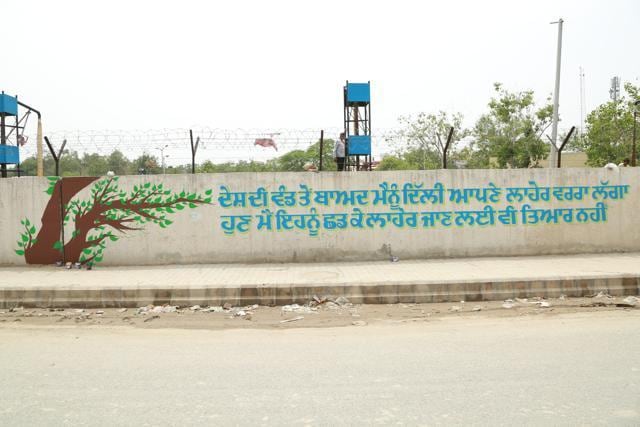
Aastha Chauhan, spokesperson for DILY, says, “We encouraged people to write in Hindi, Urdu, Punjabi and English as these are the four most widely spoken languages in the city. Through this, we want to celebrate the diversity of the city.”
Read: ‘Art for everyone’: Delhi turns into a canvas for street artists
The once flourishing art of signboard painting is being used to paint these messages. This project serves a dual purpose – along with reviving the city’s native languages, it is also giving a chance to many signboard painters to showcase their art. “Street art in Delhi is picking up a new meaning. These signboard painters are the original street artists and are part of the fabric of the city. We wanted to show people that signboard painting is not a dying art,” informs Chauhan.
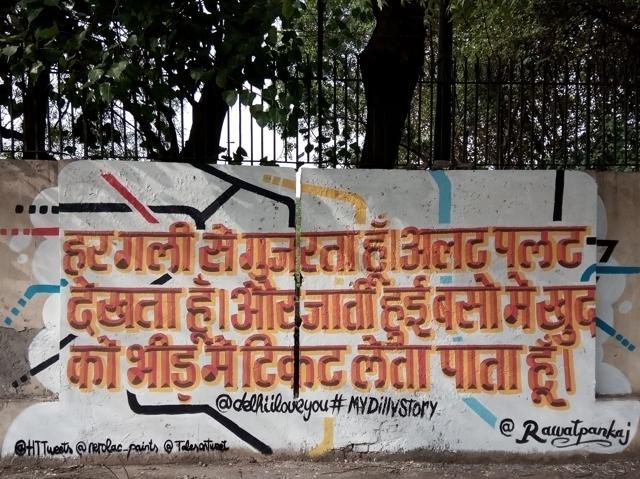
Monu, a local signboard painter, who has been involved in this art for the last two decades, says, “Earlier, there used to be so much work that we used to paint for over 13 hours a day. But now, newer techniques, like Flex, have taken over. No one wants a hand-painted job.”
Monu is one of the few signboard artists who can paint in the Gurumukhi script. He says, “It is still easier to find an Urdu signboard painter, but Punjabi painters are hard to find.”
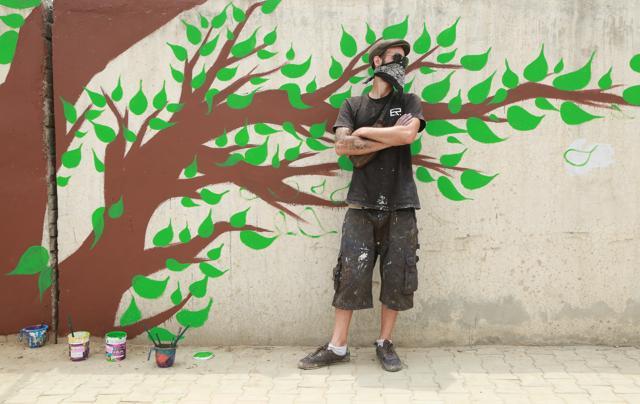
Swen Simon, an artist from Paris, is also part of the project. He loves the food and culture of the city and says, “Old Delhi reminds me of Morocco.” The concept of street art is relatively new in India, he feels. “Here, when I see a wall and feel like painting it, I can’t just go and start. I feel artists should be able to paint public spaces without the rigmarole of getting permits,” he adds. He has painted many cities, but Paris remains his favourite.
These wall paintings are being done in areas like Jhandewalan, Pashchim Vihar and Rohini, and the reason for this is very simple. “South Delhi has been sort of privileged when it comes to art and cultural movements. We wanted to take it beyond this part of Delhi and spread it all over the city,” concludes Chauhan.


