E-Paper



MP’s neki ki deewars spark moral dilemma as people ‘steal and sell’ donated items
The neki ki deewar is a charity rack where people can hang or drop whatever they want to gift to the destitute. The poor can pick anything they want for free.


Unscrupulous people are taking away and selling donated items such as clothes and footwear kept at the neki ki deewar, an initiative that allows the public and charities to give surplus and unwanted household goods to the needy.
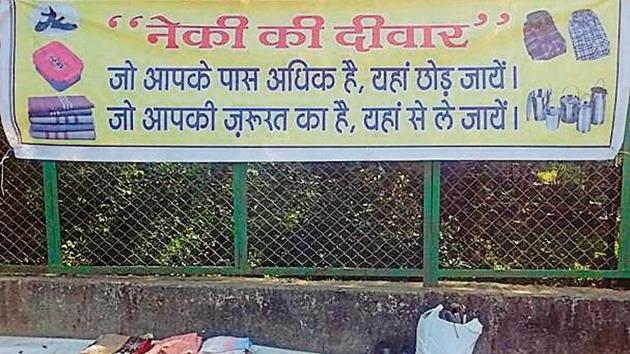
Set on a roadside wall, it is a charity rack where people can hang or drop whatever they want to gift to the destitute. The poor people can pick anything they want for free.
Some people are stealing stuff and selling them elsewhere,” said Veena Singh, who teaches at a college in Mandsaur, Madhya Pradesh.
Singh is also a master trainer of the “happiness department” in the district.
Madhya Pradesh became the first Indian state in 2016 to set up such a department to bring happiness in the lives of the people on the lines of neighbouring Bhutan.
Public-private initiatives such as the neki ki deewar, or wall of kindness, complement the state’s efforts to spread happiness.
“The happiness department is still in its infancy and we have to reach out to a larger mass of people to make them aware about the various concepts and initiatives,” Singh said.
The biggest challenge is people lifting articles from the charity racks and selling them for a profit.
Singh said donated clothes are the preferred items of these “thieves”. She said no police complaint was made because the issue has more to do with awareness and ethics.
Mandsaur collector OP Srivastava expressed similar views.
“This concept is good. But there are all kinds of people. For neki ki deewar, the responsibility lies not only with the people who donate but also those who take the stuff from it,” he said, adding the beneficiaries should respect the benefactor.
According to Mandsaur chief municipal officer Savita Pradhan, the “thefts” are a moral issue.
“When it comes to happiness, you can’t impose rules and take strict actions ... focus should be on making people understand the concept. If the thefts become regular, we will report to police,” she said.
The government set up 172 neki ke deewars across 51 districts, a year after chief minister Shivraj Singh Chouhan launched the happiness department that has its roots in the Bhutanese concept of measuring “gross domestic happiness”.