
 E-Paper



A striking new voice on nationalism, marginalisation and more from Nigeria
Nigerian Abubakar Adam Ibrahim, author of the superb Season of Crimson Blossoms, speaks about exploring taboo and about choosing to write in English.


Abubakar Adam Ibrahim, author of the superb Season of Crimson Blossoms, recounts the time he was “attacked” by an elderly woman at a literature festival in his native Nigeria.
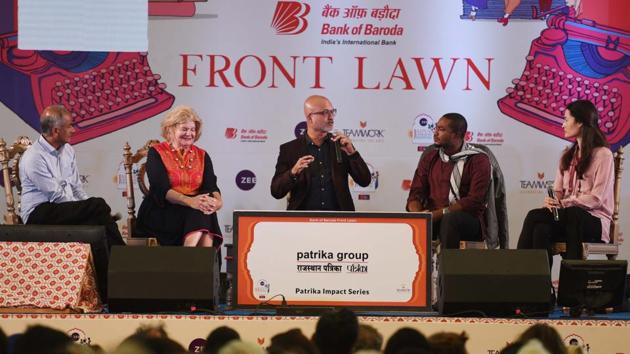
“This elderly woman came to me at a festival in north Nigeria and actually held my ear and said: ‘You’ve been a very naughty kid.’ And she said to me that she felt the book was her story and she felt as if I was writing about her.”
For Jaipur Literature Festival full coverage, click here
The 29-year-old novelist, who won the $100,000 Nigerian Literature Prize, says he was “curious about human relationships” and was especially “intrigued” about the notion in conservative countries like Nigeria and India that, in a couple, the man has to be older than the woman. “So I thought, ‘What will happen if you reverse it?’”
This is why his protagonist 55-year-old widow Binta finds liberation in discovering her sexuality and falling in love with Reza, 25 and a weed dealer. Their relationship, which has incestuous undertones - Reza reminds Binta of her dead son while she reminds him of his estranged mother - is crafted “delicately”.
“The internal conflict in Binta is to reconcile with the mistakes she made with her son, and make amends,” he says.
Ibrahim, who has been named among the 39 most promising writers-under-40 by Hay Festival, reveals that he made a conscious choice to write in English. “English is the official language of Nigeria; Nigerians relate to it and I want the world to know about north Nigeria,” he says.
The conversation then shifts to identities and Nigeria’s history of slavery, colonialism and dictatorships and their impact on writers. “We are living in a dynamic world where people are moving and borders are becoming irrelevant… People are becoming whatever they want to become,” says Ibrahim who recognises that there is also a simultaneous pushback of nationalism and Right-wing tendencies. “I find it bizarre that people are easily offended about things that aren’t offensive. There are ways of being protective about your identity without being overly aggressive.”
Words or wisdom that would benefit Abubaker Adam Ibrahim’s readers in Nigeria, India, and in the rest of this increasingly-embattled world.
Follow @htlifeandstyle for more


