
 E-Paper



Ajay Aggarwal: “It is the cogs that make things happen”
In his memoir, How Tech Changed India, the veteran of the retail technology industry looks back at five decades of the work culture that shaped generations

 Prefer HTon Google


You have spent more than 50 years in technology. Why did you decide to write this book now?
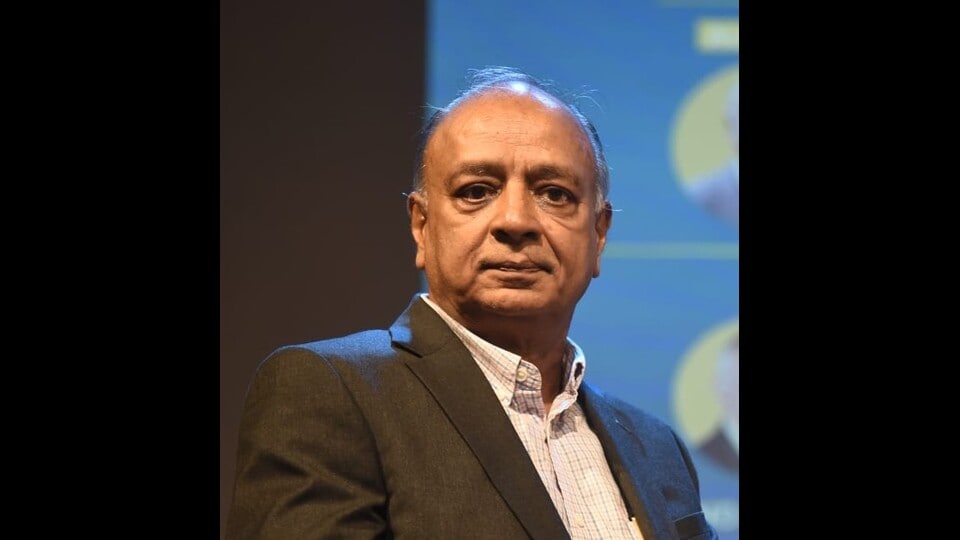
Over the years, I had shared many of these stories with my wife, Saaz, who is an author and oral historian. I’d do it sometimes in the context of our children or young people we work with. She would say that these were stories that needed to be preserved. I wanted to preserve what happened during those years: how the technology industry changed, but also how work culture changed.
When I was turning 70, she said, “This is the right time, otherwise it will never happen.” So, we used that milestone as an opportunity to put everything together.
You call yourself a “cog” in the subtitle. What does that mean to you?
The story is of everybody. Every person of my generation went through similar journeys. Thousands of people contributed to India’s technology industry without becoming household names.
In my view, it is only the cogs that make things happen. If you have a wheel and one cog is missing, it cannot move smoothly. The Indian technology story is a large wheel that keeps moving, and there are cogs in that wheel. If some cogs are not functional, the wheel will have trouble moving properly. Every cog has a role to play.
What was it like to enter the technology industry in the 1970s?
Many of the things we now take for granted were scarce. I remember wanting to watch a live cricket match between India and Australia in 1972. I had to take a bus to a friend’s house far away, and when I got there, there were about 20 people sitting in the living room watching it.
We had no idea what technology might become, what gadgets lay in the future or how they would impact our lives.
At our college farewell, our electronics professor said he hoped we would become good engineers rather than people who converted refrigerators into cupboards and televisions into shoe boxes. We found it funny and laughed. There was no vision at all of what technology would become. We just went with the flow.
Your career began with calculators. Is there an early assignment that has stayed with you?
Soon after I joined DCM in 1975, I was sent from Delhi to the construction site of a power project in Obra, Uttar Pradesh, to install three printer calculators.
I arrived late at night with the machines and discovered there was no hotel. The bus conductor refused to let me sleep inside the bus, so I laid out the boxes on the ground and slept on them, with my suitcase as a pillow and my bag of tools under my feet.
The engineer I needed to meet was away from his office because it was a holiday. I found him at his residence and explained that I could not go back without installing the machines. He was kind enough to allow me to demonstrate one there. I secured formal acceptance and caught the next bus back. This was just one of many such incidents. And I learnt early on to stay focused on the customer.
You speak often about the people you worked with. How did they shape your career?
I was always a relationship person. The environment in which we worked helped shape us. Building relationships with customers was part of our professional training; those values were drilled into us.
Many colleagues from my first job at DCM Data Products went on to become CEOs, managing directors and entrepreneurs. I think the credit goes to the work culture, the training, the exposure and the kind of responsibilities we were given.
My boss, Shashi Ullal, was a big influence. Two things he said have never left me. The first was: The customer pays your salary not the company, never forget that.
The second was: If you see a mess lying somewhere, clean it. Don’t think of it as a sweeper’s job, think of it as an opportunity. Volunteer to solve problems.
It was also from Shashi that I learnt that your family background and professional education may open doors, but once you are inside, it is your work that will earn you respect.
You have seen several generations at work. What differences do you see between your generation and younger professionals?
People of my generation felt a strong commitment to the job they had been given. Once a task was given, we had to do it. Simple.
Reward and recognition were not the focus. Everybody was not equally capable or competent, but there was a strong peer network. If my colleague was struggling with something, I would help him or her complete the task.
Younger professionals have tools and opportunities we did not have. They are smarter and have access to facilities that were unavailable to us. In my view, this has also made the working environment more transactional. There is a greater expectation of immediate reward and recognition.
After all the technological change you have witnessed, what advice would you give someone starting out?
If you are a professional and looking for professional lessons, there are two things I see as most important. First, be sincere in your relationships. Second, never lose focus on your customer.
Technology will continue to evolve, but these two lessons will not change. When you have a new technology, first understand what customer problem it is going to solve. After that, make optimum use of your available resources, whether time, effort or money, to solve that problem. Continuously validate your efforts against your customer’s needs.
In today’s world, finding an investor is the prime focus of young entrepreneurs. Instead of that, once you solve customer problems and build a scalable model, investors will find you.
You have seen everything from calculators to AI. Does AI feel fundamentally different?
In my view, it is another evolution of technology. There is nothing special about AI, to be very honest. AI is essentially data and how you use that data. Without data, there is no AI.
Apart from technology, you have been involved in civic issues, farming and the environment. What draws you to these areas?
Because of the work culture and exposure I grew up with, I always noticed the gap between behaviour in professional environments and in public. This is clearly reflected in our day-to-day civic behaviour.
As a nation, we are at par with other nations on technology. We are one of the fastest-growing economies in the world. Despite all that, we are struggling with basic issues and are far behind global standards of traffic discipline, cleanliness and the environment.
I believe that citizen participation and sensitivity to these issues can make a huge difference.
In Pune, I work with the traffic police and citizen groups on traffic issues, with the objective of bringing citizen participation into these issues. I started My Pune Dialogue, which brings citizens, authorities and experts together to discuss mobility, infrastructure and quality of life. One of the projects we did was building a digital platform through which people can raise complaints against violations by fellow citizens. The objective is to make citizens a part of the solution. In Pune you can download the PTPapp to participate in this movement.
At home, my interest in gardening grew into a terrace farm. I have experimented with growing fruits, vegetables and herbs using natural growing methods.
Do you still recognise the teenager who assembled and sold transistor radios outside Delhi’s cinema halls?
Yes, I am still the same boy. I am still the same person. I still have the same curiosity, the same method of doing things and the same excitement when I see something new.
I still find myself thinking about new ventures, sometimes to my children’s amusement or concern.
What did writing the book change for you?
Revisiting failures was not especially difficult because I had never hidden them from myself. But writing about the past changed the way I understood some of my decisions.
I feel I am a changed person after this book was completed. The process was healing. It has made me much calmer, and I have become more relaxed.
I also learnt a lot about people. When I reached out to people I had worked with in the past, they were very generous with their responses and feedback. That was a lesson for me too: when somebody comes to you, this is how you need to behave and respond. The whole experience has been transformative.
What is the one thing you hope readers carry with them after reading the book?
I would say two things: be sincere in a relationship and do not lose focus on your customer. If you focus on these two things in your professional life, you will never fail. I strongly believe in that.


