
 E-Paper



Deciphering a genius: Walter Isaacson’s new book on Leonardo da Vinci is a treat
Walter Isaacson tries to unlock the life and mind of Leonardo da Vinci, the Renaissance man, the creator of Mona Lisa’s elusive smile who mastered art and sciences.

 Prefer HTon Google


In the spring of 1452, a boy was born out of wedlock to a peasant near Florence. It was his “good luck” he wasn’t a legitimate child, because then he would have to become a notary, as every heir in his father’s family was expected to.
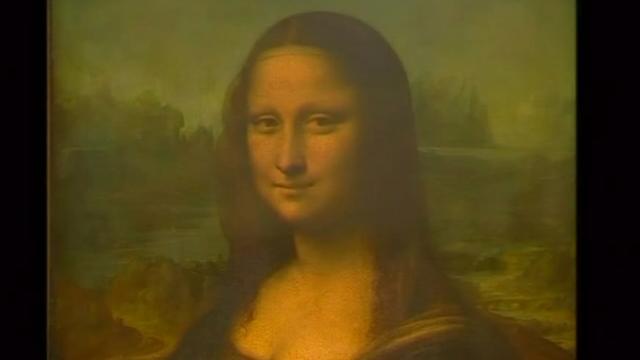
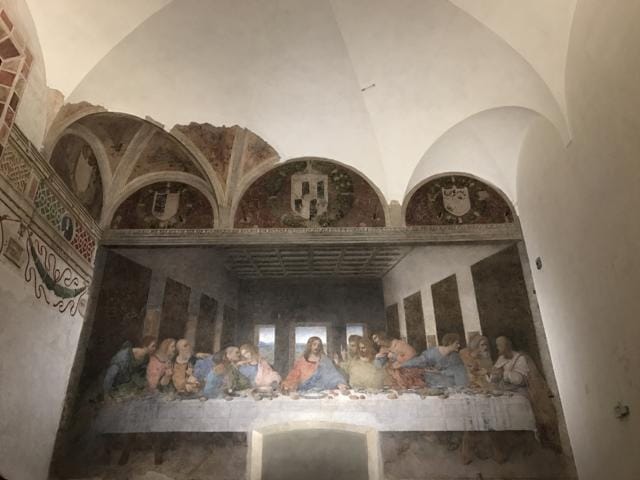
Fortunately for the world, it got its Leonardo da Vinci. Imagine never having to know about the enigmatic painter, architect, biologist and scientist, lost to the world simply because of a stroke of birth. Imagine again, that without Leonardo there might not be kilometres of lines outside the Louvre. There wouldn’t be the pilgrimage studies of Mona Lisa and her (or his) elusive smile. Alas, where would Dan Brown’s Professor Robert Langdon rank if there weren’t conspiracy theories about The Last Supper, another creation of Leonardo’s meticulous genius.
Photos: Leonardo da Vinci’s greatest, most-captivating works
So here we are again, trying to unlock the secrets of Leonardo da Vinci, Renaissance’s gift to humanity who obsessively poured over art and sciences, whose relentless curiosity appears to be a thing of legends (or the Elon Musk and billionaires in the 21st century).
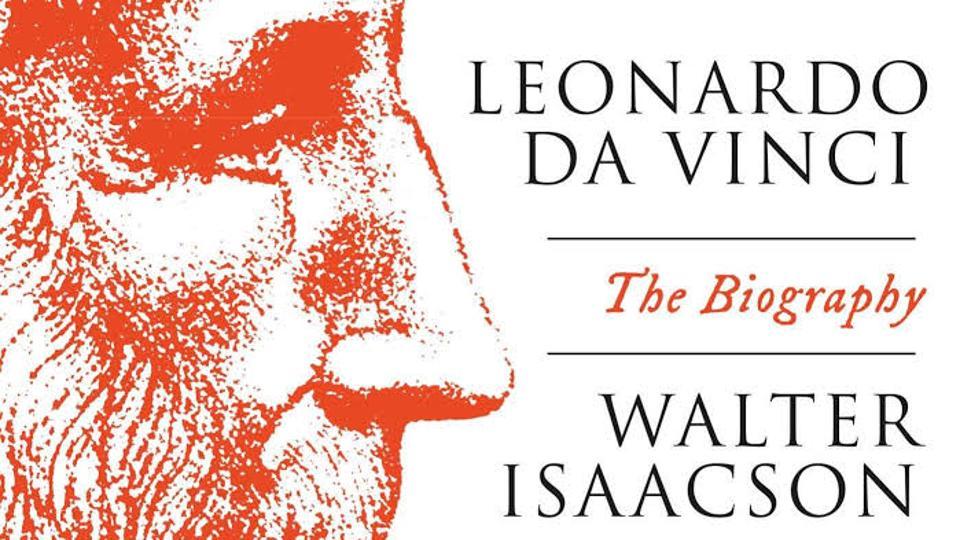
Walter Isaacson’s Leonardo da Vinci charts the ebbs and flows of the painter’s life through his art, thousands of notes and others testimonies. It brushes through each piece of Leonardo’s art, even the unfinished paintings and sketches, calculating every move of the painter and painstakingly trying to make sense of his mind. Isaacson tries, with the palette of a seasoned researcher, to collaborate all of Leonardo’s shades with his observations. The writer says, exuding calm confidence, that understanding the painter means noticing the patterns in his notes and his to-do lists that survived long after Leonardo.
In meagre words, Isaacson’s biography takes flight through planes of Leonardo’s life that often intersect because the man wasn’t just a painter. Leonardo combined his love for science and art in ways humankind has still not figured out. The beat of the drum today is to be brilliant in at least one field. The instruction manual goes something like this: find the Holy Grail of your life and voraciously aim at it. From completing post-graduation to becoming a doctor, every profession begs to specialise because without it, you’re the master of none.
It is serendipitous Leonardo was born in a glorious period of artistic revival when eccentricities were celebrated and flairs indulged in. In many ways, Leonardo’s wits match that of Einstein and Newton, instead of just the Michaelangelos of the world. His microscopic emphasis on proportion, geometry, features of the flesh and even his signature soft curls come alive in The Vitruvian Man, a culmination of Leonardo’s boundless intelligence that wasn’t limited to a single subject.
Chapter by chapter, episode after episode, it’s evident and perhaps obvious – even to a non-intellectual – that Leonardo deserves sonnets and poetry for admiration. The little talked about thing is how he became the way he was. Was it because he belonged neither to his father nor his mother (she eventually got married and had more children)? Was it because he was homosexual, an aberration from the norm? Or was it just because he had the distinction from being a left-handed painter?
There must be reasons why a smile that took years of observations and expertise has captivated the imagination of millions. There must be answers to why Leonardo’s figures light up in three-dimensions and blend into the shadows on his masterful hand’s bidding. There must be rationality to why the people Leonardo gave life to obligingly stand in front of surreal landscapes. There ought to be a process that explains how the painter was centuries ahead of his time in studying nature and its delicacies. There should be ways to tell how Leonardo, who dissected brains and eyes, had a trove of empathy that prompted him to be a vegetarian because he didn’t want to hurt animals.
Isaacson sums up all queries succinctly in this passage: “Just as he blurred the boundaries between art and science, he did so boundaries between reality and fantasy, between experience and mystery, between objects and their surroundings.”
But despite all the in-depth chapters of Isaacson’s biography, you keep asking yourself: ‘At what point do you think you understand Leonardo?’
Perhaps, never in his entirety. But the mystery is what makes him Leonardo da Vinci. And that makes reading his biography worth it.
Disclaimer: For matters of simplification, we refer to Leonardo da Vinci as a ‘painter’.
Leonardo da Vinci
By Walter Isaacson
Publisher: Simon and Schuster
Pages: 599
Price: Rs 1,199
Follow @htlifeandstyle for more


