
 E-Paper



HT Picks: The Most Interesting Books of the Week
This week’s book picks include a novel about a Jewish American woman and her family who have made India their home, a study of how population became a supreme force in history, and a celebration of seven decades of India’s electoral democracy


MOTHER INDIA BY TOVA REICH
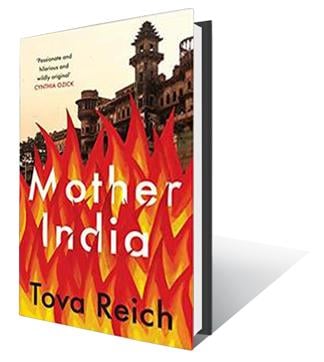
Meena , a Jewish-American lesbian who has claimed India as her home, takes us into a darkly comic universe populated by three generations of women along with other family members, as well as by the Indians whose world they seek to penetrate.
There is Meena’s religiously observant mother, Ma, whose desire to remove herself from the wheel of life plays out in a Faulknerian funeral procession and cremation on the banks of the Ganga; Meena’s daughter, Maya, a misunderstood child coming of age in an emotionally treacherous household; her ex wife, Geeta , a privileged and hedonistic Indian woman who enters their world with devastating consequences; Meena’s twin brother, Shmelke, a charismatic rabbi turned guru and international fugitive; and the Indian servant, Manika, whose loyalty to the family both sustains and shackles them.
Universal yet intimate, brutal yet tender, satiric yet sympathetic, Mother India is Tova Reich’s most poignant and astonishing novel yet.
THE HUMAN TIDE BY PAUL MORLAND
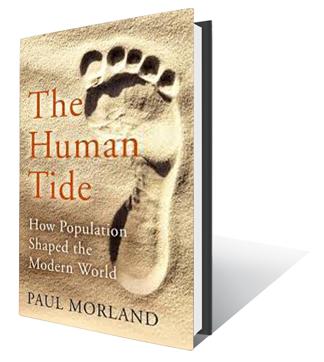
The story of people, not only individually but en masse, is the biggest story never told. The Human Tide is the first book to explain how, precipitated by the industrial revolution and the profound social changes which came in its wake, population became a supreme force in history. From 1800, following an unprecedented multiplication in the British Isles, sudden population booms then spread to every corner of the world.
This explains why the British Empire crested when it did, why it faced global challenges from Germany, Japan and Russia, how the United States emerged as a sole superpower, how the long term decline of economic growth that started with Japan has now spread to Europe, why the Arab Spring came and went, how China rose so meteorically and finally why Britain voted for Brexit and America for Donald Trump.
In ten chapters, sweeping from Europe to the Americas, China, East Asia, the Middle East and North Africa, The Human Tide is a panoramic view of the last two hundred years, showing us just how much the sheer weight of numbers has mattered. An essential insight into the modern age, and a remarkable story we each witness and share, this is history as you’ve never counted it before.
THE GREAT MARCH TO DEMOCRACY EDITED BY SY QURAISHI
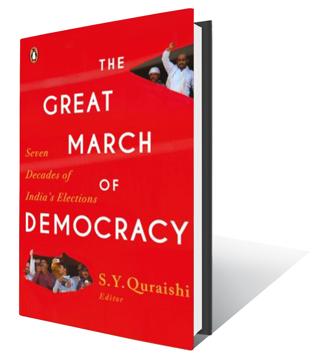
As India gears up for its seventeenth Lok Sabha elections in 2019, the Election Commission of India, guardian of the world’s grandest electoral experiment, marks the beginning of its seventieth year. This book celebrates seven decades of India’s vibrant democracy and the Election Commission’s excellence and rigour, with a remarkable collection of essays written by those who have studies India’s unique experiment in electoral democracy, as well as analysts, politicians, social workers, activists, businesspersonas and public servants.
The essays in this book cover a range of subjects, from the evolution of the Election Commission, the exciting story of the first electoral roll, election laws, the deepening of democratic institutions over the decades to the participation revolution ushered in by the Election Commission’s untiring and targeted efforts at voter education. Contemporary issues, such as the corrupting influence of money and the creeping criminalization in politics, have been addressed, as have been the electoral reforms proposed by experts on these subjects. There is a peek into how India’s experience with elections has inspired its neighbours Nepal and Bhutan and impacted observers who have had a chance to witness, first hand, the mammoth exercise held in the largest democracy on the planet.
The diversity of perspectives from keen observers of India’s democracy makes this volume an enthralling read.


