
 E-Paper



Review: Sleep Journeys byAzra Abbas
Translated from the Urdu by Daisy Rockwell, this is an unsettling prose poem obsessed with interiority and cosmic anxiety

 Prefer HTon Google


Pakistani writer Azra Abbas’s book-length prose poem, Sleep Journeys, travels from Urdu into the Anglophone literary sphere via International Booker Prize winner Daisy Rockwell’s translation. The book, that won the 2025 Wisconsin Prize before it became a Penguin Modern Classics edition this year, is startling in its refusal to be understood or explained. Like a fever dream or a voyage into fantasy, it is something that you can feel only through a first-hand encounter.
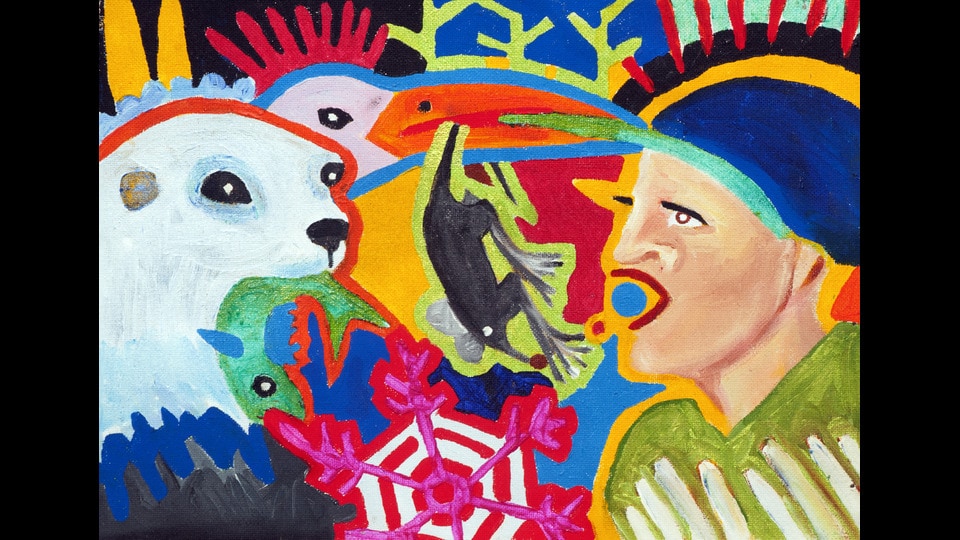

Abbas, who is from Karachi, is a pioneer of experimental free verse in Urdu. The choice to embrace this form could not have been easy, given the ghazal’s dominant stature in Urdu literature. Divided into three cantos, Nii.nd kii Masaafate.n was first published in 1981, and in Rockwell’s words, “took the Urdu poetic world by storm” because of its formal and thematic qualities. The formal break from tradition is well expressed in one of the two afterwords, where Abbas recalls her encounter with love, a force that “crashed” over her “like ocean waves”. Once Abbas recognized that the ghazal, with its structural logic of couplets, rhyme and refrain, would be unable to contain the ideas inside her, a prose poem felt like a more “appropriate vessel”.
Looking for linearity in this marshland of a poem, which requires multiple readings before it begins to captivate, would be a futile exercise. Deliberately unsettling, this work isn’t for those who turn to poetry for solace. Meant to be experienced through association and sensation, it reminds the Anglophone reader of Allen Ginsberg’s Howl and of the intense self-interrogation of TS Eliot’s The Love Song of J Alfred Prufrock. Like the Beat poet, Abbas too alternates between prayer and transgression. But her voice is not the cry of a generation. Her obsession with interiority (“Why are we at our own doorways when we wish to walk on open waters?”) is closer to Eliot’s “Do I Dare?” in Prufrock.
The anxiety expressed in Sleep Journeys is more cosmic than social. There is a strong religious undercurrent throughout the poem. The narrator speaks of sins that must be accounted for, and prayers that “escape from hands and join intangible breezes” as rosary beads turn. It also invokes the image of crucifixion.
Abbas employs some highly unusual similes to stretch the reader’s imagination – pillows “recline like sad girls”, bodies “pass like carded cotton”, stories are “scattered like moonlight in fields” and tree branches “keep snapping like crushed desires”. A master of the technique of defamiliarization – Viktor Shklovsky’s term for presenting everyday images through a fresh lens – Abbas makes her clouds fetch water instead of letting them drench the earth; her butterflies are not chased but feared since they are depicted as thieves who steal colours.
Birds and animals fill the dreamscape of her poem. The question “will these birds make space for us in our trees?” challenges the human tendency to destroy the homes of other creatures as we build infrastructure for ourselves. At the same time, the non-human presence is not romanticized. The most grotesque image has “bloodthirsty cats suck the blood of newborn babies”.
There are many such images of unexpected violence in the poem, and in Abbas’s afterword, A Bit About Me (1981): words have the power to “impart an ulcer upon/ one another’s skin”; dew, which is usually soft and delicate, is described as assailing human bodies; women adorned with jewellery are compared to livestock “loaded with decorations” at country fairs.

The second afterword, titled Sleep Journeys and Me (1988), provides insights into Abbas’s personal life, which adds layers to the poem. Writing rescued her from a lonely childhood, though she found that “there were still some ideas which did not take on their expected form when they entered into words”. It took her a while to recognize what she wrote as poetry. But when she did, it stood by her in trying circumstances — as she gave birth, when she experienced a period of feared homelessness, and during a fight for higher wages that led to her arrest.
It couldn’t have been easy to translate such a complex, surreal text. However, given Rockwell’s interest in the supernatural, and affinity for psychology — both evident in her novel Alice Sees Ghosts — the process must have been both challenging and satisfying.
Rockwell is candid about translation as a practice built on not-knowing rather than mastery. “On reading the opening lines, I felt as though Azra had handed me a gossamer thread. My job was simply to hold on to it and follow where it led,” she remarks. This edition is bilingual and bi-literate with the English sitting beside the original Urdu in Nastaliq script; the volume closes with a transliteration by Mohd. Aqib in Roman script.
Rockwell lives up to her stated objective “to open up the process of translation, as well as the original text” to readers who are “bilingual even if they are not bi-literate”. Here, while Urdu takes up equal space, a lack of literacy in the language is not seen as reason enough to keep the poem from a new set of readers.

Emerging translators keen to work with experimental texts but discouraged by market forces and industry trends can draw strength from Rockwell’s commentary on form and craft. She calls her own translation “an act of blind faith”, demonstrating surrender as creative process.
Whenever the reader feels disoriented, it might be best to go back to the cover and linger. Illustrated by Abbas’s daughter, Eliyah Qureshi, it portrays a woman with her eyes closed, head thrown back, and throat exposed. Her hair dissolves into a swarm of bees. It is difficult to tell if she is in a state of rapture, or the verge of a mental breakdown.
Sleep Journeys plays with ambiguity, luring adventurous readers to plunge in.
Chintan Girish Modi is a journalist, educator and literary critic. His poems have been published in the anthologies Bent Book and Fearless Love.


