
 E-Paper



Campus life by Zuni Chopra: Make it till tomorrow

 Prefer HTon Google


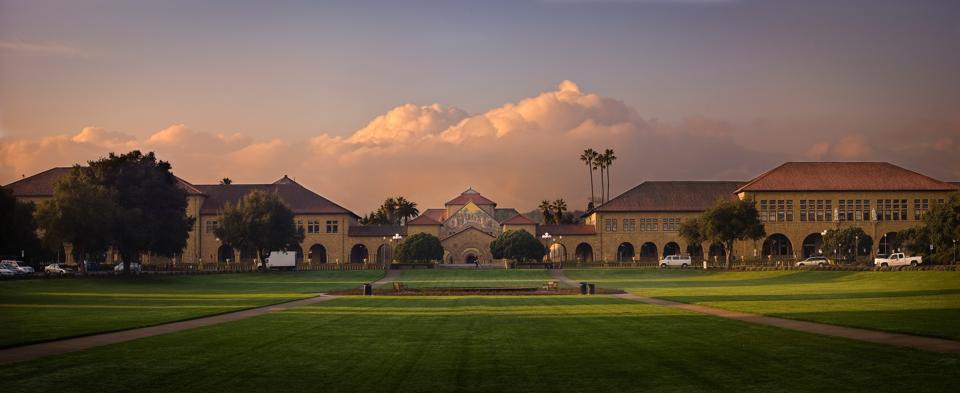
Introducing a column by a 19-year-old Indian student in the US, on the trials and tribulations of life at college
Something many Indian students seem to forget about college admissions is that once you get in, you actually have to go. I’ve always found it a mixture of disappointing and amusing how much stock we put into Ivy Leagues, and how quickly we decide to apply there without knowing anything more than the name. Often, we don’t even bother to research what courses they offer, what the campus is like, what the learning environment provides, who our professors will be, whether it’s truly a good fit for us. It’s the equivalent of going to the pharmacy and buying a well-known medication for no other reason than the fact that you’ve heard it works well; you have no idea whether you need it, or whether it will treat your symptoms, but it’s there and it has a great reputation, so it must be the best choice!
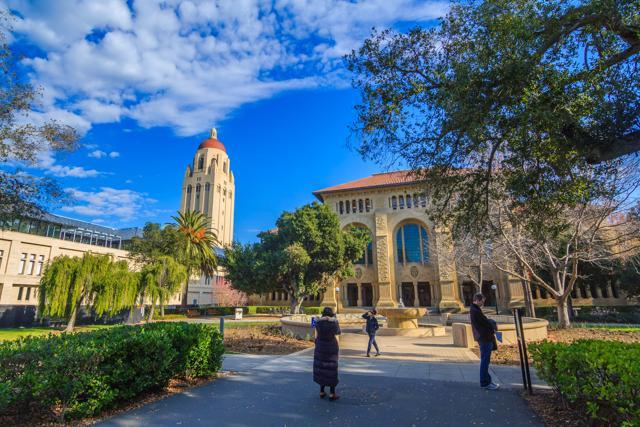
The reason I say this is because the first few months of university are hard enough as it is, without having to spend them in a place you never really wanted to attend to begin with. Not only are you adjusting to a completely new way of life, but you’re also coping with leaving behind your friends, your high school, your home, your family. My mother and father said goodbye to me at the doorway of the dorm. We had been really strong thus far, bracingly approaching this unfamiliar terrain with a hand on each other’s shoulders. Mom gave me a final hug. I held on to her, wanting a memory to hold on to in the weeks to come, when I felt her shoulders begin to shake. I pulled back (which was tough, considering the iron grip she had on me) to see tears pouring down her face. Obviously, I started crying too, and then Dad returned from where he had been dropping off my key in my room, and proceeded to scold us both. “We’re leaving her at the finest possible place she could be in!” he reminded us. “She belongs here. We should be over the moon.” This, I think, is all that parents can hope for: the knowledge that when they do leave their child, they leave them at the finest possible place they could be in; they leave them somewhere they truly belong.
For the first few weeks at Stanford, I felt like I’d been dropped down the rabbit hole. Each day brought with it new friends, new professors, new responsibilities; there was so much moving so quickly that it was easy to feel overwhelmed. I fumbled at the smallest of things: making myself breakfast, finding my way to classes, realising (always a moment too late) that I was being flirted with. I began to miss home, and at first, it was hard to accept that this was the new normal; this was my new life. There’s something interesting, though, about being thrown into the deep end. Whether you know it or not, you slowly learn to swim. This is something I wish someone had told me when I first started college. You’re going to fall, and you’re going to flail, but at the end of it all, you will find yourself landing on your feet. All you need to do is make it till tomorrow. This, I think, is the thing I’m proudest of: my newfound ability to persevere.
Winds of change
In times like these, that ability is needed more than ever. It seems that I had only just begun to view the swaying trees, the cool breezes, the swirls of red and white as home when it fell out from under my feet. The speed with which things decomposed was more frightening than the decomposition itself; events were being cancelled, students were being tested, and, finally, dorms were shutting down. At first, the university insisted that those who wanted to stay still had the choice to. However, soon it became clear that this was no time for the luxury of choice; the campus shut down entirely, only allowing students to remain if the borders of their country were shut, if they truly had no choice but to stay. On my last day at the dorm, my friends decided we should all go out to lunch in Palo Alto. It was a day of sunshine and storefronts and bumbling background music. We pulled chairs together and ate and talked and laughed, looking for all the world as though we had always been there and always would. The only sign that things were fading fast was the Stanford theatre, chipped red letters spelling out the words “Closed Temporarily” above its gleaming doors.
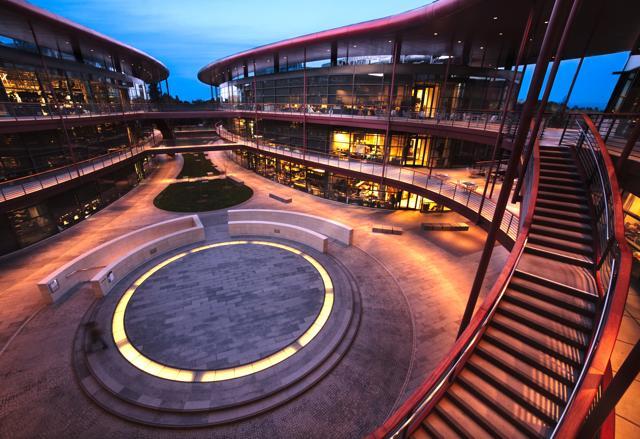
I got out in that perfect moment between mounting panic and swift anarchy. When I arrived in Dubai for my connecting flight home, there was a large swarm of passengers being turned away. They didn’t hold Indian passports, and in the fifteen-hour flight from SF to Dubai, India had closed its borders to all foreign citizens. Things were less frenzied but equally frightening at my final destination. A line of people had formed before immigration to submit the mandatory health forms and get their temperature checked with a forehead scanning thermometer. Posters for prevention of Coronavirus had been splattered across the once colourfully cultural walls, and in those late hours of the night, it felt as though the world was splintering into chaos.
The homecoming
I’m back in Mumbai now. Safe and healthy and among loved ones. It’s astonishing to me how quickly I began to miss Stanford. I cried early and often, particularly when the university announced that the whole of spring quarter would be held online; and so our time in our freshman dorm was over. They’ll soon be packing up our remaining belongings into bulky brown boxes, shipping them back to us like cracked picture frames found in the ashes of a desecrated home. I’ve realised now that because of how much my friends and my community have come to mean to me, it doesn’t matter where I am; half of my heart will always be halfway across the world. It’s too easy in times like these to dissolve into anger and wallow in the stale, oppressing silence that every morning brings.
But whenever the flames threaten to overwhelm me, I think of all the beautiful things I’ve been gifted. I think of every lunchtime in the crowded dining hall, every writing workshop steeped in discussions of the stakes of true art, every lecture that inspired me to change the way I moved about the world. I think of how lucky I am to have my family with me, of every parrot perched outside my bedroom window, of every dinner my brother and I spend teasing our parents over rotis and paneer. And I realise all over again that no matter what hardships we have faced, no matter what tribulations we have yet to meet, we have too much to be grateful for to let ourselves fall apart.
Author bio: Zuni Chopra is filmmaker Vidhu Vinod Chopra and film journalist Anupama Chopra’s daughter, and is currently a freshman at Stanford university where she’s studying the creative arts. She has authored three books of poetry and one novel. Through this column, she chronicles her journey as an international student leaving home for the first time to study abroad.
Follow@zuni_chopra on Twitter
From HT Brunch,April 12, 2020
Follow us on twitter.com/HTBrunch
Connect with us on facebook.com/hindustantimesbrunch


