
 E-Paper



Pelé is known as the world’s greatest football player. Here’s your chance to know him

 Prefer HTon Google


German football legend Franz Beckenbauer
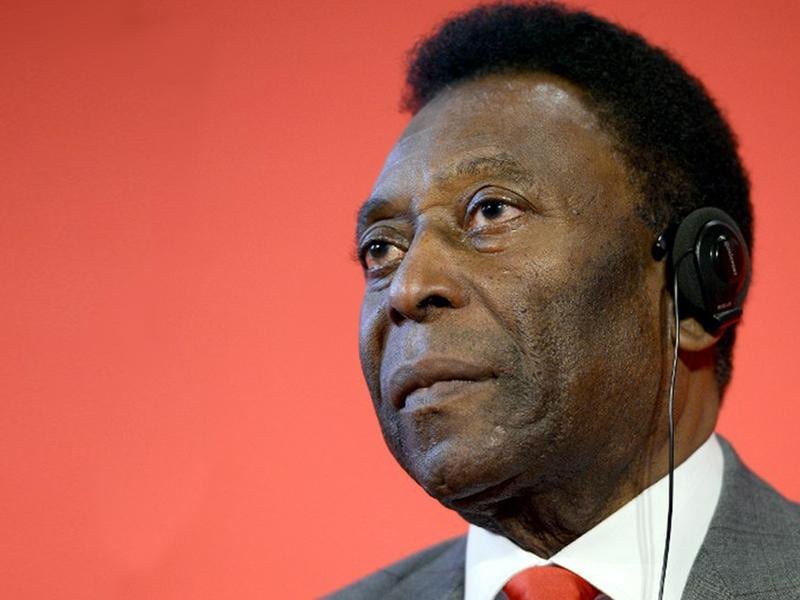
Pelé, the Black Pearl from Brazil, the land of the jogo bonito (the beautiful game), will be in India this week to watch Atletico de Kolkata play in the Indian Super League. German football legend Franz Beckenbauer anointed him the greatest football player in the history of the game for good reason. Here’s your chance to know him.
His calling card: He was born in Três Corações near Rio de Janeiro as Edson Arantes de Nascimento and named by his footballer father Dondinho and mother Dona Celeste Arantes after inventor Thomas Edison.
Arguably the best-known footballer in the world, heads of state and politicians from Nelson Mandela to Bill Clinton have hosted the celebrity footballer, who was conferred the ‘citizen of the world’ honour by the United Nations in 1977.
His record: Bursting onto the public imagination in the 1958 World Cup played in Sweden as a 17-year-old, Pelé would go on to win three World Cup trophies – in 1958, 1962 and 1970 – the most ever.
None of the other greats of the sport, including the magical Argentineans Diego Maradona, Mario Kempes and Lionel Messi or the European greats Franz Beckenbauer of Germany and Johan Cryuff of the Netherlands even come close.
His Kodak moment: The photograph where he swapped shirts with English captain Bobby Moore after the 1970 final in front of 107,000 spectators in the Azteca Stadium in Mexico City remains one of the most iconic football moments ever.
His India connect: Pelé last visited India close to four decades ago. Named the FIFA Player of the Century in 2000, he was last in the country on 24 September, 1977, as New York Cosmos played out a 2-2 draw against apna Mohun Bagan at the Eden Gardens.
His popularity: Such is his popularity back home in Brazil that he once considered running for president. The shirt worn by Pelé during the 1970 World Cup Final fetched a record £157,750 when it was auctioned at Christie’s in 2002. In the 1960s, two factions in the Nigerian Civil War reportedly agreed to a 48-hour ceasefire so they could watch Pelé play in an exhibition game in Lagos.
From HT Brunch, October 11
Follow us on twitter.com/HTBrunch
Connect with us on facebook.com/hindustantimesbrunch


