E-Paper



Gas shortage hits ceramic hub in Gujarat's Morbi as Iran war widens
For Morbi, the world’s second-largest ceramic hub, the stakes are existential, even as Qatar shutters the world's largest LNG terminal amid Iran war.

 Prefer HTon Google


The ceramic industry in Gujarat’s Morbi district is facing a looming production crisis as an escalating Iran war chokes the supply of essential natural gas.
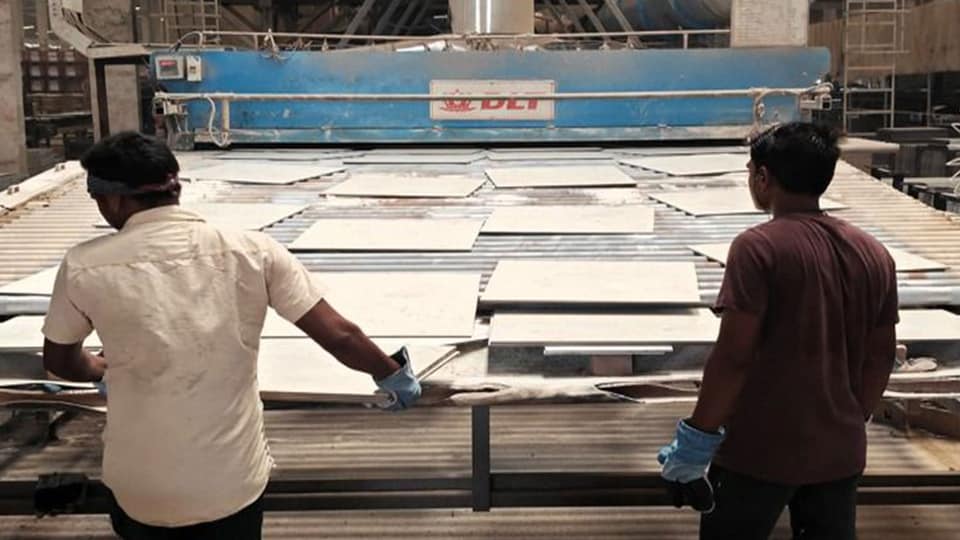
“Most of the gas and petroleum products come from GCC countries,” said Manoj Arvadiya, president of Morbi Ceramic Manufacturers Association. “Currently, all vessels passing through are being stopped at an area controlled by Iran. A complete barricade has been erected there.”
Shipping through the Strait of Hormuz, which carries nearly nearly half of India's crude oil and gas supply every day, has come to a halt as the Iran war intensified and spread across the wider Middle East. Tehran's drone attacks, in retaliation to missile operations by Israel and the United States, have forced Qatar to shut down the world's largest LNG terminal in Ras Laffan.
Separately, Saudi Aramco has closed its Ras Tanura refinery, and Iraq has cut oil production as there's no way to evacuate the output.
Iran war impact on India
For the manufacturers in Morbi—the world’s second-largest ceramic hub—the stakes are existential. Arvadiya said the industry is almost entirely dependent on gas-fired kilns. "If the gas supply is not adequate, we anticipate that the entire Morbi Ceramic Industry will have to be shut down," he said, adding that the gas shortage could lead to a total shutdown if logistics do not improve.
New Delhi Projects Calm
Despite the industry’s alarm, New Delhi maintains that India’s energy security remains intact. The country holds eight weeks of crude oil and petroleum inventory, including strategic reserves.
Officials further downplayed the impact of the Iranian blockade, asserting that only 40% of India’s crude imports transit through the Strait of Hormuz.
While the government continues to monitor the situation closely, they insist that diversified sourcing and existing stockpiles leave the country in a “comfortable position” to manage potential supply-side shocks.