
 E-Paper



The Chocolate Company Where Prices Change Every Three Months
Rocky Mountain Chocolate Factory is implementing a new dynamic pricing plan for its gourmet chocolates.


 Prefer HTon Google


Rocky Mountain Chocolate Factory has adopted a dynamic pricing strategy after seeing rising cocoa costs cut into profits. That means prices for its gourmet chocolates could change every three months.

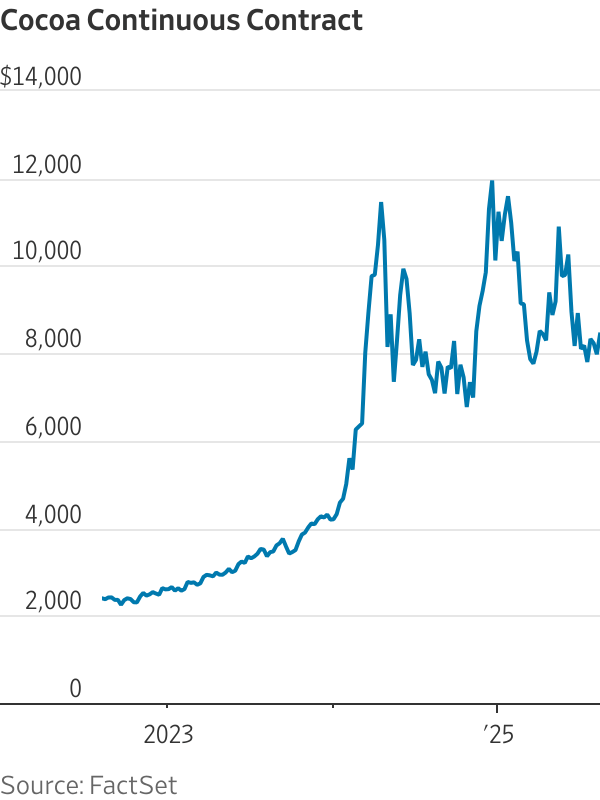
Cocoa prices that soared late last year have fallen in recent months, hovering Wednesday afternoon at around $8,660 a metric ton compared with over $12,000 in December. But they remain above historical levels with supplies squeezed by poor weather and plant disease. In response, chocolate makers have doubled down on hedging strategies, changed packaging and raised prices to protect profits.
Rocky Mountain Chocolate’s answer includes quarterly pricing adjustments for truffles, chocolate-covered pretzels and more to account for the turbulent cocoa market. Executives call it dynamic pricing, though there are no plans to change prices based on demand around popular chocolate holidays such as Valentine’s Day, said Chief Financial Officer Carrie Cass. Instead, the chocolate seller will raise—and lower—prices on a set schedule based on its own costs.
“We’re really trying to stick to a certain margin,” Cass said.
Volatility in the cocoa market is spurring changes across companies. Oreo maker Mondelez International announced a planned price increase this year. Nestlé has raised prices on certain items after trying other efforts to offset higher cocoa costs, such as finding efficiencies in the supply chain, according to a company representative. And Hershey has plans for a roughly double-digit percentage increase in prices in response to higher costs.
As companies raise chocolate prices, a risk is that wallet-watching consumers pull back or stop buying, analysts said. “Is the consumer going to eventually hit a breaking point where they say, ‘I’m priced out of the category or I can only buy smaller pack sizes?’” asked Connor Rattigan, a senior analyst covering food and beverages at Consumer Edge.
U.S. consumers are already eating less chocolate candy, with unit sales down 1.7% for the 52 weeks ended in mid-July from the comparable period a year earlier, according to market-research firm Circana. The average unit price is up 4.8%, to $3.58, Circana said.
At Rocky Mountain Chocolate, price adjustments are expected to help.
The past several quarters have been bruising for the company, prompting cost cuts, leadership shifts and operational changes including the new pricing strategy. Revenue has largely remained flat the past few years, aside from spikes around occasions like Valentine’s Day and Christmas.
With two price adjustments so far, total product and retail gross profit increased 200%, to $300,000, for the quarter ended May 31 compared with a year earlier. Total gross margin increased to 6.9% for the period, compared with negative 5.8% a year earlier. Rocky Mountain Chocolate anticipates adding several million dollars in gross profit this fiscal year because of the new approach to price adjustments, executives said in June.
The plan was put into motion this year after the company revamped its data collection on sales, input costs and other items. Such figures used to come with a delay, and often weren’t granular enough to make decisions about specific products. Now, the company monitors sell-through, inventory trends and product performance in real time and at a store level, and executives can see the margins tied to each product, Cass said.
“So instead of just saying: ‘We’re going to increase prices across the board 5% or 10%’ or whatever, we strategically look at each [stock keeping unit] and set a target margin so that even if our costs go up, our adjusted pricing will still provide us with that target margin,” the CFO said. The company hasn’t shared specifics on its target margin.
The figures are updated daily, but price changes will be less frequent so that the franchise owners who sell the company’s chocolate drizzled caramel apples, English toffee and other treats have time to plan for any adjustments, according to Cass. The first price change was in March followed by a second in June, both increases because of cocoa prices. The next adjustment is expected in September.
Rocky Mountain Chocolate executives are watching for signs of pricing fatigue from franchisees. And the company will lower prices when possible. “If cocoa prices come down … those prices could also fall,” she said.
The company only has so much say in what consumers pay for treats. This is because it suggests retail prices to franchisees, but doesn’t dictate them, the CFO said.
Price adjustments at larger chocolatiers tend to be made as needed rather than at set intervals, analysts said. The Rocky Mountain Chocolate approach likely works in limited circumstances when there is greater control of the store shelves, said John Baumgartner, a senior analyst covering the U.S. food industry at Mizuho Financial Group.
“If you’re going to be that iterative with pricing on a month-by-month basis, the expectation is that you will adjust prices down” when input costs decline, even if overall costs don’t similarly drop, he said. “I just don’t think for large [consumer packaged goods] companies, the appetite is really there to swing prices up and down like that.”
Write to Jennifer Williams at jennifer.williams@wsj.com


