
 E-Paper



Chandigarh admn rolls out ambitious parking policy to decongest city
Vehicle registration only with availability of parking and congestion pricing at high-density parking lots among key features; admn leaves implementation to MC, transport dept

 Prefer HTon Google


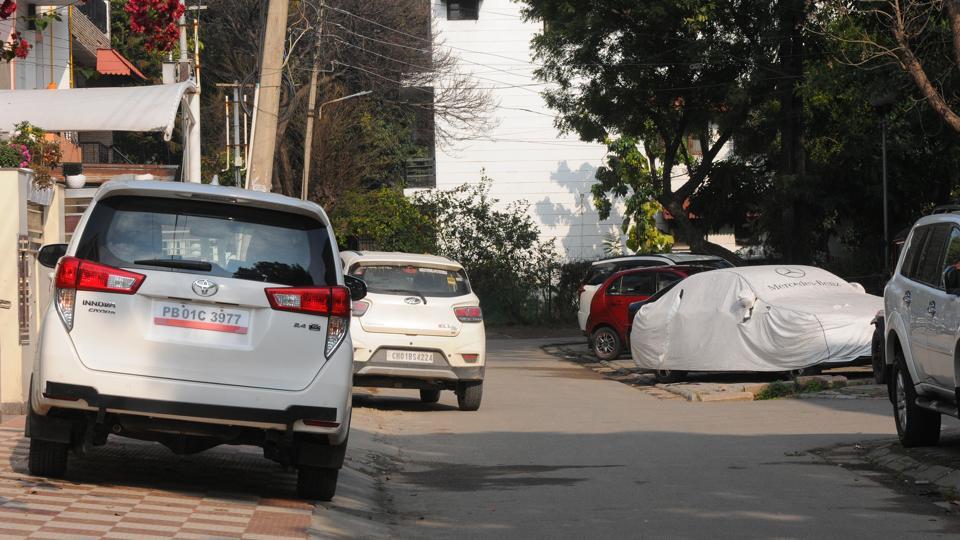
After years of debate and multiple drafts, the UT administration has finally notified the parking policy with the aim to decongest Chandigarh, a city with the highest density of privately owned vehicles in the country.
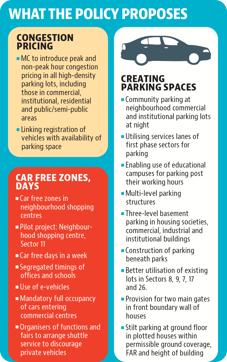
Retaining some of the controversial proposals, such as imposition of congestion chares and linking availability of parking space with vehicle registration, the policy’s key focus is on maximising utilisation of existing parking spaces through community parking.
At the same time, it pushes for creation of new parking avenues by allowing multi-level parking lots, even those under ground.
Formulated by the urban planning department, the policy doesn’t have any mandatory clauses, with the onus of its implementation being on various government agencies – particularly, the municipal corporation and the UT transport department.
The policy recommends community parking in each sector by using neighbourhood commercial and institutional parking lots on rental basis. These parking lots are to be run by the registered Residents’ Welfare Associations (RWAs). It also proposes using the parking of educational institutions post their operational hours.
The policy categorically states against converting green belts into parking areas, though it allows for construction beneath the parks.
For creating more parking space in houses, it allows for two main gates in the front boundary. It also permits stilt parking on the ground floor of the house. In the group housing societies, commercial and institutional buildings it allows for three-level basement parking.
CONGESTION CHARGES
Even though earlier drafts of parking policy proposing congestion fee during peak hours came under severe criticism from different stakeholders, including councillors and business associations, the notified policy recommends that MC impose these charges to restrict vehicular volume.
The policy, drafted on the lines of the Chandigarh Master Plan 2031, has also recommended that the Registering and Licensing Authority (RLA) register new vehicles only if te applicant has parking available for the new vehicle.
SEGREGATED OFFICE TIMINGS, BUS SERVICE FOR STAFF
The guidelines propose mandatory plying of staff buses by various institutions, such as hospitals, public offices, industrial units and IT firms, to discourage use of personal vehicles.
“Differential timings for schools/offices among Punjab/Haryana/UT, especially those of Chandigarh administration, will be adopted to reduce the demand for parking,” the policy states.
Improving the public transport system with first- and last-point connectivity has been recommended for reducing use of private vehicles.
ADOPTING TECHNOLOGY
The policy recommends introduction of mobile apps, which will provide citizens travel advice on non-motorised transport and public transport, which will be integrated with public bike sharing. Use of technology will also allow them to assess parking demand and availability of parking lots in a particular area.
Smart parking systems, like parking fee payment through e-wallet and other digital modes, has also been proposed.


