
 E-Paper



Bengaluru commuters protest inside Metro trains, demand fare hike rollback
The fare increase has led to a decline in ridership as commuters seek alternative transport, raising concerns about pollution and traffic congestion.

 Prefer HTon Google


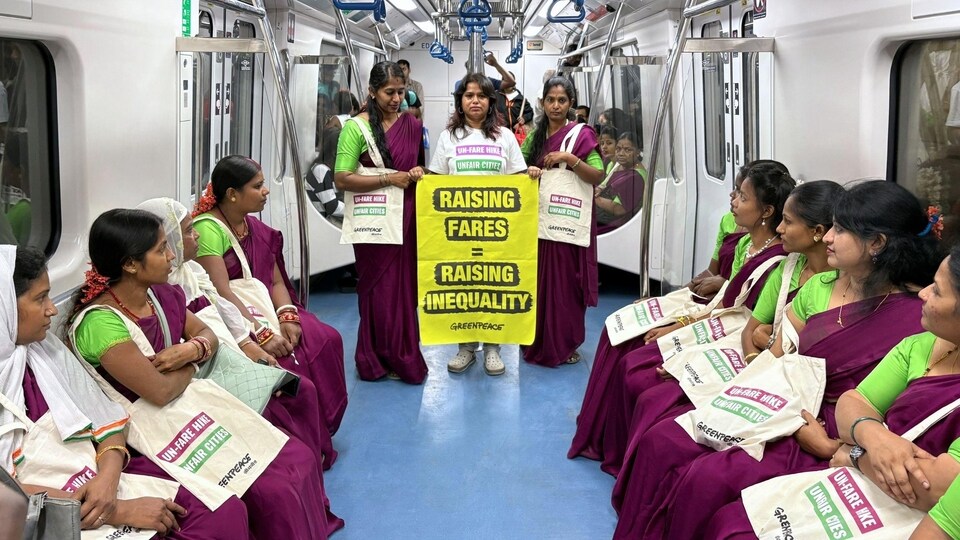
A month after the metro fare hike was implemented in Bengaluru, city residents took to metro trains on Sunday to voice their opposition to the increased ticket prices. Several commuters carried placards, highlighting concerns over the unaffordable fares, which many believe are forcing people to opt for personal vehicles instead of public transport.
Also Read - 'Women will run the show': DK Shivakumar calls on women to gear up for Assembly, Lok Sabha elections
Author Avinash Chanchal shared images of the protest on X, showing citizens inside metro coaches demanding an immediate rollback of the fare increase. In his post, Chanchal stated, "A month after the metro fare hike, commuters and citizens in Bengaluru have come together inside the metro, urging authorities to revoke the recent hike." He further warned that higher ticket prices could lead to worsening pollution and increased congestion, as more people shift away from public transportation. "Higher fares will only discourage public transport use, exacerbating pollution, traffic congestion, and the climate crisis," he added.
Currently, Bengaluru's metro is the costliest in the country, with the highest ticket fare reaching ₹90. The fare hike has triggered widespread frustration among daily commuters, many of whom have been demanding a reversal of the decision. Despite public outcry, the Bangalore Metro Rail Corporation Limited (BMRCL) has made only minor adjustments to the fare structure, which do little to ease the financial burden on regular passengers.
Also Read - Bengaluru auto rickshaw driver swaps stiff regular seat for stylish comfy chair: ‘Gamer hoga’
Following the fare increase, metro ridership has witnessed a decline, as many commuters have sought alternative modes of transportation. The first Monday after the hike saw a noticeable drop in footfall, with metro ridership standing at 8,28,149,. This figure represents a 6% decline compared to the average Monday ridership recorded this year, excluding January 13, which was the eve of Makara Sankranti.
Here is the new fare structure
Under the revised fare structure, the maximum metro fare has risen from ₹60 to ₹90, while the minimum balance required on smart cards has also increased from ₹50 to ₹90. Short-distance travel up to 2 km now costs ₹10, while journeys between 2 km and 4 km are priced at ₹20. Passengers covering 4 km to 6 km will have to pay ₹30, whereas trips between 6 km and 8 km are charged at ₹40. The fare for distances ranging from 8 km to 10 km is now ₹50, and those traveling between 10 km and 12 km will pay ₹60. Journeys spanning 15 km to 20 km cost ₹70, while distances of 20 km to 25 km are charged at ₹80. Commuters traveling beyond 25 km must now pay ₹90 for their ride.


