
 E-Paper



Karnataka bus fare hike: BJP distributes roses to passengers as a mark of protest against Congress govt
Karnataka's cabinet approved a bus fare increase of up to 15% across four state-run transport corporations, effective January 5.

 Prefer HTon Google


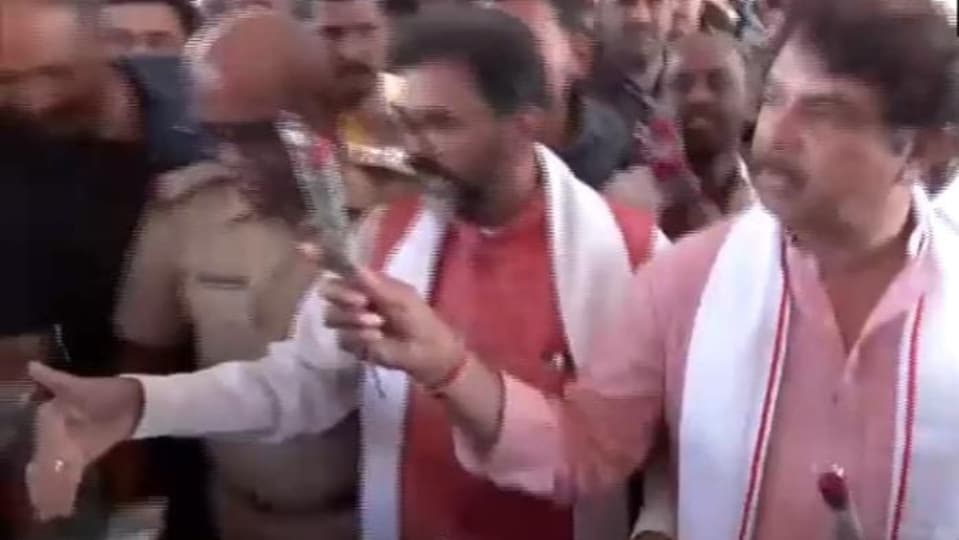
In a unique protest against the recent bus fare hike implemented by the Congress-led Karnataka government, the state BJP unit distributed roses to passengers in Bengaluru. Criticizing the government, the Opposition labeled the Shakti scheme a "scam," alleging that men are being burdened with higher bus fares while women benefit from free travel.
Also Read - Bengaluru to experience severe cold wave, temperatures expected to drop to 10.2°C: IMD
Take a look at the video
Leader of the Opposition, R. Ashoka, personally handed out roses to passengers, urging them to question the government about the fare increase. He accused Chief Minister Siddaramaiah of being one of the state's "worst Chief Ministers" and argued that the Congress government was inept at governance. Ashoka also claimed that the fare hike was unjustly attributed to rising petrol prices, asserting that the previous BJP government had not raised fares even when fuel prices surged.
In response, the Congress party defended its decision and hit back at the BJP. It pointed out that bus fares had been raised multiple times during R. Ashoka’s tenure as the transport minister, suggesting that the BJP had no moral authority to criticize the fare hike.
The Karnataka cabinet recently approved a fare increase of up to 15% across the four state-run transport corporations, effective January 5. According to PTI, this measure is expected to generate an additional ₹74.85 crore per month, amounting to approximately ₹784 crore annually.
Also Read - Bengaluru woman jumps from moving auto after drunk driver takes wrong route, Namma Yatri responds
Karnataka’s Law and Parliamentary Affairs Minister H.K. Patil explained that the fare revision applies to the Karnataka State Road Transport Corporation (KSRTC), North Western Karnataka Road Transport Corporation (NWKRTC), Kalyana Karnataka Road Transport Corporation (KKRTC), and Bengaluru Metropolitan Transport Corporation (BMTC). He also highlighted that BMTC fares were last raised in January 2015, when diesel was priced at ₹60.90 per litre.
Patil reassured the public that the ‘Shakti’ scheme, which provides free travel for women on non-luxury state buses, would remain intact. He noted that ₹5,015 crore has been allocated for the scheme in the current fiscal year.


