
 E-Paper



Who is Dr Ramarao, Kannadiga behind India's Akash system that thwarted Pakistan missiles
Dr Ramarao’s journey with the Akash missile began in the early years of India’s missile development efforts.

 Prefer HTon Google


When drones and missiles from Pakistan threatened Indian airspace on May 8 and 9, it was the Akash surface-to-air missile system, built indigenously, that stood as the country’s first line of defence.
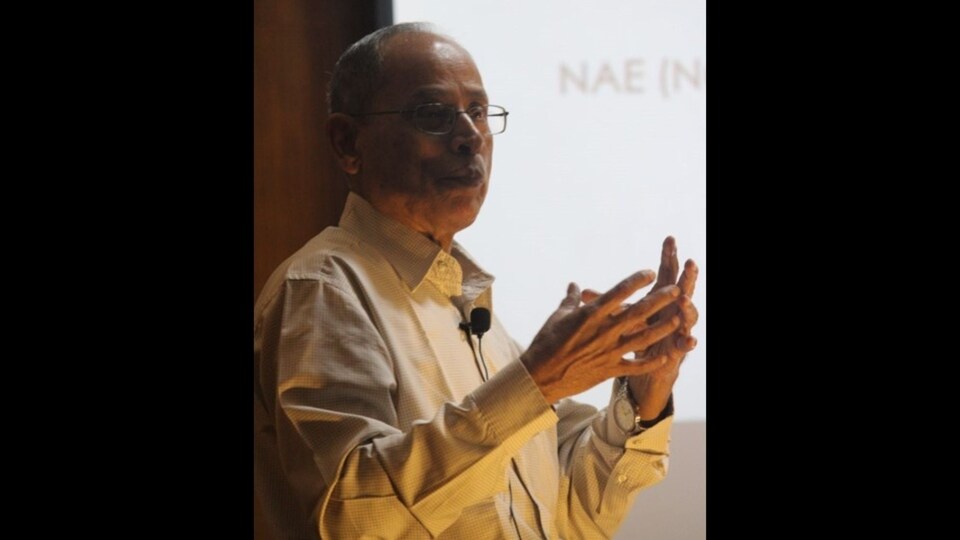
Designed to detect and destroy aerial targets with accuracy, the system intercepted multiple threats successfully, earning praise for its performance. At the core of this defence breakthrough is Dr Prahlada Ramarao, a Kannadiga scientist whose work with the Defence Research and Development Organisation (DRDO) shaped India’s missile defence capabilities, Business Today reported.
Speaking after Akash’s successful interceptions, Dr Ramarao called it the most fulfilling day of his life. "Seeing the missile I helped develop neutralise enemy threats with such accuracy... it was like watching your life’s work come alive," he said in a televised interview according to the publication. He added that the system not only met but exceeded its design expectations during the recent engagement.
Dr Ramarao’s journey with the Akash missile began in the early years of India’s missile development efforts. Handpicked by Dr AP Abdul Kalam, India’s ‘Missile Man’ and former President, Ramarao was appointed as the youngest project director for the Akash programme. At the time, the Indian Army was sceptical about the system’s feasibility.
The Akash missile is now a key pillar of India’s air defence network. Produced by Bharat Dynamics Limited and developed by DRDO, it has evolved over the years to include the advanced Akash-NG variant. The newer version boasts a range of up to 80 km and can reach speeds of 2,500 km/h. It can lock onto 64 targets at once and launch 12 missiles simultaneously.
A career built on missile systems
Akash is just one part of Dr Ramarao’s extensive contribution to India’s missile programme. Over his career, he has worked on nearly 10 different missile systems, including surface-to-air and air-to-air categories. He played significant roles in developing missiles such as the Astra and BrahMos, the latter a joint venture with Russia that has become one of India’s most successful precision-strike weapons.
Today, the Indian Army, Navy, and Air Force actively deploy many of these systems. Their success has also drawn international interest. Countries like Armenia have placed orders for the Akash system and the Pinaka rocket launcher, underlining India’s emergence as a credible defence exporter.
Dr Ramarao believes Indian missiles offer a compelling package for global buyers, “Our systems are cost-effective, simple to operate, and deliver competitive performance. That’s what sets them apart in the global market.”
(Also Read: Bengaluru resident wants Donald Trump to intervene in Ejipura flyover delay, offers to name it ‘MAGA Trump Flyover’)


