E-Paper



17,000 sq km in MP and Rajasthan to be home base for Kuno cheetahs
The officials said the emphasis is on the inter-state coordination and monitoring of cheetahs for which forest staff in Rajasthan will be trained

 Prefer HTon Google


At least 17,000 square kilometers of forest area in Madhya Pradesh and Rajasthan is set to be developed into a wild habitat for cheetahs and the modalities for the same is expected to be finalised at a meeting between forest officials of two states in Ranthambore on November 29, officials aware of the developments said.
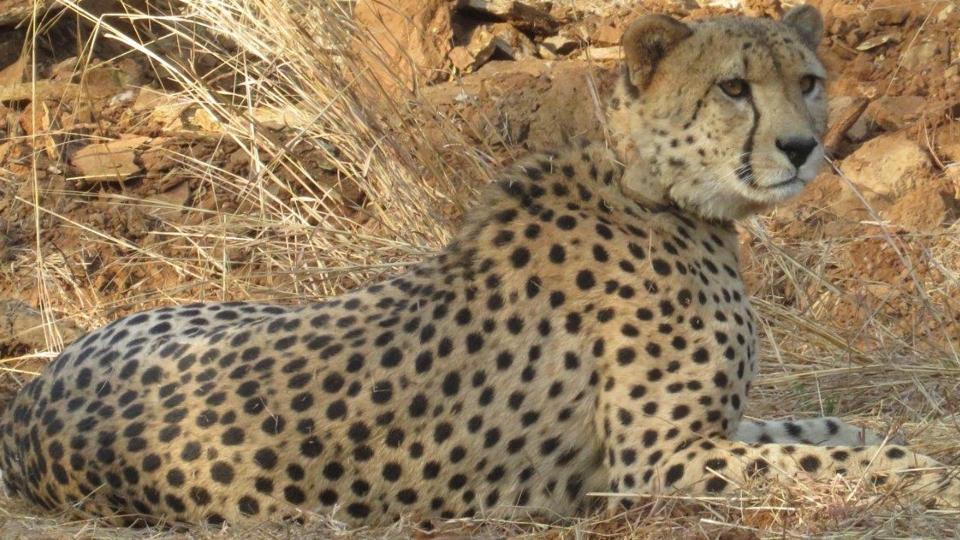
The MP forest department plans to release cheetahs into the wild by end of this year and there is high possibility of the animal entering Rajasthan, which is only 80km from Kuno National Park, which is home to 12 adult cheetahs and 12 cubs transported from Namibia and South Africa in September 2022 and February 2023.
In the first tranche, the MP forest department plans to release two cheetahs in the wild, more than a year after the first attempt failed. Seven cheetahs were released into the wild between March 2023 and December 2023. Three cheetahs had died due to infection during monsoon season in 2023. All of them were captured and only one free roaming cheetah, Pawan also died in this year in September 2024.
Also Read: Kuno cheetahs to soon be released in the wild
In a new strategy, the officials said that the cheetahs who move long distances will not be darted and brought back to Kuno.
“This time, we want the cheetahs to explore and settle in the forest,” a senior government official said.
“They will not be darted unless there was a risk to their lives. Cheetahs will be managed by the respective state if they cross the border.”
To prevent cheetahs from catching infection in wild, L Krishnamoorthy, additional principal chief conservator of forest (APCCF) (wildlife), said, “All the cheetahs have been vaccinated for ticks and skin infection. They did not catch any infection this year.”
The officials said the emphasis is on the inter-state coordination and monitoring of cheetahs for which forest staff in Rajasthan will be trained.
“We will also provide technological training to forest staff to monitor movement of cheetahs,” said another forest official, who was part of the meeting held at Kuno National Park last month on release of the animal into the wild.
Kuno and Ranthambore have a tiger corridor, through which over a dozen tigers from Ranthambore had crossed over in the past decade.
The officials said when the cheetahs were released in wild by the end of this year, they also moved in this corridor.
“We rescued a cheetah from Baran district in Rajasthan in December 2023. In May 2024, cheetahs were seen in Karauli, Rajasthan and brought back to Kuno National Park,” an official said.
The officials said that cooperation initiative started when the Bharatiya Janata Party-ruled (BJP) Rajasthan chief minister Bhajan Lal Sharma met his MP counterpart Mohan Yadav in January 2024.
Before December 2023, Rajasthan was ruled by the opposition Congress.
The officials said the two states were keen to develop 17,000 sq km for cheetahs to roam freely to develop their territories, both MP and Rajasthan government will play active role and share responsibilities. The corridor includes 10 districts of Madhya Pradesh and seven of Rajasthan.
Madhya Pradesh government is developing another home for cheetahs at Gandhi Sagar Sanctuary in Mandsaur district.
The cheetah steering committee recommended to release a male and a female from Kuno at Gandhi Sagar Sanctuary, said a forest official from MP adding that talks are underway with Kenya and other African countries to send cheetahs to India.