
 E-Paper



Amid 2nd wave, Himachal’s Kashmiri migrants stare at an uncertain future
This year, these daily wagers, who make up the informal sector, are not trudging back home but their means of earning a living have dried up, leaving them vulnerable and their future uncertain.


Food insecurity, unemployment and economic vulnerability loom large over Himachal Pradesh’s ‘Kashmiri Khans’ yet again, with the government imposing fresh restrictions to control the spread of the pandemic.
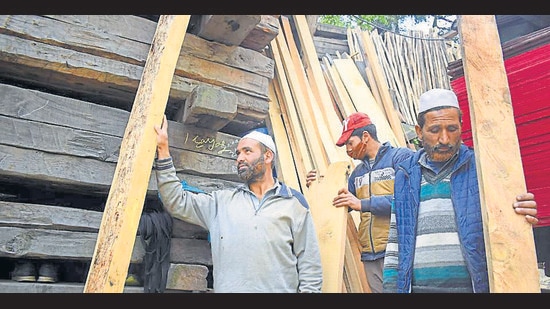
Last year, when the Prime Minister had suddenly imposed a nationwide lockdown, it had triggered mass exodus of these sturdy workers, known as ‘Khans’. When heavy snowfall and landslides brings life in the hill state to a grinding halt, it is these brawny workers who clear the roads of snow and uprooted trees and ensure uninterrupted supply of essential services. They also lug heavy loads to areas inaccessible by road. Some of these Khans work as scrap and old newspaper collectors, salesmen and porters. Since the British era, these workers, who have been given the sobriquet, camel of the hills, for their unparalleled strength and endurance, have been virtually carrying the state’s economy on their shoulders.
A year on, these indispensable workers, have been left in a lurch yet again as the second wave of infections tears through the state, forcing businesses to close and travel to come to a standstill. This year, these migrant daily wagers, who make up the informal sector, are not trudging back home but their means of earning a living have dried up, leaving them vulnerable and their future uncertain.
No avenues of earning
At least, 8,000 Kashmiri workers are employed in the capital city of Shimla, most of whom are porters and labourers. “The Khans are the lifeblood of the capital, but their avenues for earning have shrunk,” says Inderjeet Singh, president, Shimla Beopar Mandal.
“Many of them, who had returned home, have not come back this year. Though migrant labourers from different areas flock to Shimla but we implicitly trust the Khans as we have a long history with them,” he says.
With restrictions adversely impacting tourist influx in Shimla at the peak of the tourist season the Khans are worried about their livelihood . “I searched for jobs after graduating, but did not get any. So, I came to Shimla two years ago and started working as a labourer with a local contractor,” says Imitiaz, 28, of Watnarh village in Anantnag.
“I was to get married but I had to defer the plan as our income has dried up,” he adds.
Tourism, the mainstay for many
“We are keeping tabs on the situation and advisories are being issued by the government from time-to-time. Last year, too, we faced great difficulty though the administration had arranged for us to the go home,” says Fiaz Ahmad, president, Masjid Intijamia Committee.
‘Many Khans had just returned after a year looking for avenues to earn a livelihood. Now, they are unsure if they will be able to fend for their families in the coming days,” he said.
Many youngsters from the Valley are employed as tourist guides with local hotels and also bring guests . A few of them work as commission agents.n However, tourist inflow to the town has drastically declined after the government has imposed restrictions in wake of surging Covid cases. Almost 100% booking have been cancelled.
“ I used to work as a tourist guide but now I work at the local saw mill in Lakkar Bazaar. However, I am not sure how long it will last,” says one of the labourers. With numerous Kashmiris rendered jobless, many are keen to return home.


