E-Paper



CAQM puts officials on high alert for one week as farm fires rise
The member reviewed crop residue management measures with the administrative heads of the districts and stressed that field staff must remain alert and ensure strict monitoring

 Prefer HTon Google


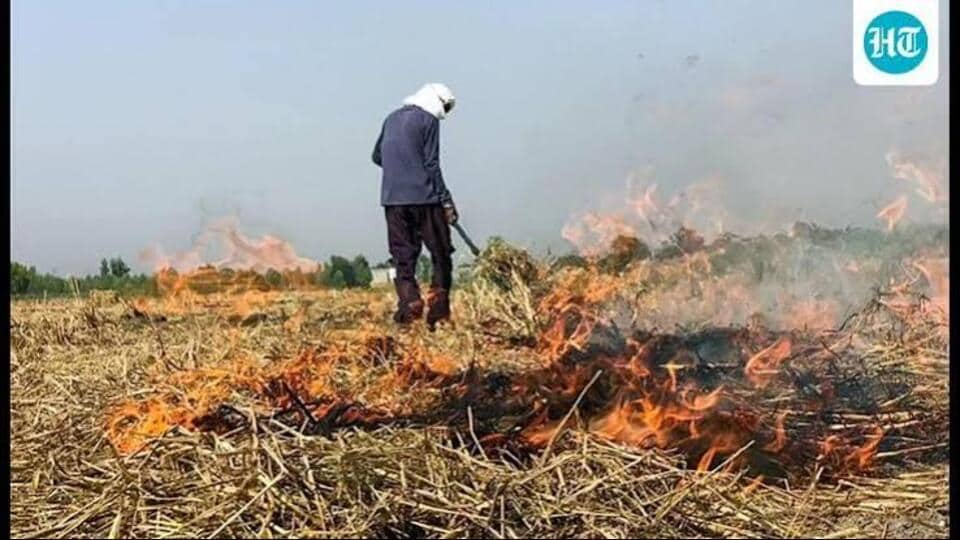
As incidents of paddy crop residue burning continue to rise in Haryana, the Commission for Air Quality Management (CAQM) has directed officials in the region to remain on high alert for the next seven days to prevent further incidents.
CAQM is a statutory body formed by the government of India to co-ordinate, research, identify and resolve air quality issues in the National Capital Region (NCR) and its neighbouring areas.
On Thursday, the body’s member SD Attri met with deputy commissioners, superintendents of police and other concerned officials from four Haryana districts—Kaithal, Karnal, Kurukshetra and Jind—at the Kaithal Mini Secretariat.
The member reviewed crop residue management measures with the administrative heads of the districts and stressed that field staff must remain alert and ensure strict monitoring, particularly in vulnerable villages.
At the meeting, Attri observed that farm fires remained largely under control before Diwali, but witnessed a sudden increase in some districts around the festival, making the coming week crucial as harvesting concludes.
Evidently, the state has so far recorded 218 cases, 123 of which were reported post-Diwali, including a season’s maximum of 80 on the night of the festival.
In Kaithal, 67 cases of residue burning have been lodged, the highest in the state. Similarly, Jind added 27 cases, followed by 22 in Karnal and 19 in Kurukshetra. The region forms the ‘rice bowl’ of Haryana.
Presenting Kaithal’s report, DC Aparajita said 44 FIRs had been registered against farmers for violations and fines amounting to ₹1.6 lakh had been imposed, while 45 notices had also been issued to officials and employees for lapses.
“Of the FIRs, 36 were based on HARSAC inputs, while eight followed action by monitoring teams. The district had 272 paddy-growing villages, 681 village-level nodal officers and 3,800 in-situ agricultural machines. Besides, 317 ex-situ machines had been provided, while 150 more were required,” she informed.
Similarly, Karnal DC Anand Kumar Sharma said 10 FIRs have been filed against farmers for violation. In addition to imposing fines as per regulations, a red entry has also been registered on the Meri Fasal-Mera Byora portal.
CAQM member inspects stubble mgmt
After the meeting, Attri visited the fields of Kailaram village to inspect stubble management, where he took stock of the in-situ and ex-situ techniques.He interacted directly with the farmers, listened to their problems and suggestions, and appreciated their participation in stubble management.
After this, he also visited the stubble management center in Pinjupura village and gathered detailed information.
“Kaithal farmers are aware and are taking positive steps toward not burning stubble. This problem cannot be solved through administrative action alone; instead, the government, administration, and farmers must share collective responsibility,” he said.