
 E-Paper



Chandigarh MC House to finalise policy to improve garbage collection
Policy proposes collection from every floor of a residential building, a persistent demand of residents, especially the elderly

 Prefer HTon Google


Pending for over a year, a policy with regard to door-to-door garbage collectors is set to be finalised in the upcoming Chandigarh MC House meeting on November 3.
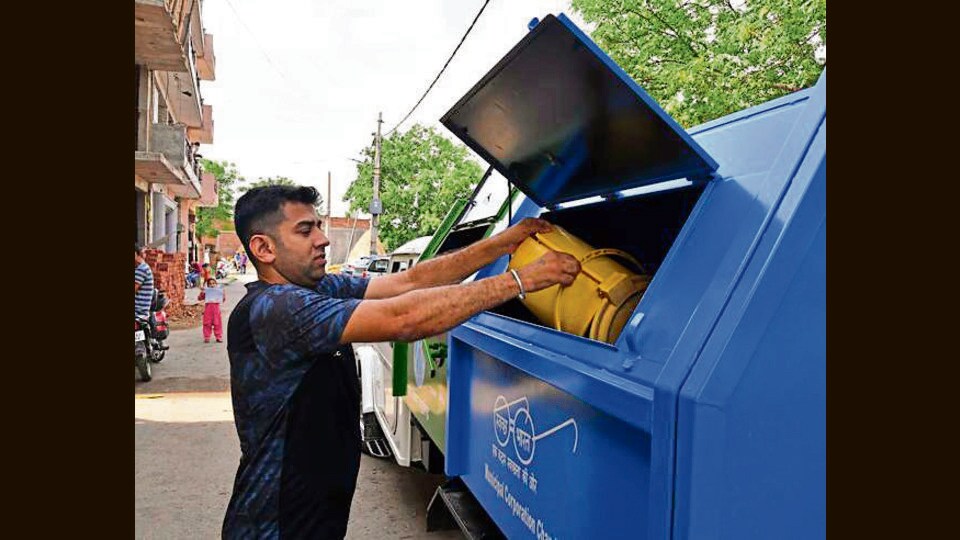
The policy aims to streamline the city's waste management system by introducing stricter service norms, biometric attendance and expanded coverage for all residential floors. The proposal was deferred in the MC House meeting in October 2024 and has been brought back for discussion.
In 2020, the civic body had launched the door-to-door garbage collection system in residential areas using compartmentalised vehicles and trained drivers. According to the corporation, the service is provided to 100% households, and the waste is collected in segregated form — dry, wet, sanitary, domestic hazardous and plastic.
Accordingly, MC had signed a memorandum of understanding (MoU) with 926 door-to-door garbage collectors individually, from January 1, 2021 to December 12, 2022. The said MoU has been extended time and again ever since.
In the new policy draft, the civic body has planned significant upgrades to its waste collection operations. These include ensuring that garbage is collected from every floor of residential buildings—addressing persistent complaints from residents, especially the elderly on upper floors, who struggle to bring down their waste.
The reforms also propose a biometric attendance system to ensure timely and consistent service and introduced penalties for non-compliance, such as skipping households, failing to wear uniforms or ID cards, or demanding money from residents.
However, several provisions of the draft have met resistance from garbage collectors themselves, who have raised objections, particularly to the biometric attendance requirement and the penalty clauses. The lack of consensus between MC and the field staff has effectively halted progress on the policy.
MC officials say the policy was aimed at enhancing both residents’ convenience and service reliability.
Under the new draft, waste collectors would be required to work from 7 am to 2 pm, six days a week, and could take the help of an additional worker only if servicing more than 300 households.
Collectors will also have to nominate a substitute to take over duties in case of illness or death. Importantly, MC has also proposed several welfare measures for the sanitation workers, including uniforms, timely salaries, insurance, annual health checkups, paid leaves and a ₹10-lakh welfare fund to support medical or educational needs of workers and their families, said officials.


