
 E-Paper



Chandigarh: PGIMER-Sarangpur flyover tenders to be floated by month-end
The project, aimed at easing congestion on one of the city’s busiest corridors, is expected to be complete within two years. The tendering and allotment process will take about two months.

 Prefer HTon Google


The UT administration is all set to float tenders for the long-pending PGIMER-Sarangpur flyover project by the end of this month, with the estimated cost expected to rise by around 10% to nearly ₹100 crore due to global factors, including the Middle East conflict. Officials said the revised cost estimates will be submitted by the project consultant within a week, after which the bidding process will begin.
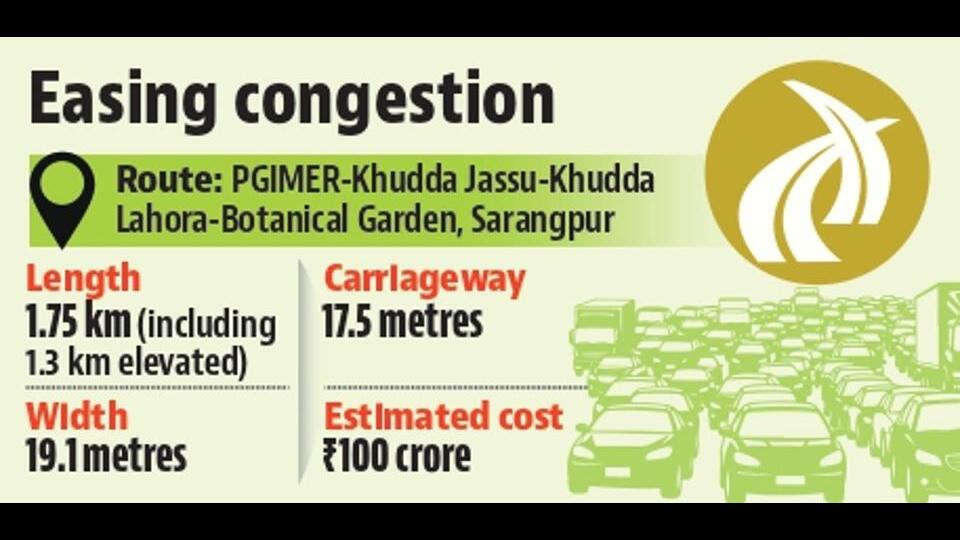
The project, aimed at easing congestion on one of the city’s busiest corridors, is expected to be complete within two years. The tendering and allotment process will take about two months.
A senior UT engineering department official said the cost escalation, from the earlier ₹90 crore estimate, is due to rising material rates. “We expect the consultant’s report within a week, after which tenders will be floated,” the official said.
The flyover had received in-principle approval from the Heritage Committee in July last year, and formal clearance from the department of urban planning in February this year.
This will be the second major flyover project in Chandigarh to advance after the Tribune Chowk flyover, which was cleared by the Centre in August last year.
Originally proposed in 2020 to address traffic congestion on the PGIMER-Sarangpur stretch, the project faced delays due to multiple hurdles. Although geotechnical and feasibility studies were completed, it was shelved in February 2023 after a Metro corridor was proposed along the same alignment.
The proposal was later revived following a fresh traffic survey conducted under the supervision of deputy commissioner and road safety committee chairperson Nishant Kumar Yadav, which identified the stretch as a major traffic bottleneck.
To resolve the overlap with the proposed Metro corridor, the engineering department proposed a double-decker design, with one level for vehicular traffic and another reserved for Metro tracks. The Heritage Committee subsequently approved the revised plan, noting it would not disturb the sectoral grid pattern of the city’s heritage sectors (1-30).


