E-Paper



Chandigarh: Technical institutes’ faculty to retire at 65, not 58
Chandigarh administration has withdrawn from the Supreme Court an appeal challenging high court ruling on enhancement of faculty’s retirement age

 Prefer HTon Google


In a big relief to the faculty of technical institutes in Chandigarh, the UT administration has withdrawn an appeal from the Supreme Court, which was filed to challenge a Punjab and Haryana high court ruling on enhancement of their retirement age from 58 to 65 years.
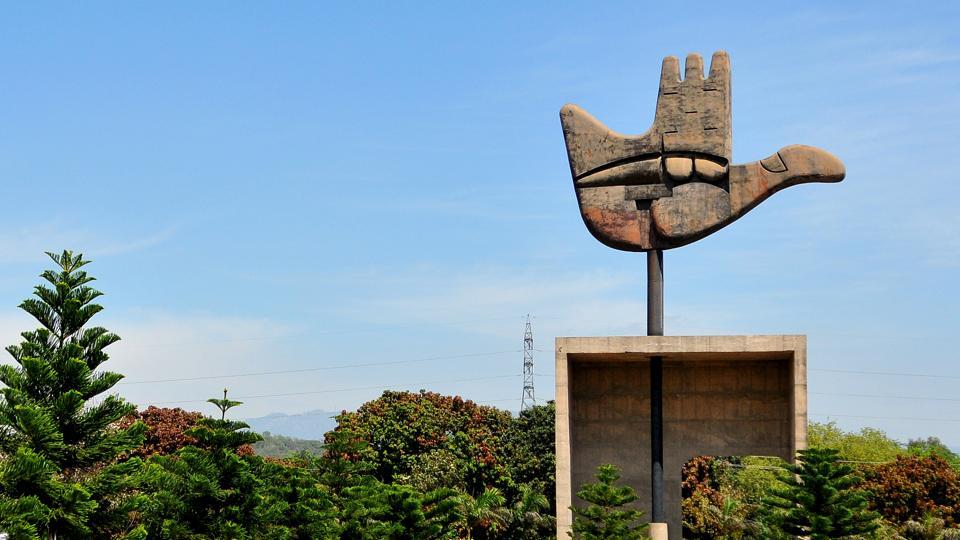
The decision will affect the faculty at Punjab Engineering College and Chandigarh College of Architecture in Sector 12; Chandigarh College of Engineering and Technology, Sector 26; Government Polytechnic for Women, Sector 10; and Government College of Art, Sector 10.
It was on March 1 when the high court had held that retirement age for faculty of institutes governed under norms of the All India Council for Technical Education (AICTE) will be 65 years, and not 58 as fixed by the Chandigarh administration, with an extension period of five years as in central government institutes. The court had also directed that the petitioners who were forcibly superannuated be taken back with consequential benefits.
The UT administration had approached the apex court against this order on August 23.
A lawyer associated with the case said that a statement was made before the Supreme Court on instructions from the UT administration that the petition be withdrawn. The lawyer said that the UT’s instructions were in pursuant to a communication from the Centre to withdraw the case. The SC’s website showed the case status as “dismissed as withdrawn”.
“This decision will benefit approximately 300 teachers working in higher and technical institutions in Chandigarh. It will go a long way in solving teachers’ problems,” said Dr Manoj Kumar, general secretary, Chandigarh Government College Teachers’ Association.
Litigation so far
In 2020, a group of faculty members of Government College of Art and Government College of Architecture had moved the Central Administrative Tribunal, challenging the UT administration’s rules pertaining to their retirement. After they lost, they approached the high court.
The teachers have been arguing that their institutes are governed under the AICTE Act, 1987, and rules with regard to regulations on pay scales, service conditions, etc, should apply as followed by all AICTE-governed institutes. However, the Chandigarh administration was of the view that services of these faculty members are covered by rules framed under a 1992 notification, according to which Punjab government service rules have been adopted in the UT, and the retirement age should remain 58 years.
The high court was of the view that in the case of Union Territories, the rule-making power belongs to the President. This power under Article 309 and the rules framed will operate and will have a force of law, unless and until the Parliament chooses to legislate on the subject. “Once the Parliament legislates, such Act and the rules/regulations framed there under, would take over the field, resulting in the rules framed by the President under proviso to Article 309 seizing to operate forthwith,” the high court had said referring to the AICTE Act.
The high court was also of the view that under the AICTE Regulations, 2010, the age for superannuation was 65 years, with a provision for re-employment up to the age of 70 years. To the argument that funds for the colleges are provided by the UT, the high court had said that these are central government funds and the UT is merely utilising them.
Meanwhile, retirement age of teachers at Panjab University (PU) is 60 years. The PU faculty has lost first round of litigation on increasing the retirement age to 65, and an appeal against the same is pending before a division bench of the high court. The argument in this case is that PU is not a centrally funded institute as Punjab gives an annual grant to the varsity.