
 E-Paper



For me, finding peace of mind is most important, says Dalai Lama
During his address to students of Tibet House, New Delhi, at Mundgod in Karnataka, the Dalai Lama said, “When I visited Beijing and met Mao Zedong, he was quite affectionate towards me. Since I consider peace of mind to be important, I tried to reveal that to him, and he seemed to appreciate it.”

 Prefer HTon Google


Tibetan spiritual leader, the 14th Dalai Lama, has recalled that during his visit to Beijing, Mao Zedong, the former chairman of the Chinese Communist Party, once told him that religion is poison.
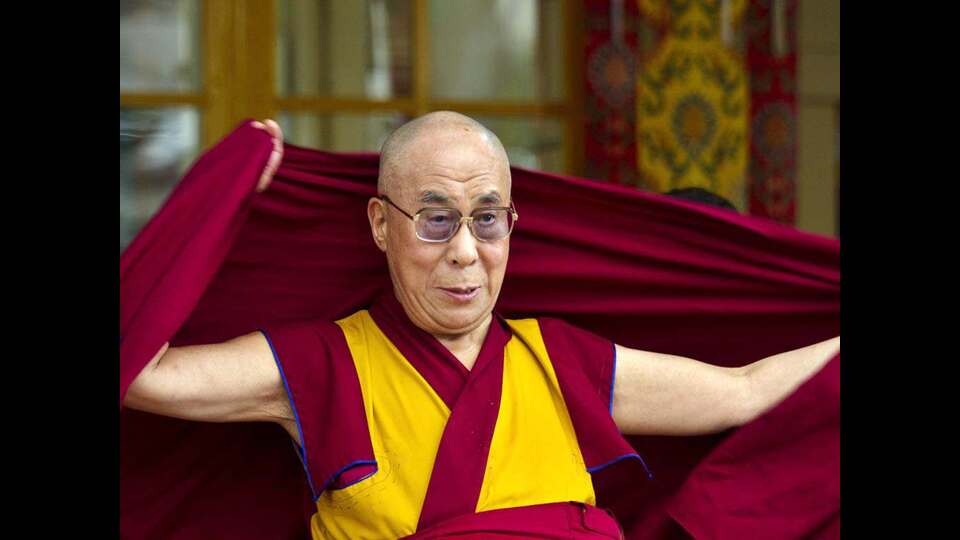
During his address to students of Tibet House, New Delhi, at Mundgod in Karnataka, the Dalai Lama said, “When I visited Beijing and met Mao Zedong, he was quite affectionate towards me. Since I consider peace of mind to be important, I tried to reveal that to him, and he seemed to appreciate it.”
“However, during our final meeting, Mao Zedong told me that religion is poison. I kept quiet, but in my own mind I thought, “In fact, the communism they extol is poison,” he said.
The Tibetan spiritual leader, who is currently in Karnataka, said that the way our Buddhist texts teach us to take a rational approach in our search for reality is very precious. “Personally, I have made very good connections with modern scientists because I employ analysis in my investigations. This is something scientists appreciate,” he said.
“Since I came into exile in India, I have visited many different places in this country. Everywhere I go, people take an interest in what I have to say about Buddhism. As far as I’m concerned, the most important point is to find peace of mind. On my part, as soon as I wake up in the morning, I reflect on how I can be of benefit to all sentient beings, and that brings me peace of mind — a sense of serenity within,” he said.
The 14th Dalai Lama has been living in exile for over 66 years now. The Tibetan spiritual leader became the 14th reincarnation of the Dalai Lama in 1940. In 1959, the Dalai Lama, then 23-year-old Tenzin Gyatso, fled to India with thousands of Tibetans following a failed uprising against Mao Zedong’s Communist rule, which gained control of Tibet in 1950. He later arrived in Dharamshala in 1960.
The Tibetan government-in-exile had consistently accused China of interfering in the reincarnation of the Dalai Lama in recent years. In July last year, the exiled Tibetan spiritual leader announced that the 600-year-old institution of the Dalai Lama will continue and reiterated that Gaden Phodrang Trust has sole authority to recognise the future reincarnation and no one else has any such authority to interfere in this matter.


