E-Paper


Fresh spell of rain adds to woes of Haryana paddy growers
The Chandigarh Meteorological Centre issued an orange alert for 15 districts, warning of thunderstorms till October 30

 Prefer HTon Google


Another spell of light to moderate rain in several parts of Haryana on Thursday disrupted paddy harvesting and procurement operations, adding to farmers’ woes at a crucial stage of the harvesting season.
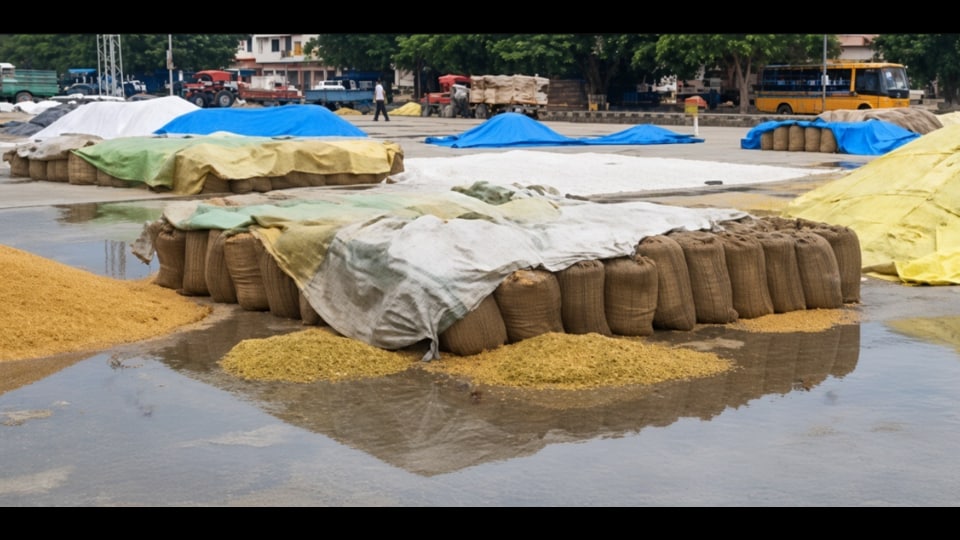
The India Meteorological Department (IMD) warned of more unsettled weather over the next two days. According to the reports, rain was reported from parts of Sonepat, Rohtak, Panipat, Faridabad, Narnaul, Yamunanagar, Panchkula, Ambala, Jind, Kurukshetra and Karnal, while several other areas remained under a thick cloud cover. The Chandigarh Meteorological Centre issued an orange alert for 15 districts, warning of thunderstorms till October 30, possible hailstorms and gusty winds that could reach 50–60 kmph in some areas.
According to IMD, Panipat recorded 22 mm rain, while Karnal’s Uchani station witnessed 14 mm rain till 5:30 pm of the day. Moreover, the weather office forecasted fairly widespread rainfall over Haryana on October 29 and 30, followed by isolated rainfall on October 31.
The fresh spell has compounded farmers’ difficulties at a crucial stage of the procurement season, with waterlogging, inadequate covered storage and slow lifting of purchased grain adding to their concerns.
According to the state’s e-Kharid portal, 42.2 lakh metric tonnes (MT) of paddy arrived in mandis, of which 37.5 lakh MT had been procured. However, only 29.2 lakh MT had been lifted, leaving a substantial quantity of around 13 lakh MT in the mandis.
Farmers fear that rain-soaked produce will have to be dried before procurement agencies can accept it. Higher moisture content and loss of lustre could lead to rejection at procurement centres or force growers to sell at lower prices to private buyers.
BKU farmer leader Rattan Mann said that the rain, fourth time this month will only add to the problems of the farmers as it may deplete the condition of the procured crop. He said that the rain will also delay the sowing of next crops including vegetables, wheat and pulses.
“The slow lifting and repeated rains have increased problems for the arhtiyas as well as it is their responsibility to protect every grain until it is lifted from the mandi”, said a commission agent Subhas Chand of Rohtak grain market. A farmer Mahesh Kumar who has brought his paddy to Rohtak grain market said that he could not sell his produce as due to rains as the moisture content was beyond the prescribed limits of 17%.
Haryana has recorded 25.3 mm of rainfall between October 1 and 29, against the normal 9.4 mm for the period a surplus of about 170%. Sonepat recorded the highest cumulative rainfall at 64 mm followed by Panipat 57.9mm, Kurukshetra 57.1 mm, Karnal, 53.9 mm, Kaithal 48.7mm, Ambala 47.2mm, Palwal 42.9mm, Faridabad 28.6m, Gurgaon 26.8mm, Fatehabad 19.5mm Jind 18.7mm during this period, according to IMD data.
(With inputs from HTC Karnal)