
 E-Paper



Guest Column | Chandigarh needs to push the pedal
Chandigarh has a 210-km network of cycle tracks, but, as per a recent report by the Rail India Technical and Economic Service (RITES), these tracks are in a state of neglect. Meanwhile, the periphery of Chandigarh is mostly bereft of cycling infrastructure.


If the country were to develop a cycling culture, it would have immense economic, environmental and personal health benefits, while reducing congestion on roads. As per The Energy and Resource Institute (TERI) if 50% of short-distance motorised movement is substituted by cycling, India will save 1.8 trillion INR annually. This can be done by investing in high-quality infrastructure for cycling and other policy initiatives.
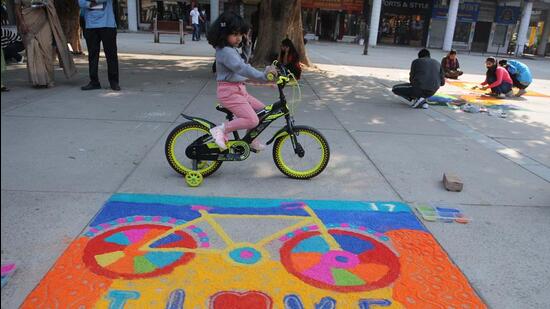
Chandigarh has a 210-km network of cycle tracks, but, as per a recent report by the Rail India Technical and Economic Service (RITES), these tracks are in a state of neglect. Meanwhile, the periphery of Chandigarh is mostly bereft of cycling infrastructure.
Separate cycle tracks were not originally planned in the City Beautiful, but now footpaths have been converted into cycle tracks at multiple places. As a result, morning walkers and dog walkers throng these tracks and often take offence when the rightful cyclists come along, ringing their bicycle bell to warn pedestrians of their approach. At times, untrained dogs try to snap at cyclists, dragging their owners along as they struggle to hold the canines back. Besides, pets often poop on the tracks, disincentivising cyclists.
Cycle wheels are delicate, and any unwelcome bump or pit is enough to disturb the equilibrium, or crash the two-wheeler. Nothing is more unwelcome to a cyclist than riding on unswept cycle tracks, strewn with broken beer bottles, thorny garden waste, and other junk, which is bound to cause a puncture. At many places, cycle tracks have been laid with pre-fabricated tiles which give it a cobbled finish. This is a sure recipe for back pain for anyone who has spinal or cranial trouble, especially the elderly. These vertebra-rattling rides are usually avoided by the elderly cyclists, who prefer to take the road instead. Also, during rainy season, potholes and low-lying areas on cycle tracks collect water and become slippery. When cyclists see slippery tracks, they avoid them out of a sense for self-preservation as they may suffer fractured arms, hands or spinal injury, commonly associated with bad cycle falls.
It is important to create a culture of respect and courtesy for cyclists. Cyclists are serving both the nation and society by saving fuel, the environment, road space, and parking space. They deserve respect and courtesy, from the other commuters as well as police personnel. Some policemen do stop traffic to allow cyclists to pass. Such moves are necessary to encourage cyclists and pedestrians.
While it is praiseworthy that the administration has been organising cycle rallies, these are mostly targeted at encouraging leisure cyclists. Focus should be on distributing useful gear and accessories such as reflector jackets, rear view mirrors, cycle bells, or head torches to daily commuters. If cycling is to be promoted as a culture. after taking the hot and humid climate into account, all cycling tracks must be redesigned as tree-lined avenues. The trees should be shady and safe, unlike the hazardous African Sausage tree (Balam Kheera) whose fruit often damages cars’ windshields and may also injure cyclists. Drinking water stations should be set up after every 5km. May the cyclists’ tribe grow!
divyagurnay@yahoo.com
(The contributor is an advocate in the Punjab and Haryana high court)


