
 E-Paper



Kharif crop in Punjab: 200k-hectare fields still to be cleared
Agriculture officials said that it may take another eight or 10 days before the kharif harvest ends across the state, though cultivators have cleared the crop in Majha and Doaba districts.

 Prefer HTon Google


Around 200,000 hectares under rice cultivation in Punjab’s Malwa region is still to be cleared of residue, said state government officials, an indication that more farm fires are likely, even though most fields have been cleared in other parts of the agrarian state.
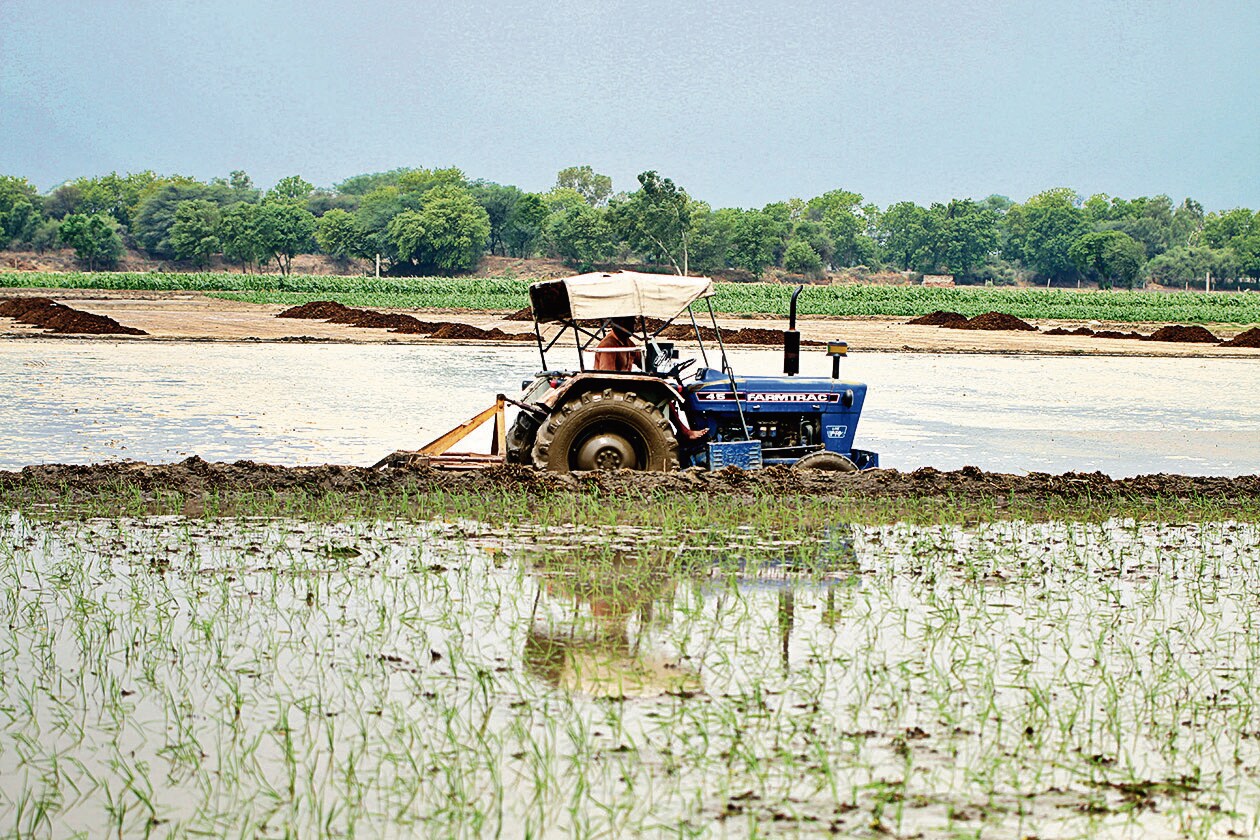
Agriculture officials said that it may take another eight or 10 days before the kharif harvest ends across the state, though cultivators have cleared the crop in Majha and Doaba districts.
Farm fires in Punjab are, to a great degree, responsible for toxic pollution levels in Delhi between October and November. The air clears up to some extent when all kharif crop fields in Punjab are cleared and fires subside. The Malwa region drives the blazes in the northern state.
This kharif season, paddy was sown on 3.8 million hectares across the state, the officials added. Of this, 2.1 million hectares were in the Malwa region, 600,000 were in the Majha belt, and the rest in the Doaba region.
State agriculture director Gurvinder Singh said that till Monday, rice was harvested in 90% of the sown area, and the rest is likely to be cleared in another week.
“Paddy harvesting is almost over in Majha and Doaba region. It is only the Malwa belt, which has about 68% of the total paddy area, where harvesting is in the final stage and farmers will complete the operations to speed up the rabi crops,” he said.
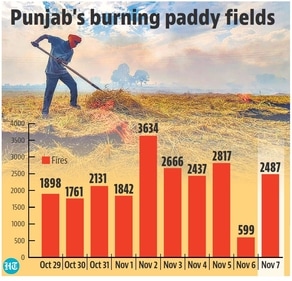
So far this season, the highest single-day count of fires in Punjab was 3,634 fires on November 2. The figure then dropped below 3,000 the next day, to a total of 2,666 fires and has remained below that threshold since then. On Monday, Punjab recorded 2,487 farm fires, while the count was just 599 on Sunday, data showed.
This year, the impact of farm fires on Delhi’s PM 2.5 has also not been as high as it was in the last few years. As per the System of Air Quality and Weather Forecasting And Research (Safar), the contribution of farm fires to Delhi’s PM 2.5, peaked at 34% on November 3 – just a day after this season’s peak fire count was recorded.
Last year however, the single-day fire count in Punjab peaked at 5,327 fires on November 5. This translated into a peak stubble burning contribution of 48% just two days later. In 2020, the peak farm fire count was 5,235 fires – recorded on November 6, while the peak in 2019 was 6,001 fires in a single day, on November 4. In 2020, Safar said the highest single day contribution of stubble burning to Delhi’s PM 2.5 was 42%, while it was 44% in 2019.


