
 E-Paper



NIRF grading: Punjab colleges fail to make it to top 100 for 5th consecutive year
No Punjab college made it to the NIRF grading list in contrast to state’s schools topping national performance index


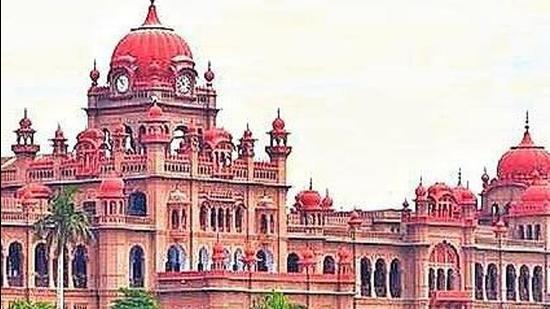
Punjab’s higher educational institutes have performed poorly in the recent National Institutional Ranking Framework (NIRF) grading yet again as none of the colleges could make it to the top 100 list in the category for the fifth consecutive year.
This is in contrast to the state’s schools topping the national performance grading index of school education for 2019-20 released by the Union government in June this year.
The NIRF rankings for higher educational institutes across the country given by the Union ministry of education are based on teaching, learning, and resources; research and professional practice, graduation outcome; outreach and inclusivity; and peer perception.
As per the NIRF data, a total 1,802 institutes participated from different states for the 2021 grading, the highest number since 2017 when colleges were clubbed for national ranking.
Punjab has 303 colleges, including 67 run by government, 135 aided privately managed and another 100 run under self-finance scheme category. Only 22 colleges came forward for NIRF assessment’s latest annual edition. When college rankings were rolled out in 2017, none of the colleges participated in it.
But the state’s participation improved in the next four with 10 colleges applying in 2018; 12 in 2019 and 17 in 2020.
Teachers and academicians admit that most colleges are aware they do not fulfill the basic criteria of assessment and hence they stay away from participation.
Prof RK Kohli, former vice-chancellor of Central University of Punjab, says it is a cause of concern that education was not a priority for the political dispensations. It is discouraging that a faculty member in a government institute in Punjab gets paid less than a peon for a minimum period of three years, he added.
“The government ranking exposes the standards of education in Punjab. Educational institutes are evaluated from the talent they produce and no government has formulated a policy to check brain drain,” Prof Kohli said.
Punjab and Chandigarh College Teachers’ Union (PCCTU) president Vinay Sofat blames lack of higher education policy in Punjab. “Governments are quick to announce new colleges but desist from appointing faculty members on regular basis. When a teacher is not paid well in government colleges and institutes run by social or charitable bodies are not supported financially how anyone could be motivated to participate in activities like NIRF,” said Sofat.
Swaraj Raj, former head of English department at Government Mohindra College, Patiala, said the number of faculty members has reduced even as more colleges have been opened in the last three decades.
“Government schools have seen an improvement in terms of infrastructure and number of teachers but the colleges continue to get step-motherly treatment. When I joined service in 1982, there were about 2,400 college teachers and the number was about 1,000 at the time of my retirement in 2015. One simply cannot expect qualitative education in the given circumstances,” he added.
NIRF grading year College participants from India Punjab’s participation
2017 535 NIL
2018 1,087 10
2019 1,304 12
2020 1,659 17
2021 1,802 22


