
 E-Paper



Post PUCSC polls: Campus covered with stickers, posters, varsity yet to take action
A visit to the campus on Tuesday found a large number of printed campaign slips and pamphlets scattered across the parking area of the English Auditorium near Arts Block 1

 Prefer HTon Google


A day after the Panjab University Campus Students Council (PUCSC) elections, the university campus remained littered with election pamphlets and posters, despite a warning issued by the administration against such material. Posters of candidates were also found inside girls’ hostel, including in a washroom and a lift.
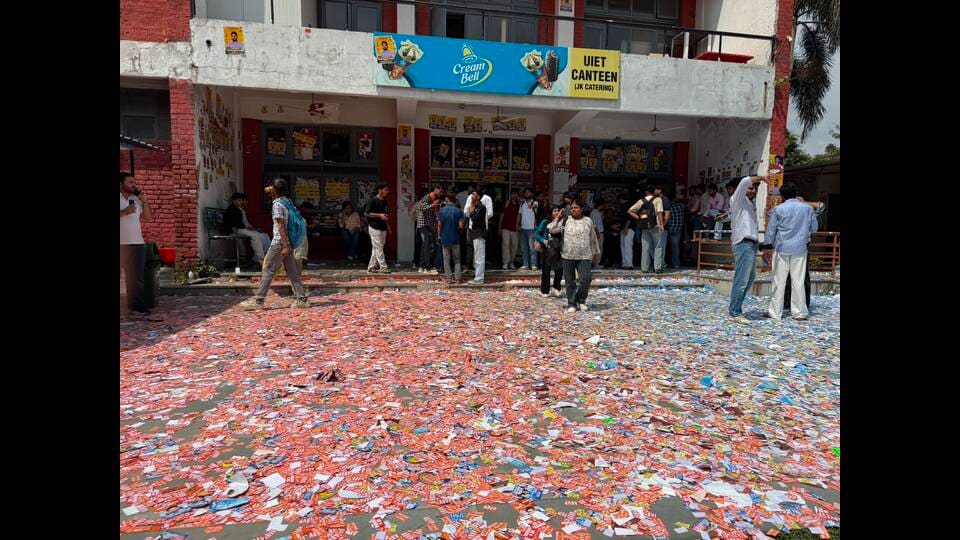
A visit to the campus on Tuesday found a large number of printed campaign slips and pamphlets scattered across the parking area of the English Auditorium near Arts Block 1. Posters bearing candidates’ names and photographs were also seen inside the girls’ hostel. These included posters of newly elected president Ankit Bidhan as well as campaign material associated with opposing student organisations.
The material remained visible despite the dean student welfare having issued an advisory on August 27, warning all student organisations against littering the campus or defacing university property. The advisory said putting up printed material on walls, trees, floors, poles and buildings will be counted as a violation of the JM Lyngdoh Committee guidelines and could also invite action under the Defacement Act. It specified that campaign material was permitted only on designated notice boards provided for the election.
The university had already constituted a committee to examine alleged violations of the election guidelines. The committee is currently gathering its findings, with a decision on further action yet to be taken.
“We are gathering the report. We will get to know what the students have done,” dean students welfare YK Rawal said.
“When students come for campaigning, we tell them not to put up posters and ask them to leave the material at the reception and focus on talking about their manifesto. We advise the students not to take the posters upstairs, but they do not follow the instructions,” said the girls’ hostel warden, Indu Sharma.
“The same thing happened last year as well. We specifically tell them not to put up posters inside washrooms or at any inappropriate place. Action against such defacement is taken by the Defacement Committee.We get the posters removed, once the elections are over,” she added.
The violations also raise questions over compliance with the Lyngdoh Guidelines, which prescribe a maximum election expenditure of ₹5,000 per candidate.
Ankit Bidhan, who won the president’s post on Monday, denied that his campaign had undertaken anything beyond what was permitted under the guidelines.
“We have not done anything extra. Students who were supporting me and wanted me to win had put up posters from their end. The opposition parties had more posters,” he said.
Bidhan secured 3,149 votes, defeating Aadil Brar of the Association of Students for Alternative Politics (ASAP), who polled 2,637 votes, by a margin of 512 votes.
The university’s committee will now determine, based on its findings, whether individual candidates or student organisations can be held responsible for the campaign material and whether any action is warranted.
The situation also raises questions about enforcement of the poll code. PU had already warned that defacement of university property could invite action, yet the material remained scattered across the campus after voting ended.
The contrast is notable with the 2024 Delhi University Students’ Union elections,when the Delhi high court allowed polling but directed that counting would not proceed until posters, banners and graffiti were removed and public property was restored. Although, no such court intervention has taken place in the PU elections, with the university instead examining the violations through its own committee.


