
 E-Paper



Punjab flags 663 villages as hotspots of stubble burning
Eight districts recorded 6,815 farm fires in 2024, roughly two-thirds of the 10,909 cases reported last year from September 15 to November 30

 Prefer HTon Google


The Punjab governmenthas flagged 663 villages across eight districts of Punjab as hotspots of stubble burning based on data over the past threeyears, the Punjab Pollution Control Board(PPCB) said on Friday, marking fresh efforts to tamp down on a practice that contributes to the toxic haze that envelopes Delhi every winter.
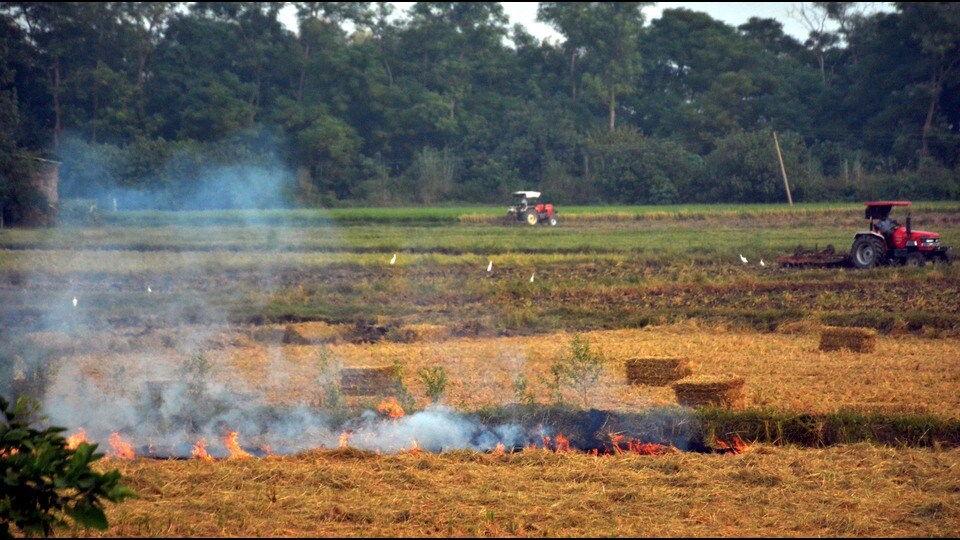
The eight districts –– Sangrur, Ferozepur, Bathinda, Moga, Barnala, Mansa, Tarn Taran and Faridkot –– recorded 6,815 farm fires in 2024, roughly two-thirds of the 10,909 cases reported last year from September 15 to November 30. The 663 villages were those where more than 75% of the area of the habitation saw stubble burning over the past three years, according to an action plan submitted by the state government to the Commission for Air Quality Management (CAQM).
PPCB superintendent engineer Rajeev Kumar, who is the nodal officer (stubble), said the district administrations identified the hotspot villages based on the number of fire incidents in the village. “The detailed meeting was held with the Punjab chief secretary over hotspot districts and villages. The directions have been issued to deputy commissioner and senior superintendent of police to monitor the situation at ground level and to carry out the micro management of stubble at village level,” he said.
Besides it, the officials are ensuring that the machinery required for in-situ and ex-situ management of paddy straw in these areas, he said. “The identified districts have already been instructed to prepare separate hotspot action plans,” he said.
To tackle the problem, the state has constituted a team of 8,000 people, comprising nearly 5,000 nodal officers, 1,500 cluster coordinators and 1,200 field officers who have been deputed in 11,624 villages. The team — known as the parali protection force — have to share daily action-taken reports through a mobile application called Action Taken Report (ATR) developed by PPCB and the Punjab Remote Sensing Centre (PRSC) after physical verification of stubble burning incidents.
The PRSC will send them the latitude and longitude of the location so that the fire can be doused. “We have also decided to constitute ‘Parali Protection Force’ at district level for better coordination and execution of government directives,” Kumar said.
The season of farm fires has already begun in Punjab with the first blaze reported from Amritsaron September 16. This is earlier than in previous years because the worst floods in 40years destroyed 491,000 hectares of standing crop, pushing farmers to burn the damaged stalk earlier to clear fields for rabi sowing. Till September 18, 46 cases of stubble burning have been reported from Punjab.
The PPCB has already submitted a detailed action plan with the National Green Tribunal and the commission of air quality management to curb farm fire incidents in the coming three months.
Stubble burning usually peaks in October, when farmers are clearing their field of paddy stubble after harvests to prepare them for the next crop, and lasts for around three weeks to a month, sending Delhi’s already poor air quality into hazardous territory.
To be sure, while the number of stubble burning incidents in Punjab fell from 49,922 cases in 2022 to 10,909 in 2024, the area where the stubble was burnt grew from 1.5 million acres in 2022 to 1.9 million acres in 2023. Data for 2024 was not available.


