
 E-Paper



As water recedes, locals return to wrecked homes, filthy streets
As the streets caved-in at multiple points, Ludhiana residents demanded for the roads to be rebuilt above the level of Buddha Nullah

 Prefer HTon Google


As the water started to recede in the city, residents returned to filthy streets and wrecked homes, with stinking furniture and damaged floors.
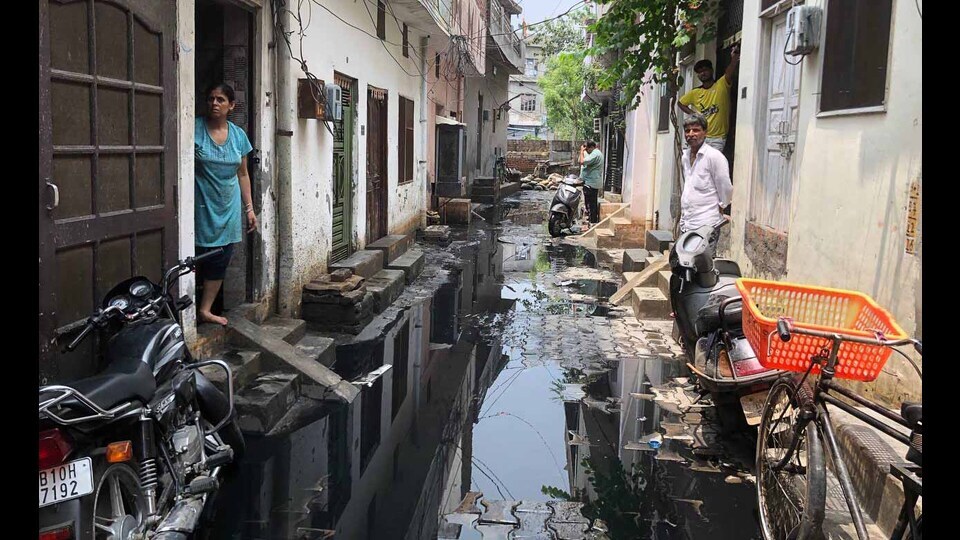
The areas, including Dhokka Mohalla, Dharampura and Maharaja Ranjit Singh Park, have been drowned in sewage for a week. After the situation moved towards normalcy, residents returned to their homes on Saturday to take stock of their homes, only to find them loaded with filth and garbage. They started cleaning their localities themselves, rueing the lack of help from the authorities.
As the streets caved-in at multiple points, residents demanded for the roads to be rebuilt above the level of Buddha Nullah. Manholes and sewages in the areas have been flowing in reverse as Buddha Nullah is at a greater height as compared to them.
Residents said that the havoc caused by the flooding, with the reverse flow of sewage and rainwater, has caused damage to the flooring of their homes, sinking it by several inches.
They added that the furniture, motor vehicles and other valuables were ravaged and demanded that authorities conduct a proper survey and compensate for their losses.
Dharampura resident Ishmeet Singh said, “I, along with my family, had shifted to a relatives’ home as the flooding had left my home unliveable.” He said that the waterlogging in the area surrounding his home was as high as five feet.
Father of an 11-year-old daughter, Ishmeet added that it would take his family months to recover from what they faced in the last week.
Rajinder, who also lives in Dharampura, said that he is out of work and has no means to earn for the survival of his family.
“My autorickshaw, the only source of livelihood for my family, was parked on the street when the water level rose. I could not manage to take it out of the water and its engine has been damaged,” said Rajinder.
Residents urged that civic body to ensure supply of potable water and regular fogging to control the spread of vector-borne diseases.
Monitoring the situation regularly, says MC chief
Municipal corporation commissioner Shena Aggarwal said that water accumulation was seen in a few low-lying areas alongside the nullah after its level rose due to the excessive flow of water from upstream areas. She added that soon after the nullah’s water level receded, water was pumped out of the low-lying areas, including Dhokka Mohalla, Dharampura and a few areas on Tajpur road, among others, using pumps.
“Senior officials are in the field and are monitoring the situation continuously. Chlorine tablets are being distributed in the few affected areas for providing clean drinking water to the residents,” she said.
She added that the staff concerned have been directed to take up fogging in these areas regularly.
‘Still afraid to enter our homes’
As the residents of colonies on Tajpur road, including Sunny Homes, CMC colony and Harvdev Nagar, returned to their homes after almost a week, they found a shadow of what they had left behind. They walked to decaying structures of their homes that were ravaged after being submerged by the overflowing Buddha Nullah.
These colonies, which fall outside municipal corporation limits, wear a deserted look as majority of the residents are still afraid to get back, fearing a repeat of what happened last week. The water had risen to such levels that residents had to use boats to rescue their families.
Residents said that electricity and water supply of the area was snapped on July 9 after the nullah started overflowing. They claim that they waited for administration’s help, camped on their roofs, only to be left to fend for themselves. They finally moved out using boats.
The colonies on the outskirts of the city are home to almost 200 homes, most of which belong to the working-class population. Residents said that although the area was among those worst affected, their concerns were hardly addressed.
Sardhari Lal, who built his home using his life-savings around three years ago, said, “When I opened the gate of my home, I saw the furniture covered in mud. I even found two dead snakes inside.” He added that foul-smelling water was flowing through the taps and the electricity supply was restored on Friday.”
Mukesh, who has rented a home in CMC colony, said, “I camped on the roof and spent seven days, surviving on the bare minimum, as I had nowhere to go.”


