
 E-Paper



Smog in Ambala sky, as AQI remains ‘very poor’ three days after Diwali
Four days after Diwali , the Air Quality Index (AQI) levels remained in the ‘Very Poor’ category in Ambala till Monday, except for Saturday when it remained ‘Poor’, data by the Central Pollution Control Board (CPCB) show.

 Prefer HTon Google


Four days after Diwali , the Air Quality Index (AQI) levels remained in the ‘very poor’ category in Ambala till Monday, except for Saturday when it remained ‘poor’, data by the Central Pollution Control Board (CPCB) show.
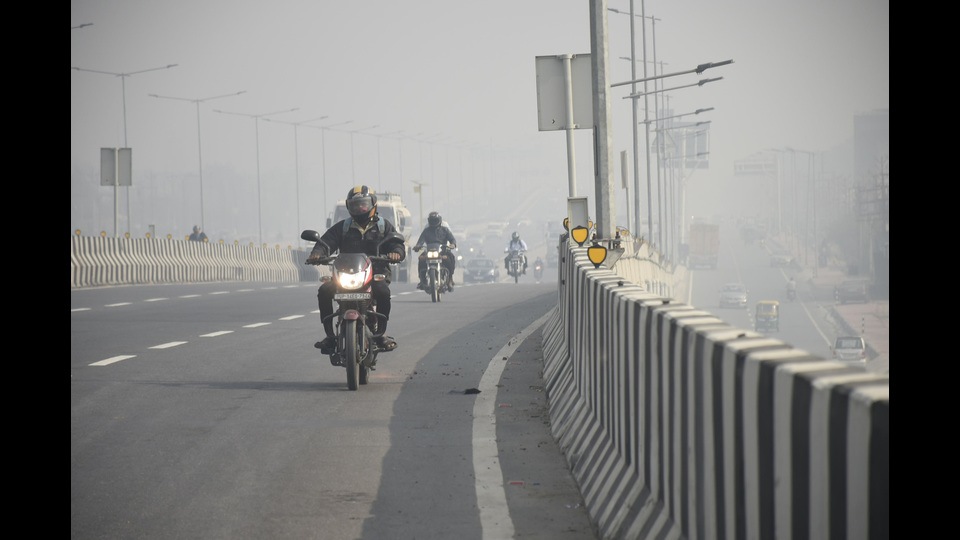
Due to such unhealthy levels, the sky remained covered with thick smog during nights and early morning, thus adding to the woes of sensitive groups.
On Monday, the AQI levels touched 366 (average of the past 24 hours), the highest in the year after January 30 (398-Very Poor) as measured by the only device of the district at Patti Mehar near Polytechnic Chowk in the city.
However, in the neighbouring cities, the levels remained ‘Moderate’ in Panchkula (127) and Chandigarh (122), ‘Poor’ in Yamunanagar (286) and ‘Very Poor’ in Patiala (326) and Kurukshetra (363).
The AQI defines overall air quality like a thermometer that runs from 0 to 500 degrees with six remarks and color codes – Good/Dark Green (0-50), Satisfactory/Green (51-100), Moderate/Yellow (101-200), Poor/Orange (201-300), Very Poor/Red (301-400) and Severe (Above 401).
As per CPCB, it is calculated only if data are available for a minimum of three pollutants out of which one should necessarily be either PM2.5 or PM10. In Ambala, the prominent pollutant remains ultrafine particulate matter (PM 2.5) that is said to be the most harmful to human beings due to its far-reaching health risks.
Experts believe that even after a decline of almost 80% in stubble burning cases as compared to last year in October and almost half of the wheat sowing is complete, the air quality has remained unhealthy primarily due to a decrease in temperature and atmospheric pressure, thus holding the dust particles in the air.
Further, regular vehicular pollution, dust emission from road or construction sites and Diwali crackers added to the trouble, they said.
At a review meeting recently, deputy commissioner Vikram, instructed the municipal corporation (MC) authorities to ensure sprinkling of water at construction sites and roadside, it has been learnt.
MC Commissioner Dhirendra Khadgata said that the builders have been asked to ensure that there is no dust emission from their construction sites and dust sweeping activities on roads through MC machines and water sprinkling by fire engines are being carried out.
However, Nitin Mehta, Regional Officer of Haryana State Pollution Control Board, said that no such ATR (Action Taken Report) has been received on water sprinkling activities yet.


