
 E-Paper



Two years of Omar Abdullah govt in J&K: Big promises, limited power, growing discontent
As the National Conference government hits the midway mark, chief minister Omar Abdullah cites dual power centres for slow progress, while opposition leaders and daily-wagers demand tangible results.

 Prefer HTon Google


As the National Conference (NC) government completes two years in office in Jammu and Kashmir on Friday, chief minister Omar Abdullah finds himself struggling to balance public expectations against the administrative constraints of governing a Union Territory.
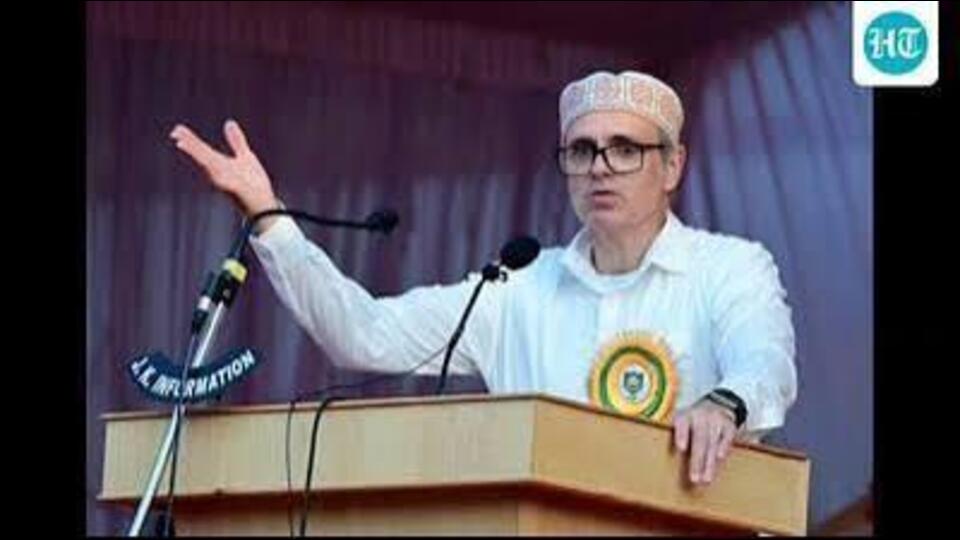
When Abdullah took oath on October 16, 2024, following a landslide victory—where the NC secured 42 seats and its coalition partner, the Congress, won six—he expressed optimism that statehood would be restored within a year. Despite maintaining a reconciliatory stance toward New Delhi and repeatedly raising the issue with Prime Minister Narendra Modi and home minister Amit Shah, statehood remains unrealised. Midway through his term, Abdullah points to J&K’s “two power centres” as the primary obstacle to fulfilling his party’s poll guarantees. Under the J&K Reorganisation Act and the revised Transaction of Business Rules, key jurisdictions—including public order, police, bureaucracy transfers, and legal appointments like the attorney general—remain under the direct control of the lieutenant governor (LG), creating administrative friction with the elected government.
Key achievements
NC spokesman Imran Nabi Dar said the Omar Abdullah-led government has delivered results across various sectors over the past two years despite limited powers, the UT framework, and bureaucratic hurdles.
Highlighting political commitments, Dar said that the government fulfilled a key electoral promise by introducing a resolution on the restoration of Jammu and Kashmir’s special status in the very first session of the assembly. The resolution seeking the restoration of statehood was passed by majority in the assembly, with reference to both the 2000 autonomy resolution and the 2024 resolution on special status.
On the administrative and legislative front, the assembly passed the Jammu and Kashmir Ease of Doing Business Act and the Private Universities Bill. The government also restored the academic calendar from the March session back to the traditional October–November schedule.
To address disparities in the reservation policy, Dar said that the government completed its review exercise and forwarded the file for approval; however, he pointed out that “the matter remains pending in the lieutenant governor’s office.”
On development and infrastructure, the administration is targeting 24x7 power supply by 2027–28 by accelerating major hydro projects (Pakal Dul, Kiru, Ratle, and Kwar) to reach a peak availability of 3,362 MW, backed by an initial ₹1,718 crore capital expenditure for AI-driven grid management. Dar said efforts are underway to improve power supply and strengthen basic infrastructure, including roads, drinking water, drainage, healthcare, and other essential public services.
Education reforms include introducing pre-primary classes across 15,550 schools, establishing 1,735 kindergartens, upgrading 4,200 smart classrooms, and granting tuition fee waivers for low-income (Antyodaya Anna Yojana) students up to degree levels.
Under Mission YUVA, the administration aims to facilitate 1.37 lakh enterprises and 4.25 lakh jobs over five years. Dar pointed out that recruitment to vacant posts across various departments is actively underway to provide employment opportunities to youth, supported by an increase in the upper age limit for appearing in competitive examinations. Additionally, the government approved an option for eligible New Pension Scheme (NPS) employees to switch to the Old Pension Scheme (OPS).
Healthcare infrastructure has been bolstered with new diagnostic tools and 80 telemedicine centres. Social welfare initiatives include increasing marriage assistance for AAY women from ₹50,000 to ₹75,000, continuing the Ladli Beti scheme, and extending ₹6,595 crore in crop insurance coverage across key agricultural sectors.
Addressing relief for citizens, Dar highlighted that free bus services—and smart bus services introduced across all districts—were launched for women and extended to students and persons with disabilities. The government doubled the quantity of free ration for eligible families, granted a 100% exemption in stamp duty on property transfers through gift deeds (Hiba) between blood relatives, and announced 200 units of free electricity to AAY consumers along with six free LPG cylinders.
Pending promises
Despite these announcements, the government faces criticism from political opponents and civil society over key pending commitments, particularly the regularisation of 61,000 daily-wage workers and the scope of its free power promise. While the NC manifesto pledged 200 units of free electricity to all households, the initial rollout announced by the government remains restricted to AAY consumers, alongside long-term generation goals for 2027–28.
Sajad Ahmed Parray, the president of the J&K Casual Daily Wagers Forum, accused the government of backing away from its commitment. “This government initially framed our issue as a humanitarian priority, but now they are dodging it,” Parray said. “They promised phase-wise regularisation last year; now they say there is no timeline.”
Valley-based economist Ajaz Ahmad said while the public understands the government’s limited autonomy, frustration is mounting. “Expectations for economic breakthroughs were low given the administrative setup, but people expected stronger assertion regarding political rights,” he said.
Right to information (RTI) activist and advocate Naveed Bakhtiyar described the two-year mark as a “mixed bag,” adding that governance must be judged by ground outcomes in employment and infrastructure rather than announcements.
Political opponents have been more direct. Peoples Democratic Party (PDP) leader Waheed-ur-Rehman Parra characterised the administration’s tenure as a failure of governance, alleging growing public anger and an institutional vacuum. Similarly, BJP spokesperson Sajid Yusuf said that the chief minister and his cabinet have failed to demonstrate accountability. “The NC made big promises during the election campaign. History will judge this government by its actual delivery, not by its rhetoric,” he said.


