E-Paper



HC stays U’khand govt Char Dham yatra move
The high court directed the state governmentto livestream the daily prayers and ritual ceremonies held at these shrines instead

 Prefer HTon Google


The Uttarakhand high court on Monday stayed the state Cabinet’s decision to allow Char Dham yatra from July 1 for the locals of the three districts of Rudraprayag, Chamoli and Uttarkashi. The Kedarnath shrine is located in Chamoli district, Badrinath shrine in Chamoli district, Yamunotri and Gangotri shrines are in Uttarkashi district.
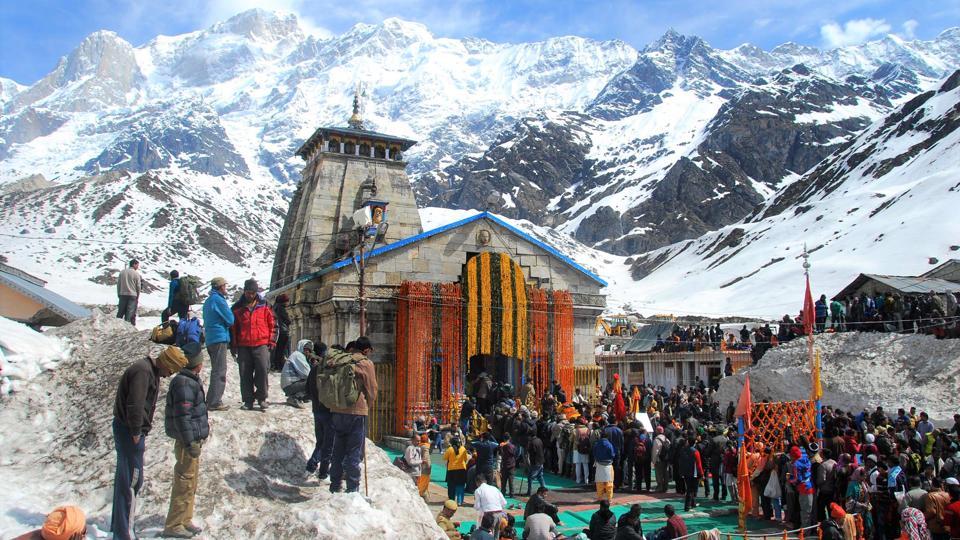
The division bench of chief justice RS Chauhan and justice Alok Verma, while expressing dissatisfaction over the affidavit filed by the state government amid fears of a third wave and the Delta plus variant, said the yatra should not be allowed. The bench said it was not satisfied with the preparedness of the government, especially regarding the healthcare facilities and status of Covid-19 inoculation in these three districts.
The high court directed the state government to livestream the daily prayers and ritual ceremonies held at these shrines instead.
The state Cabinet had allowed the Char Dham yatra for the locals in the three districts after a meeting chaired by chief minister Tirath Singh Rawat on Friday. On June 23, high court had lashed out at the state government for having announced Char Dham yatra from July 1 amid fears of the third wave and delta plus variant. The court had directed the state government to review its decision in the Cabinet meeting and inform it about the same on June 28. The state government had said that it would be issuing guidelines for the pilgrimage for people from three districts.
The high court gave these directions while hearing a bunch of PILs filed by petitioners Sachdanand Dabral, Dushyant Mainali, Anu Pant and Rajendra Arya related to various issues regarding the fight against the Covid-19 epidemic in the state.
Mainali said the high court was dissatisfied with the affidavit submitted by the state government. “The court remarked that it seemed the state government had copied the SOP it had prepared for Mahakumbh as there are references about arrangements in Haridwar and Dehradun in it,” he said
Mainali said regarding the issue of livestreaming, the advocate general of Uttarakhand SN Babulkar, who represents the state government, raised concerns about security,since these shrines are in districts bordering China. “The high court responded by saying that livestreaming is already happening at noted shrines of the country like Mahakal in Indore. The court also pointed out that it is not asking to livestream the location of the shrines but prayers being offered inside the sanctum sanctorum of these shrines,” he said.
On June 23, the high court stressed that “Perhaps the Char Dham Yatra needs to be postponed or cancelled, as already the Amarnath Yatra has been cancelled by the Jammu & Kashmir administration.”
The high court in its June 23 order had also remarked that considering the fact that a large gathering invariably leads to a spike in the Covid-19 pandemic, “This Court is of the firm opinion that a catastrophe like Covid-19 pandemic should not be re-invited by holding and permitting large gathering at religious shrines, and by permitting the Char Dham yatra by the State government. Therefore, this court directs the state government to review its decision to commence the Char Dham Yatra on July 1.”
The high court had also pointed out that “Already holding of Kumbh Mela, and permitting a large congregation of lakhs of people on Ganga Dussehra at Har-ki-Pauri at Haridwar, are clear cut proof of the failure of the civil administration, to administer the precautionary SOPs.”
On June 20, the state government had announced the opening of Char Dham yatra in two phases, the first phase would commence from July 1 for locals from three districts. Earlier on April 29, the state government had postponed Char Dham yatra, which was scheduled to start on May 14.