E-Paper



After 2 incidents in 7 days, Delhi Metro says audit in progress
The scope of the repair work, officials said, would include replastering loose concrete on walls and removing and cleaning drain covers

 Prefer HTon Google


The Delhi Metro Rail Corporation (DMRC) on Friday said it was carrying out a comprehensive inspection of all its physical assets across the Metro network in Delhi and the National Capital Region (NCR), adding that areas that require repair work would be looked into immediately.
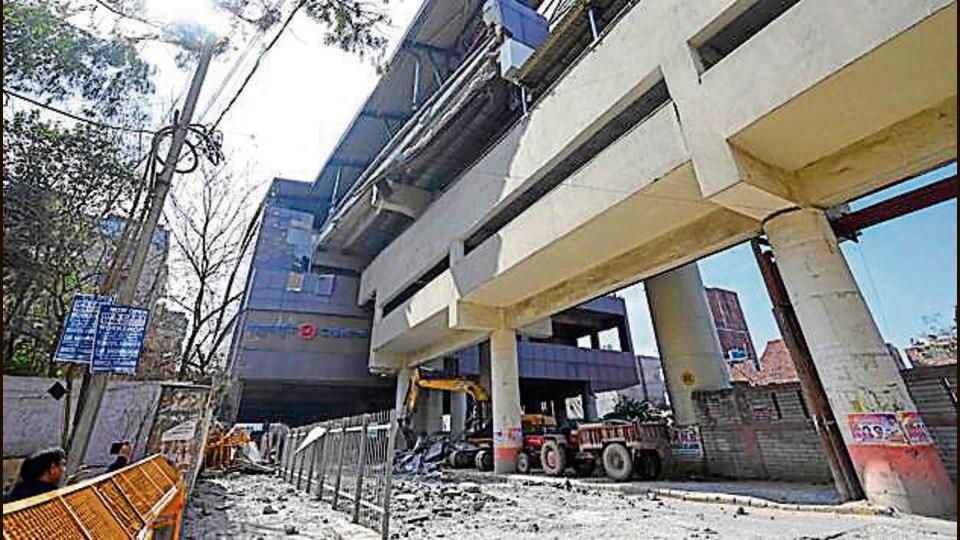
DMRC said it had begun the assessment last week but announced it on Friday, after two back-to-back incidents of infrastructural collapse in the Metro network within a week. While the first incident claimed the life of a 53-year-old man and injured four others, the second injured a 26-year-old woman.
The scope of the repair work, officials said, would include replastering loose concrete on walls and removing and cleaning drain covers and their adjacent parapets. The Metro also said it was securing all pipes and fittings with clamps on a priority basis, with these pipes to eventually be replaced with the more durable uPVC pipes.
On Wednesday evening, a large metallic pipe broke off and fell on the road underneath the Subhash Nagar Metro station on the Blue Line, injuring the woman, who was hospitalised but did not suffer any major injuries, the DMRC said.
The Delhi Police said the 26-year-old woman was injured after the metal pipe from the station fell on a motorcyclist, who swerved the vehicle, ramming into the woman’s scooter. “A medico-legal case was received from the hospital about the woman. There was some damage to the scooter as well. As per the statement, she does not want any legal action now,” said deputy commissioner of police (west) Vichitra Veer.
On February 8, a section of the platform wall of the Gokulpuri Metro station on the Pink Line collapsed and fell on the road below killing Vinod Kumar Pandey, 53 and injuring four others. The incident prompted the Metro to suspend two officials for negligence, while a case was registered by the Delhi Police against the contractor.
Anuj Dayal, principal executive director, corporate communications at DMRC said that following the Gokulpuri incident, detailed inspections had begun across the Metro network, which included the 26 elevated stations on the Pink Line.
“Unfortunately, even as the repair work was in progress, a portion of the drain pipe adjacent to the viaduct at Subhash Nagar station fell. The injured woman was immediately sent to the nearest hospital accompanied by DMRC staff for medical assistance and is presently recovering with no major injuries,” Dayal said.
“As per the preliminary assessment, necessary repair work shall be carried out at the earliest on a priority basis. In addition, wherever loose concrete or plaster is being noticed on any structure of the DMRC network, immediate repair work is being done,” he added.
Dayal said the decision to replace metallic pipes with uPVC pipes was made due to them being easier to maintain, while also being more durable. “Furthermore, as part of these maintenance inspections, DMRC already started thorough checks on the fittings and pipes (specifically the drain pipes) of all the Metro stations and as a precautionary measure, DMRC has started securing these iron pipes with clamps on priority. Any signs of wear and tear on these pipes may not be easily visible to the naked eye because of their location. Subsequently, these pipes will be replaced with more durable and easy-to-maintain uPVC pipes,” he added.