
 E-Paper



After dewatering, Haiderpur wetland faces encroachment
In January, the UP irrigation department drained water from the wetland , leading to tens of thousands of migratory birds deserting the site.

 Prefer HTon Google


letters@hindustantimes.com
MEERUT/Delhi:
Three weeks after a report in Hindustan Times on water being drained from the Haiderpur wetland in Uttar Pradesh, a Ramsar site, prompted the Union environment ministry to write to the state ordering remedial action, it has emerged that one of northern India’s best bird habitats has now been encroached significantly by farmers.
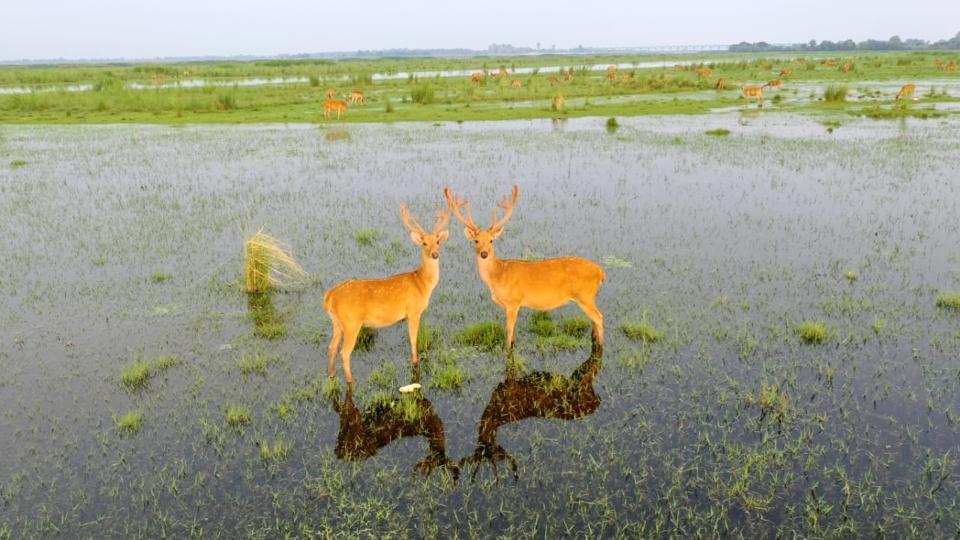
Wheat has been sown on a large area in the swampy part of the wetland along the Hastinapur Wildlife Sanctuary, environmentalists and local birders said. This has also led to removal of typha grass, which provides habitat for the swamp deer, and also the elusive Indian Grassbird, which breeds in the wetland.
In January, the UP irrigation department drained water from the wetland , leading to tens of thousands of migratory birds deserting the site.
Officials admitted then that this was done under pressure from farmers who complained of water logging in their fields due to high ground water level.
Now drone and satellite images have revealed much of the grassland has been cleared and harvested on.
Birder Ashish Loya who keeps a close watch on the wetland said “A large area has been completely destroyed , particularly the habitat of the swamp deer. Last year there were 150 swamp deer. At this time, usually at least 20-30 are seen but the drone footage captured only 3.”
“In January, we found the wetland was completely drained off by the Irrigation department. Thousands of migratory birds including some rare species flew away. After we raised concerns, the union environment ministry directed UP government to restore water. The wetland was restored partially but not many birds have returned. We now fear the entire wetland region including grassland and swamp is threatened by encroachments,” Loya added.
Haiderpur was declared a Ramsar Site in December last year because of its significance in maintaining ecological balance and for being a biodiversity hotspot.
Sub divisional magistrate of Jansath area, Abhishek Singh said he has received report of encroachments and is sending a team to verify the situation on ground.
“The central government has already issued necessary direction to the state to take appropriate action and send a report on the same. A report is awaited,” a senior environment ministry official said on Monday, responding to reports of encroachment.
Shailendra Singh, director of Turtle Survival Alliance who works on turtle species in Haiderpur, said encroachment inside the wetland which is a part of Hastinapur Wildlife Sanctaury which is a protected area, is a very serious matter.
“Haiderpur is among the finest wetlands of north India. Over 200 species of birds have been recorded here. It is a very important bird area, a Ramsar site and also a wildlife sanctuary which harbours swamp deer, otters, dolphins, and fishing cats among other species. It has a unique swamp ecology with a mix of tall and short grass which is why the biodiversity is so rich here,” said Asad R Rahmani, ornithologist and a member of the governing body of Wetlands International South Asia.
The union environment ministry directed the Uttar Pradesh government to stop further draining of the Haiderpur wetland on January 22 after Hindustan Times reported on January 21 that the Uttar Pradesh irrigation department had drained out the wetland.
According to the Ramsar Convention website, Haiderpur is a human made wetland formed in 1984 by the construction of the Madhya Ganga Barrage on a floodplain of Ganga.
Haiderpur Wetland provides habitat for numerous animal and plant species, including more than 30 species of plants, over 300 species of birds including 102 waterbirds, more than 40 fish and more than ten mammal species. Haiderpur also supports more than15 globally threatened species, such as the critically endangered gharial, hog deer, black-bellied tern, Indian skimmer and gold mahseer.
The site supports at least 25,000 waterbirds, and serves as a breeding site for the near-threatened Indian grassbird.
In all, India has 75 Ramsar sites. The Ramsar Convention on Wetlands is an intergovernmental treaty that provides the framework for conservation and wise use of wetlands and their resources.


