
 E-Paper



Was World Cup format unfair to Kylian Mbappe after one bad night ended France's dominance in 2026?
France dominated six matches and Mbappe led the World Cup, but one poor semifinal showed how its unforgiving format can punish even the best teams brutally.

 Prefer HTon Google


France’s World Cup ended with one defeat. That sentence is factually correct, but it hardly explains the scale of what was lost.
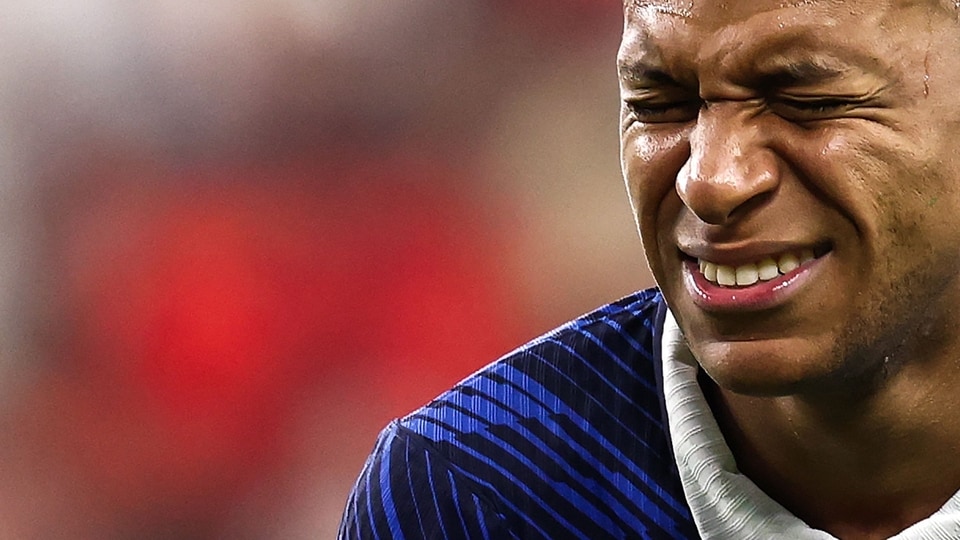
Before Spain beat them 2-0 in the semifinal, France had produced the most complete campaign of the tournament. They had won six matches out of six, scored 16 goals, conceded only two and kept clean sheets in all three of their knockout games. Their route included a 3-0 win over Sweden, a controlled 1-0 victory over Paraguay, and a 2-0 quarter-final success over Morocco.
At the centre of it all was Kylian Mbappé.
Mbappé arrived at the semifinal with eight goals and three assists. He had been directly involved in 11 of France’s 16 goals, a contribution rate of nearly 69 per cent. He was the tournament’s leading scorer on the assists tiebreaker, while also offering more creativity than the other contenders for the Golden Boot.
Those were not the numbers of a player enjoying a few explosive moments against weaker opposition. Mbappé had scored and created across the group stage and the knockouts. France had built the tournament’s most balanced statistical profile around him: maximum points, the best goal difference among the semifinalists and an attack that had combined volume with efficiency.
Then came one bad night.
Spain controlled the semifinal, exposed the weaknesses in France’s press and stopped Mbappé from receiving the ball in the areas from which he had terrorised opponents throughout the competition. France were second best. Spain deserved to advance.
Yet the result also exposed the unforgiving logic of the World Cup. A team can be the competition’s strongest side for six matches and still have its fate decided by the seventh.
One defeat, three very different consequences
In a league, France’s defeat would have been damaging rather than terminal.
Before the semifinal, France had effectively collected 18 points from six matches. Spain had five wins and one draw, giving them 16. After a 2-0 Spain victory, a hypothetical league table would have placed Spain on 19 points and France on 18.
France would have fallen one point behind. Their title challenge would not have disappeared. Their six previous victories, 16 goals and superior attacking record would still carry value. There would be another match, another week and another opportunity to respond.
That is what a league is designed to do. It rewards accumulated excellence. One bad performance matters, but it does not outweigh everything that came before it.
The Champions League provides a different kind of protection. Its knockout rounds, apart from the final, are played over two legs. A 2-0 defeat in the first match creates a serious problem, but it also creates a tactical question rather than an immediate obituary.
France would have returned to the training ground knowing exactly how Spain had beaten them. They could have altered the midfield structure, changed the press, moved Mbappé into different receiving positions and approached the second leg with the benefit of evidence from the first.
There would have been no guarantee of a comeback. Spain might have controlled the return match as well. But France would have been judged across 180 minutes rather than one evening.
Two-legged football allows quality, depth and adaptability to reassert themselves. The World Cup does not. Its knockout rounds reduce everything to a single performance in which an early mistake, tactical mismatch or poor individual night can become irreversible.
France’s first defeat of the tournament was therefore worth more than their previous six victories combined. That is not because those victories suddenly became meaningless. It is because the format gives the final result absolute power.
The same is true for Mbappé. Eight goals and three assists established him as the tournament’s best player through the semifinal stage. His failure to influence the Spain game does not erase that body of work. But at the World Cup, the biggest match often becomes the strongest part of the verdict.
That can make analysis unfairly simplistic. France did not play a poor World Cup. Mbappé did not have a poor tournament. They produced an outstanding campaign with a disastrous ending.
There is, however, no realistic argument for replacing the World Cup with a league. A 48-team round-robin would require every nation to play 47 matches and produce 1,128 fixtures. It would take the better part of a year, clash with club football and turn the competition from a concentrated global event into an exhausting calendar exercise.
Two-legged knockouts are more plausible, but they would also bring problems. The World Cup is staged in host countries, meaning there would be no genuine home-and-away balance. The tournament would become longer, players would face an even greater workload, and first legs could become cautious affairs built around avoiding risk.
Most importantly, the World Cup would lose part of what makes it compelling.
The format does not always crown the team that was best for the longest. It crowns the team that survives every decisive night. France and Mbappé may be the clearest victims of that cruelty in 2026, but the same cruelty is also what gives the trophy its extraordinary weight.
France were brilliant for six matches. Spain were better in the only one from which there was no recovery.


