
 E-Paper



Aravalli panel hears tribal concerns over mining, forest rights
New DelhiThe Supreme Court-appointed high-powered committee examining the definition and protection of the Aravalli Hills has completed a fresh round of consultations in parts of Gujarat and south Rajasthan, including Fifth Schedule tribal areas, ahead of the November 30 deadline to submit a final report

 Prefer HTon Google


New Delhi
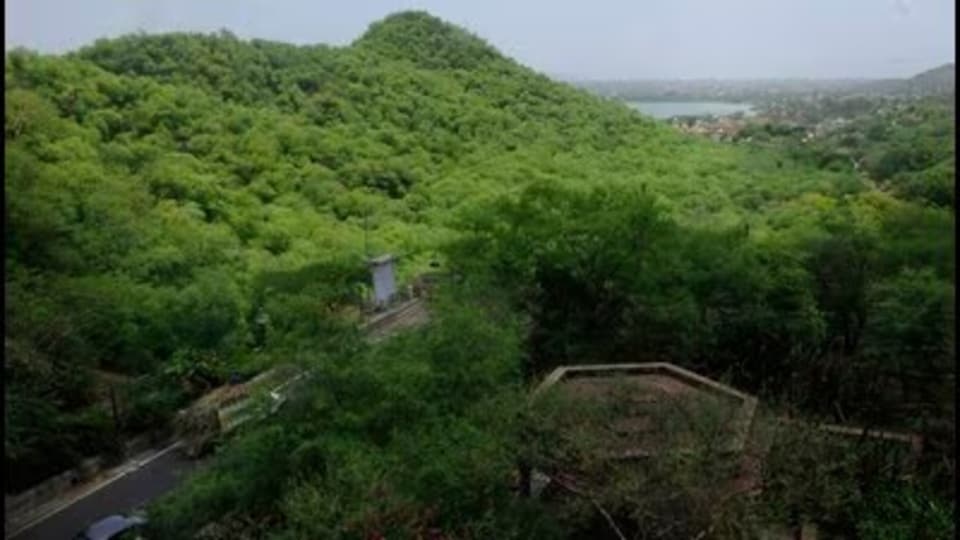
The Supreme Court-appointed high-powered committee examining the definition and protection of the Aravalli Hills has completed a fresh round of consultations in parts of Gujarat and south Rajasthan, including Fifth Schedule tribal areas, ahead of the November 30 deadline to submit a final report. In the latest round of ground-consultations, communities have raised concerns over mining, water security, forest rights and the need for Gram Sabha consent before commercial activity.
The committee, headed by Indian Council of Forestry Research and Education (ICFRE) director general Kanchan Devi, visited areas in north Gujarat and Dungarpur and Banswara districts of Rajasthan between October 8 and 12.
Community representatives have told the committee that mining and hill cutting were affecting groundwater recharge, grazing land and traditional livelihoods, while also raising concerns over the implementation of provisions under the Panchayats (Extension to Scheduled Areas) Act (PESA) and the Forest Rights Act.
“Adivasi communities have protected the ancient Aravalli Hills for thousands of years, and our lives are inextricably tied to our water, forest and land. Bypassing mandatory Gram Sabha consent under the Fifth Schedule and PESA Act to push commercial and critical mineral extraction violates our constitutional rights,” said Rajan Bhagora, an indigenous leader from Gujarat. He urged the committee to recommend that mining activity and lease renewals not be allowed without prior consent of customary Gram Sabhas.
Concerns over the impact of mining on the region’s water systems were also raised. Ashok Shrimali, founder of Mines, Minerals and People, a national alliance of grassroots groups, said hill cutting and dumping of mining waste into riverbeds and streams were affecting natural springs that recharge groundwater and feed downstream agriculture.
“The Aravallis are the birth-cradle of Gujarat’s lifeline rivers, including the Sabarmati, Hathmati, Meshwo, and Watrak,” he said, urging the committee to reject the 100-metre elevation criterion and ensure accountability through the pre-mining, extraction and post-mining stages.
In Banswara’s Talwara block, villagers also alleged that deep open-cast quarrying had dried drinking wells and covered grazing pastures with mineral dust.
Last month, the court had rejected the panel’s request for a six-month extension until February 28, 2027, directing it to complete its work and submit its report by November 30. The committee was constituted by the Supreme Court in May this year after the court stayed its November 20, 2025 judgment accepting a definition of the Aravallis based on a 100-metre minimum elevation and a 500-metre proximity criterion for grouping hills into ranges.
The definition had faced widespread opposition from environmentalists and experts, who argued that it could leave a large portion of the Aravallis outside protection and expose the landscape to mining and construction. On December 29, 2025, the Supreme Court kept the earlier recommendations and directions in abeyance and also reinforced the requirement of its prior permission for granting or renewing mining leases.


Stay updated with all top Cities including, Bengaluru, Delhi, Mumbai and more across India. Stay informed on the latest happenings in World News along with Delhi Election 2025 and Delhi Election Result 2025 Live, New Delhi Election Result Live, Kalkaji Election Result Live at Hindustan Times.


