E-Paper



As Delhi swelters, IMD warns heatwave may worsen further
Officials said the mercury shot up across the city by three to four degrees as the impact of Cyclone Asani waned from Tuesday evening, when it stopped bringing moisture-laden easterly winds to the Capital

 Prefer HTon Google


Most of the city got hotter by a degree or two on Thursday, with the mercury crossing 45 degrees Celsius (°C) in north-west Delhi’s Mungeshpur, even as the weather office predicted that temperatures will continue to climb on Friday, warning that heatwave conditions were likely to take hold of the Capital once again.
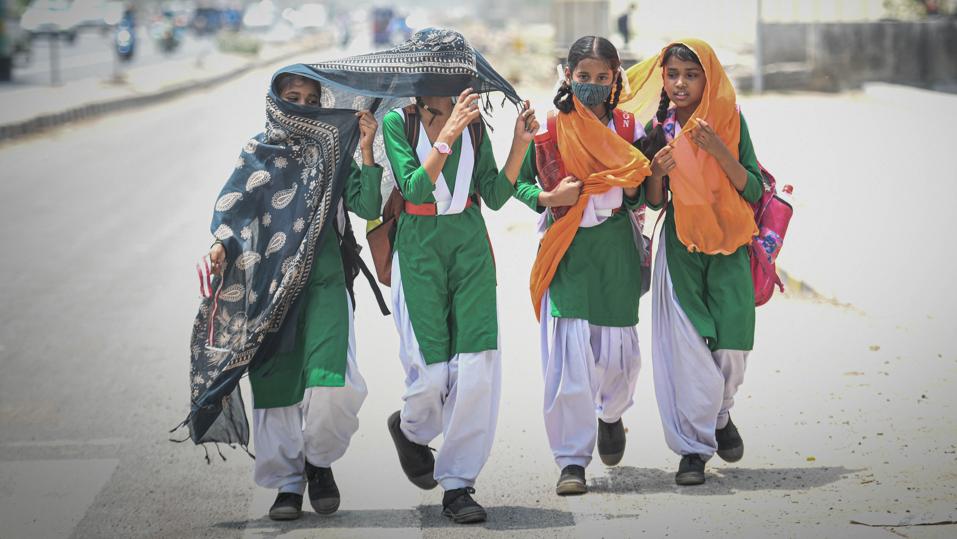
Safdarjung, Delhi’s base weather station, clocked a maximum temperature of 42.5°C on Thursday — three degrees above normal, even as Mungeshpur sizzled at 45.4°C.
Najafgarh, in south-west Delhi, was the second-hottest spot in the city, with a maximum temperature of 44.7°C.

Officials of the India Meteorological Department (IMD) said heatwave conditions are likely to be declared over the Capital, with a ‘yellow’ alert in place for Friday and Saturday. The maximum temperature on these two days will range between 44°C and 46°C at most stations.
An ‘orange’ alert — warning of severe heatwave conditions — is in place for Sunday, when the maximum could jump to between 45°C and 47°C in places, IMD said.
Meanwhile, officials said the mercury shot up across the city by three to four degrees as the impact of Cyclone Asani waned from Tuesday evening, when it stopped bringing moisture-laden easterly winds to the Capital.
On Tuesday, Delhi saw a maximum temperature of 39.5°C. It got hotter on Wednesday, at 41.4°C, then 42.5°C on Thursday, with IMD forecasting a high of around 44°C at Safdarjung on Friday.
The IMD issues a yellow alert to warn the public of a weather phenomenon in place, while it is upgraded to an orange alert, if preventive action is required. A heatwave is declared over the plains if the maximum temperature is 40.0°C or higher and 4.5 degrees above normal, with this criterion being satisfied over two consecutive days.
“Heatwave conditions are likely to be declared over Delhi on Friday, when the maximum could cross the 46°C mark in some parts. This is the first heatwave spell of May so far, which has largely been helped by western disturbances,” said a met official, stating Sunday is likely to be the warmest, when Safdarjung could touch 45°C and other parts to be even higher.
Data from IMD’s 11 weather stations showed the maximum was over 41.0 degrees at all 11 locations, with Mayur Vihar (41.1) recording the lowest maximum. After Mungeshpur (45.4), it was Najafgarh (44.7), Jafarpur and Pitampura (44.0), while the Sports Complex station (Akshardham) and Ayanagar both recorded a high of 43.5 degrees.
So far, the highest maximum temperature recorded this year at Safdarjung has been 43.5°C, recorded on three consecutive days – April 28, 29 and 30. It was also Delhi’s hottest April day in the last 12 years, since April 18, 2010, when the temperature was 43.7°C.
The highest maximum recorded at any station this year was 47.1°C, at the Sports Complex station in Akshardham on April 30.
Met records show that the mercury has hit, or crossed, 45°C at Safdarjung twice in the past four years.
While last year, the highest maximum in May at Safdarjung was just 41.6°C (May 5), it was 46°C degrees in 2020 (May 27).
In 2019, the highest maximum temperature in May at Safdarjung was 44.7°C (May 31), while it was 45°C in May, 2018 (May 27).
The all-time record for May is 47.2°C, recorded on May 29, 1944.