
 E-Paper



CAQM lifts GRAP-4 curbs as Delhi air turns ‘Poor’, retains GRAP 1–3 restrictions
The CAQM issued orders rolling back Grap-4 curbs in view of, what it said was, the “disruptive nature of restrictions”, the air quality improvement, and forecasts for the coming days.

 Prefer HTon Google


Just hours after strong overnight winds pushed air quality in the Capital to “poor” on Wednesday, the Commission for Air Quality Management (CAQM) lifted stage 4 Graded Response Action Plan (GRAP) restrictions despite forecasts showing it was expected to worsen a day later. However, all restrictions from Grap-1, 2 and 3 curbs will remain in place.
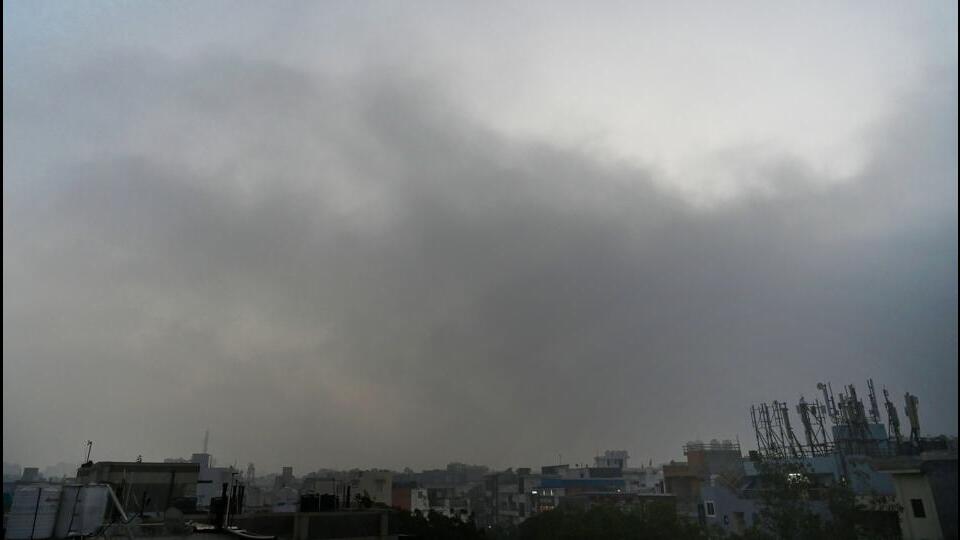
Delhi’s 24-hour average air quality index (AQI) was 271 at 4 pm, according to the Central Pollution Control Board (CPCB) national bulletin. It was in the “severe” category at the same time a day earlier, registering at 412.
In the evening on Wednesday, the CAQM issued orders rolling back Grap-4 curbs in view of, what it said was, the “disruptive nature of restrictions”, the air quality improvement, and forecasts for the coming days.
The decision to roll back Grap-4 curbs comes ahead of what is historically, driven by low temperatures, fog and local sources, the second peak of Delhi’s annual winter pollution crisis during the holiday period at the end of the year, typically the last week of December.
This appeared to be borne out by forecasts. On Wednesday, the Air Quality Early Warning System (AQEWS) for Delhi said AQI is likely to be back in “very poor” from Thursday to Saturday. “The outlook for the subsequent six days is that the air quality is likely to be ‘very poor,’” it added.
Grap-4 curbs were implemented on December 13 , when AQI in the Capital deteriorated to “severe”. The city has experienced four “severe” air days this month — December 23, 15, 14 and 13— and seven overall this year.
On Wednesday, after a 14-day streak of “very poor” and “severe” air days, AQI improved by more than 100 points over the course of the day, registering at 325 (very poor) at 12 pm, 231 by 8 pm and 222 at 10 pm.
At least eight out of the 39 active ambient air quality stations were recording “moderate” air at the same time at 10 pm.
The CPCB classifies an AQI of 51 to 100 as “satisfactory”, 101 to 200 as “moderate”, 201 to 300 as “poor”, 301 to 400 as “very poor”, and a reading above 400 as “severe”.
Mahesh Palawat, vice president at Skymet, said, “On Wednesday, the wind speed remained around 20-22 kmph, which is expected to continue for the next two days. However, a western disturbance is expected to affect the region from Saturday evening, following which the wind speed will drop again and the pollution level will go up again.”
Palawat added, “The strong surface winds affecting the Capital’s weather are cold and dry northwesterlies, which will also make the temperature dip over the next few days. Following that, due to the interruption by the western disturbance, the temperature might go up by a couple notches again.”
Delhi recorded a minimum temperature of 10.2°C, nearly 3 degrees above normal. The maximum temperature was logged at 22.7°C, two degrees above normal.
According to forecasts by the India Meteorological department (IMD), the minimum and maximum are expected to be around 5-7°C and 19-21°C by Friday.
“A yellow alert has also been issued for Friday and Saturday, as shallow to moderate fog is expected in most places of the city in the morning hours, with dense fog impacting some isolated locations,” said an IMD official.
On Wednesday, a shallow to moderate fog enveloped several parts of the city in the morning hours, with visibility at Palam dropping to 100m at 2.30 am, which later improved to 250m at 6.30 am.
Meanwhile, Delhi Chief Minister Rekha Gupta on Wednesday said the Delhi Government is implementing both immediate and long-term measures to effectively control pollution in the national capital. In the short term, 600 surplus Delhi Transport Corporation (DTC) drivers had been deployed to assist traffic police and conduct Pollution Under Control (PUC) checks at petrol pumps.
“Mist spray systems will be installed on buildings instead of heavy anti-smog guns, as it has been observed that anti-smog guns installed on high-rise buildings are not only inconvenient but also not very effective in controlling pollution,” Gupta added
Gupta further said that, as part of long-term measures, the number of air quality monitoring stations across are being increased.
Delhi environment minister Manjinder Singh Sirsa said the government’s pollution control drive has yielded measurable results, citing intensified enforcement over the past 24 hours.
Teams challaned 12,671 vehicles for pollution violations, diverted 327 non-destined trucks, decongested 39 traffic points, and lifted 2,337 metric tonnes of construction waste, according to officials.
“Our officers and field teams are closely monitoring every activity on the ground. Whenever needed, the government has not hesitated to introduce intensive measures to tackle pollution effectively,” Sirsa said.

Stay updated with all top Cities including, Bengaluru, Delhi, Mumbai and more across India. Stay informed on the latest happenings in World News along with Delhi Election 2025 and Delhi Election Result 2025 Live, New Delhi Election Result Live, Kalkaji Election Result Live at Hindustan Times.


