
 E-Paper



CAQM standardises penalties for pollution violations across Delhi-NCR
The penalties for environmental violations vary from a few thousand rupees in one state to several lakhs in another, thus requiring uniformity


The pollution watchdogs of Delhi, Haryana, Rajasthan and Uttar Pradesh must have standardised penalties for environmental violations, which should be doubled when emergency measures are in place to contain severe air pollution, the Commission for Air Quality Management in the national capital region has instructed.
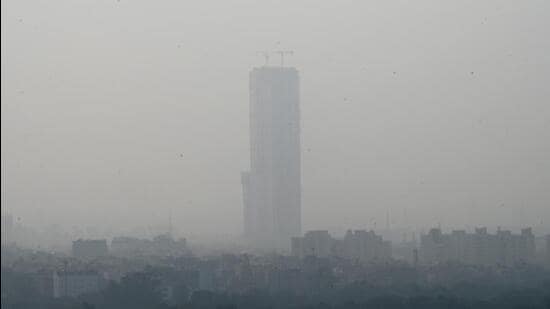
“While processing the resumption of the activities in units to whom closure directions have been issued, it is noted that there are wide ranging state-wise and sector-wise variations in the amount of EC (environmental compensation) charges being levied by the concerned pollution control boards or committee in Delhi NCR for similar violations,” the commission said in an order dated February 6 that was recently uploaded on its website.
Environmental compensation charges are levied by concerned pollution control boards or committee on polluting units in the national capital region where closure directions have been issued by the commission for violation of its orders, guidelines or for not meeting pollution norms. Such a fine can also be imposed by the pollution overseers if air or water pollution norms are violated by a project or industry.
The penalties for environmental violations vary from a few thousand rupees in one state to several lakhs in another, thus requiring uniformity, a commission official said on condition of anonymity.
In Haryana, for instance, violations on dust control at a construction site over 20,000 sq metres could attract a fine of ₹10 lakh, which could rise up to ₹1 crore depending on the severity of the air quality index. In Delhi, however, a fixed fine of ₹5 lakh is levied for construction sites fo similar area violating dust norms, irrespective of the air quality category, data from the states show.
For solid waste dumped in the open in Haryana, the fine can range from ₹10 lakh to ₹25 lakh, depedning on air quality. In Delhi, the fine for the same offence ranges from ₹5,000 to ₹25,000 if waste is dumped on the Yamuna floodplain.
ALSO READ- ‘I am surprised’: BJP MP taunts Arvind Kejriwal after ED's eighth summons to Delhi CM
“The issue was deliberated upon on a meeting held on January 18, 2024, with the NCR states, where a standard schedule of all violations and uniformity in EC charges across NCR states was finalized,” the official said. “The states have now been asked to adopt the same schedule.”
“For all these violations observed during the periods of restrictions imposed under GRAP, the rates for EC shall be doubled,” the order added. GRAP, or Graded Response Action Plan, is imposed when the air quality deteriorates in the national capital region, typically during autumn and winter.
A new list of penalties by the commission stated that violations of running diesel generators in the region would vary from ₹7,500 to ₹25,000, depending on capacity. Penalties at construction sites would range from ₹1 lakh to ₹2 lakh, depending on area, the new schedule said. Construction sites also be fined ₹7,500 for not using anti-smog guns to be deployed for every 5,000 sq metres, it said.
For industries, the commission has laid down a formula, which calculates the fine based on the pollution index of the sector, multiplied by the number of days the violation took place, further multiplied by a location factor for the industry.
ALSO READ- Advertisement on auto helps Delhi cops arrest 3 men who robbed tempo driver
If self audit reports are not uploaded on the web portal of the state government, or fencing of the project boundary has not been carried out, then the fine will be ₹20,000 for projects with area less than 20,000 sq metres and ₹40,000 for projects with construction area of over 20,000 sq metres, the commission said.
“One cannot penalize an industry or a unit heavily in one NCR state and be lenient in the other,” said Dipankar Saha, former head of the Central Pollution Control Board’s air laboratory. “The idea should be to give no disincentive or incentive to pollution in the entire NCR. Similarly, action should be uniform.”
Each state had its own environmental compensation defined and notified based on which action took place, said Vijay Chaudhary, a regional officer of the Haryana State Pollution Control Board. “States were functioning and imposing fines based on the EC charges they had notified and formulated themselves. Haryana had done the same,” he said. “The issue was flagged by some industries that had been fined across NCR and had approached the NGT (National Green Tribunal) in 2022, after which the green tribunal asked the CPCB to make a standardized list for EC charges. It is likely the latest change has been done due to the same directions.”

Stay updated with all top Cities including, Bengaluru, Delhi, Mumbai and more across India. Stay informed on the latest happenings in World News along with Delhi Election 2025 and Delhi Election Result 2025 Live, New Delhi Election Result Live, Kalkaji Election Result Live at Hindustan Times.


