E-Paper



Delhi 4th most polluted city, India home to 39 of 50 worst cities
The average yearly PM2.5 reading in India was more than 10 times the upper limit prescribed by WHO, while Delhi’s pollutant levels were more than 18 times what is considered safe.

 Prefer HTon Google


Home to 39 out of the world’s 50 most polluted cities, India was ranked the world’s eighth-most polluted nation in 2022, according to a report by Swiss firm IQAir released on Tuesday, which placed Delhi as the world’s fourth-most polluted city on the planet.
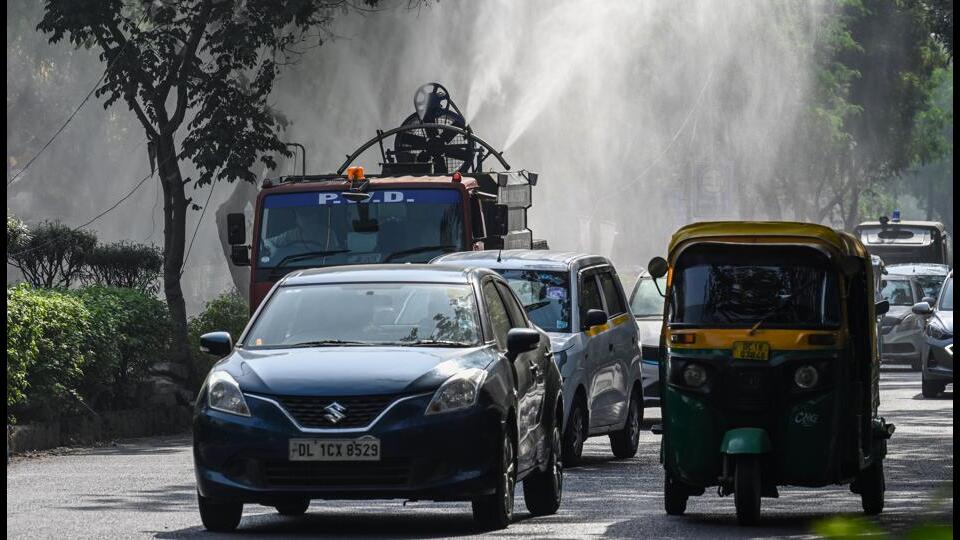
The average yearly PM2.5 reading in India was more than 10 times the upper limit prescribed by the World Health Organization (WHO), while Delhi’s pollutant levels were more than 18 times what is considered safe.
Bhiwadi in Rajasthan retained its position as India’s most polluted city, ranking as the city with the third-worst air in the world, according to the report. The town, 60km southwest of Delhi, was ranked as the world’s most polluted city in the 2021 edition.

The World Air Quality Report, 2022, classifies over 7,300 cities across 131 countries and ranked them on the basis of the average recorded annual PM2.5 concentration in micrograms per cubic metre (μg/m3).
Over 2022, India recorded an annual PM2.5 of 53.3 μg/m3 – recording a marginal improvement from the average of 58.1 μg/m3 logged in 2021. This meant India improved by three ranks in the unenviable list – from the world’s fifth-most polluted country to eighth.
To be sure, one nation (Burkina Faso) that fared worse than India in 2022 was among the 14 countries added to the report’s coverage from the year before – in 2021, the report covered 117 nations.
Overall, Delhi was the fourth-most polluted city in the world, recording an annual average PM 2.5 concentration of 92.6 μg/m3. Only Lahore in Pakistan (annual average PM2.5 of 97.4 μg/m3, making it the city with the worst air in the world), Hotan in China (94.3 μg/m3) and Bhiwadi (92.7 μg/m3) fared worse than Delhi in the report.
Also Read: India 8th in worst air quality, Lahore most polluted city in subcontinent | List
WHO’s annual safe limit for PM2.5 is just 5 μg/m3, while the national standards for the country are 40 μg/m3. This means that India’s average score is more than 10 times the WHO guidelines, while Delhi’s PM2.5 reading was more than 18 times that WHO standard.
Among major National Capital Region (NCR) cities, Delhi was the most polluted, while Gurugram (70 μg/m3) was the least. Ghaziabad, with an annual average of 88.6 μg/m3, was ranked second-worst, followed by Greater Noida (83.2 μg/m3), Faridabad (79.7 μg/m3) and Noida (78.7 μg/m3).
This year, the report makes a distinction in the Indian capital and a much smaller area classified as “New Delhi” within the overall Union territory of “Delhi” was considered among global regional capitals. Based on that, New Delhi ranked as the second-most polluted capital city in the world (89.1 μg/m3) behind only N’Djamena in Chad (89.7 μg/m3). However, if “Delhi” was taken as a whole, it would be the most polluted capital in the world.
“Bhiwadi, the most polluted city in the country, saw annual PM2.5 levels of 92.7 μg/m3 and roughly 60% of cities in India included in this report, experienced annual PM2.5 levels of at least seven times the WHO guideline,” said the report.
In comparison, as per the 2021 report, 35 out of the 50 most polluted cities in the world were from India, with Bhiwadi the most polluted city globally with an average PM2.5 concentration of 106.2 μg/m3.
Interestingly, Ghaziabad (102 μg/m3 in 2021) which was the second most polluted city worldwide in 2021, saw its PM2.5 reading drop to 88.6 μg/m3, making it the 11th worst city, data shows.
Avinash Chanchal, campaign manager at Greenpeace India said the findings, particularly 39 out of the top of the world’s most polluted cities being Indian, shows that the air quality in India is in a dire state. “The government needs to take urgent action to reduce air pollution and stricter regulations, particularly on the industrial and vehicular sector are the need of the hour. Additionally, investments in the renewable energy sector in a decentralised manner should be a priority moving ahead.” he said.
The PM2.5 data from the report came from both ground-level air quality monitoring stations and low-cost sensors which have been set up by government agencies, educational institutions, non-profit organizations and even individual citizens who are contributing to monitoring their local air quality. For the 2022 report, data from more than 30,000 air quality monitoring stations across 7,323 locations in 131 countries, territories, and regions was used.
Frank Hammes, Global CEO, IQAir said for 2022, more than half of the world’s air quality data was generated by involving communities on the ground. “When citizens get involved in air quality monitoring, we see a shift in awareness and the joint effort to improve air quality intensifies. We need governments to monitor air quality, but we cannot wait for them. Air quality monitoring by communities creates transparency and urgency. It leads to collaborative actions that improves air quality,” states Frank Hammes, Global CEO, IQAir.
Anumita Roychowdhury, executive director, research and advocacy at the Centre for Science and Environment (CSE) says for the first time this year, the report has considered two different geographical units for Delhi – Delhi and New Delhi. “New Delhi is slightly cleaner than the rest of Delhi, but overall, the findings are consistent with the downward trend that has already been noticed in other assessments for Delhi where the air quality is gradually improving. Even then, these PM2.5 levels are very high and require significantly stronger multi-sector action so we can meet both national and international benchmarks.”