
 E-Paper



Delhi: 800 recharge pits to be dug to curb water-logging, replenish groundwater
With a view to check water-logging this monsoon, and to ensure water retention and conservation, besides recharge of the water table, the Delhi government will create 800 recharge pits in locations that are prone to water-logging even after a light spell of rain

 Prefer HTon Google


With a view to check water-logging this monsoon, and to ensure water retention and conservation, besides recharge of the water table, the Delhi government will create 800 recharge pits in locations that are prone to water-logging even after a light spell of rain. The measures were announced as part of a five-point programme to address these challenges, officials said after attending a meeting with the lieutenant-governor VK Saxena and chief minister Arvind Kejriwal.
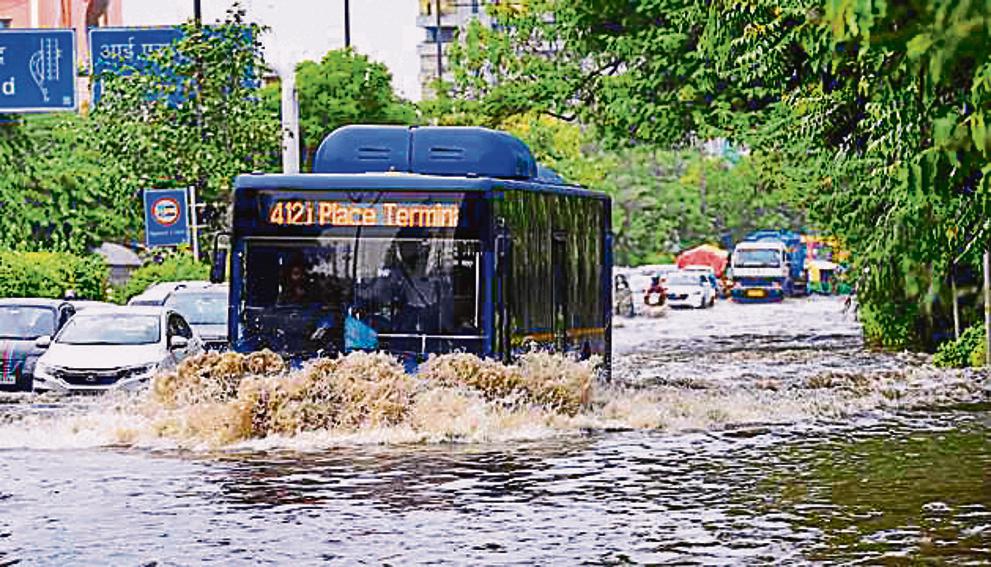
The marathon meeting, also attended by deputy chief minister Manish Sisodia, identified five steps to recharge the water table and pre-empt water-logging. In a few areas, the water-logging is widespread and deep -- one such stretch being south-east Delhi’s Pul Prahladpur where on May 31 a man, in his 40s, drowned after the area got flooded in the heavy rain.
An official, who attended the meeting, said the recharge pits are successful in checking water-logging and the New Delhi Municipal Council has dug a few in its area. “The recharge pits will be created near sites that are prone to water-logging. Water will percolate into the ground through the recharge pits, before it can accumulate, and these pits will also recharge the groundwater,” said the official, asking not to be named.
The official said the recharge pits may not address water-logging issues at Pul Prahladpur and Minto Road but they are effective for places which report shallow water-logging.
“The government will create recharge pits at about 800 locations owned by different agencies which will be identified by the Delhi Jal Board.The idea is to provide room for water to recede so that it does not accumulate on the road. This will protect vulnerable areas from water-logging,” said the official.
Dysfunctional or abandoned and sealed tube-wells will be converted into water recharging and retention pits. Around 700 identified water bodies will be dredged and deepened to at least two metres and their catchment area freed of encroachments by the irrigation and flood control department, the official said.
It was also decided that the agencies will explore the possibility of digging water sinkholes in stormwater drains at regular distances, to allow some of the water flowing through the drain to percolate into the ground.
Sarvagya Srivastava, former engineer-in-chief, PWD said water-logging has been a perennial problem in Delhi. “To some extent, recharge pits can check water-logging, but during very heavy rain, the pits may not be able to completely prevent water-logging as they have their own capacity constraints. The creation of these pits will provide the dual advantage of checking water-logging as well as groundwater recharge. But, mixing of sewage with rainwater, which is usually reported during rain, may be pollute the groundwater. The pits need to be regularly maintained to get optimum benefits,” said Srivastava
L-G’s office said directions have been issued to public works department, DJB, flood and irrigation department, NDMC and DDA for the speedy implementation of the identified steps preferably before the onset of rains in areas where water table was below 10 metres from ground level.
Work on dredging, removal of hyacinth and plantation along the embankment of the Najafgarh drain are set to start this week. “Arrangements for using boats with motorised cutters for shredding of hyacinth have been put in place, earth movers with rotters will be used to loosen hardened soil and the desired depth of four metres will be achieved in the Najafgarh drain,” the office said.


