
 E-Paper



Delhi clears first new drainage plan in 50 yrs to tackle monsoon chaos
The PWD blueprint uses GIS tools, basin-wide design, and nature-based fixes like lakes, wetlands and rainwater harvesting to combat waterlogging and floods.


After decades of delay, abandoned drafts, and monsoon chaos, Delhi has finally completed a new drainage master plan – nearly half a century after the last one was prepared in 1976, officials aware of the matter said.
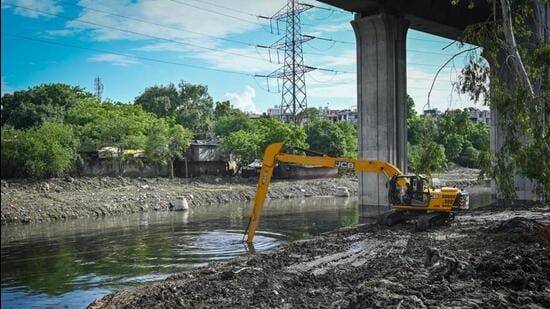
The ambitious plan, finalised by the Public Works Department (PWD), seeks to build a climate-resilient, technologically advanced stormwater system that can withstand extreme rainfall, rapid urbanisation, and the Capital’s swelling population, officials aware of the details in the plan said.
“The project has been developed with the help of consultants using advanced tools such as ArcGIS, SewerGEMS and SWMM. It integrates the city’s drains, water bodies, wetlands and parks to optimise infrastructure and strengthen resilience. This marks a paradigm shift in how Delhi will manage floods, waterlogging and stormwater in the decades to come,” one of the officials cited above said.
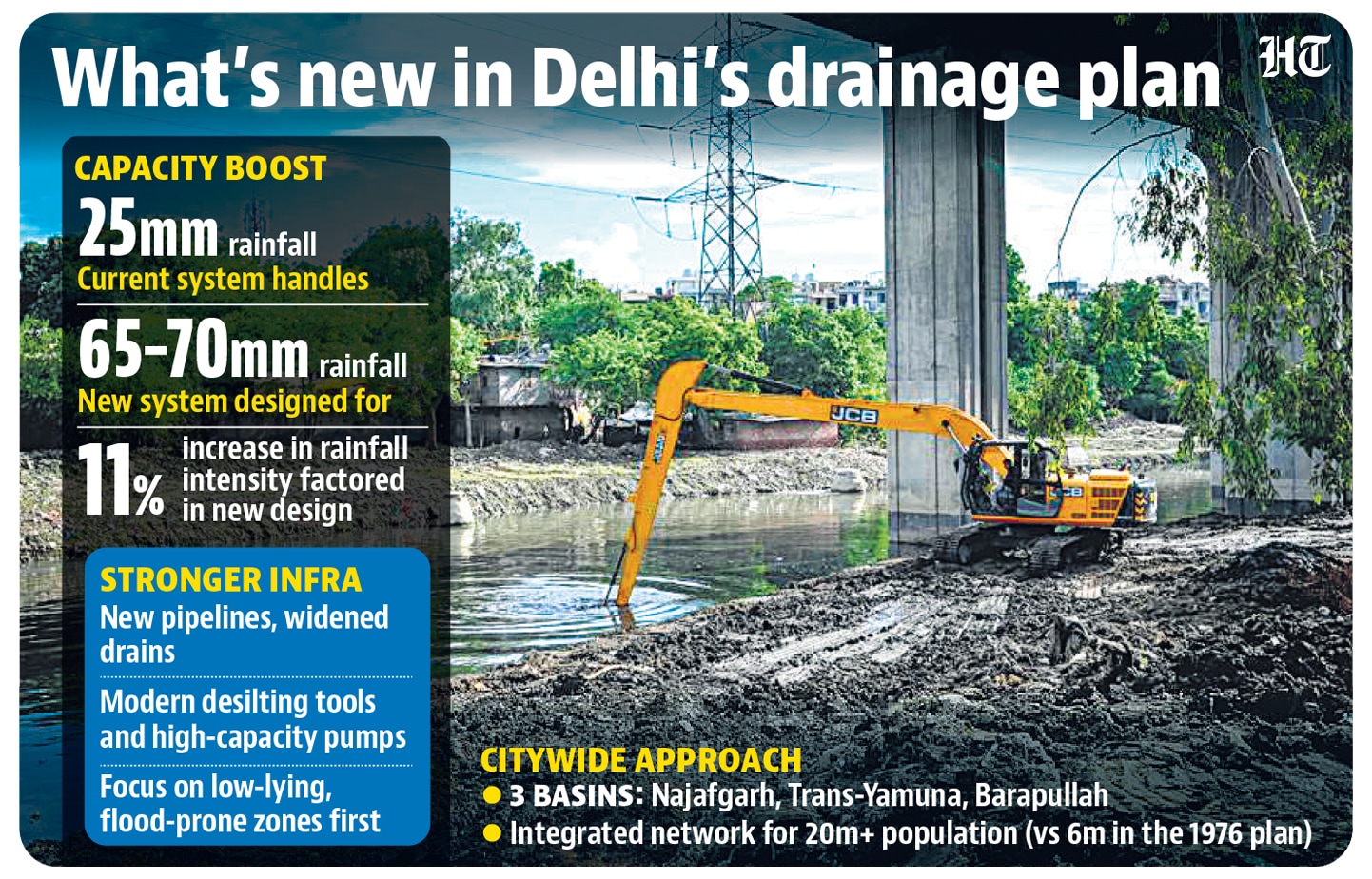
Delhi’s current drainage system is built to handle just 25mm of rainfall at a time. In contrast, the new network will be capable of managing 65-70mm, officials said. While the city occasionally records extreme spells of 100mm rainfall in a day, such instances are limited to four or five days a year.
“Several days in the last two years have seen over 50 mm of rain in a short period, each exposing the city’s weaknesses. The new plan accounts for climate change impacts and adopts an 11% increase in rainfall intensity while designing the system, so we are not caught unprepared,” the official added.
Topographically, Delhi is divided into three major drainage basins — Najafgarh, Trans-Yamuna and Barapullah. Each has unique challenges, but all ultimately drain into the Yamuna. The new plan adopts an integrated basin-wide approach, ensuring stormwater is managed as a citywide network rather than in silos.
A long-awaited overhaul

Although a new plan was first proposed in 2009, it languished in bureaucratic files for over a decade as floods worsened.
Delhi’s last drainage blueprint was drawn up when the city’s population was just 6 million. Today, it exceeds 20 million, with urbanised areas sprawling across 920 sq km.
Frequent waterlogging on arterial roads during monsoons has caused not just traffic paralysis but also significant economic losses. Officials said the new plan is designed to prevent such annual disruptions.
PWD said nature-based solutions form a core part of the strategy. These include rejuvenating lakes, wetlands and green parks, alongside large-scale rainwater harvesting. By capturing and redirecting excess runoff, these systems will reduce pressure on drains while also recharging groundwater and supporting biodiversity.
“Several water bodies across Delhi have dried up or are dying. The plan includes measures to revive these so they can absorb runoff and prevent waterlogging,” said another official.
The blueprint recommends installing real-time monitoring systems with sensors to track water levels and performance. These will feed into a central control room, providing early warnings of choke points.
A dedicated operations workforce with modern desilting and cleaning equipment will ensure drains remain unclogged. “The systems of DJB, MCD, DDA, Irrigation and Flood Control, NDMC and other authorities will all be revamped under this plan. Detailed maps show where new pipelines are needed and where old ones must be widened,” the official said.
Recognising that engineering solutions alone cannot solve Delhi’s drainage crisis, PWD has proposed awareness campaigns to educate residents on stormwater management and waste disposal. Officials stressed that residents’ welfare associations, civic bodies, and NGOs will all need to collaborate for success.
The plan lays out targeted interventions for low-lying and flood-prone zones, including higher-capacity pumping stations, stricter desilting protocols and priority upgrades of critical drains. Implementation will be phased, with the first focus on stretches that repeatedly experience waterlogging during monsoons.

Stay updated with all top Cities including, Bengaluru, Delhi, Mumbai and more across India. Stay informed on the latest happenings in World News along with Delhi Election 2025 and Delhi Election Result 2025 Live, New Delhi Election Result Live, Kalkaji Election Result Live at Hindustan Times.


