
 E-Paper



Delhi gets LG nod to merge four govt hospitals into AIIMS-like institution
The plan aims to share staff and facilities, improve referrals and expand medical education. The Delhi cabinet must approve the integration.

 Prefer HTon Google


Decks have been cleared for the proposed merger of four major government hospitals in east Delhi – Guru Tegh Bahadur (GTB) Hospital, Delhi State Cancer Institute (DSCI), Rajiv Gandhi Super Speciality Hospital (RGSSH) and the Institute of Human Behaviour and Allied Sciences (IHBAS) – into a single autonomous, multi-speciality institution modelled on the All India Institute of Medical Sciences (AIIMS), health minister Pankaj Singh said on Thursday.
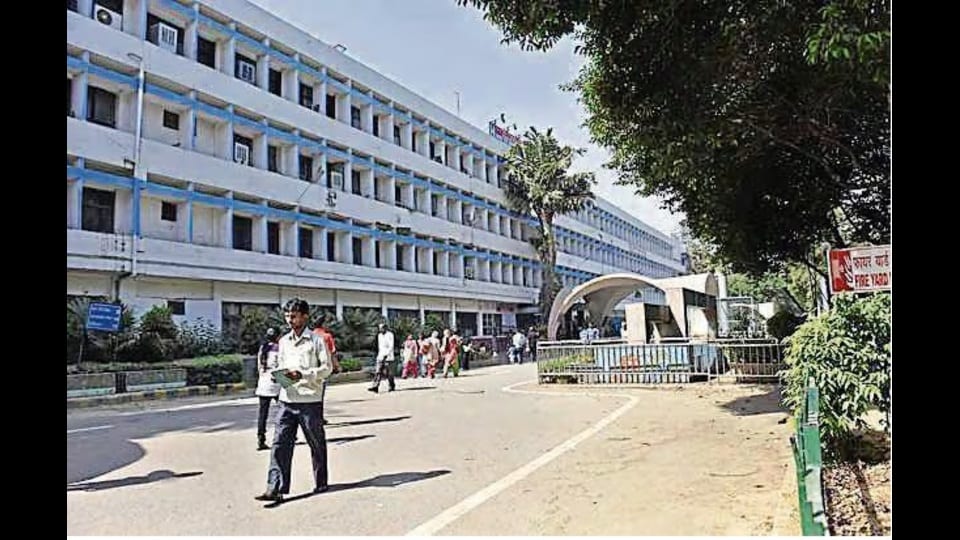
The proposal, seen by HT, envisages dissolving the separate bodies currently governing the four hospitals in Dilshad Garden and its vicinity, and bringing them under a single entity with a unified administrative structure.
Singh said the Delhi government had received lieutenant governor Taranjit Singh Sandhu’s approval for the integration and would soon invite tenders for the next stage of the process.
Also Read | 7 years on, no sanctioned posts: Chandigarh Sector 48 hospital still depends on GMCH-32 medics
“We have received the LG’s approval for the integration of the four hospitals. We will soon float the tender for the same. Now trans-Yamuna area will have a multispeciality AIIMS-like institution, that will provide direct benefit to around 6 million population of the area and subsequently to the larger Delhi residents,” Singh said, adding that work was progressing on a fast track to provide subsidised healthcare services.
The LG’s office did not respond to HT’s requests for comment.
Expected Benefits for Patients and Medical Education
According to the proposal document, the merger is intended to reduce duplication of services and make better use of existing infrastructure and staff. All specialities that are offered by these different hospitals will be consolidated under a single (and larger) banner, while patients will now be able to be cross-referred to the other units – something which isn’t possible right now.
The proposal also envisages pooling teaching positions across the institutions to increase postgraduate medical seats and expanding infrastructure to accommodate more undergraduate MBBS seats. The government expects that sharing facilities, staff and teaching resources will help the hospitals treat patients more efficiently and expand medical education.
Also Read | Putting patients, outcomes and clinical evidence first
Governance and Next Steps
At present, the four institutions operate under different governance arrangements.
GTB Hospital is run directly by the Delhi government and has an attached University College of Medical Sciences. The other three are governed by separate societies, according to the proposal.
“The societies that are now governing these hospitals separately will be dissolved and there will be a formation of a new governing body, which will be on the same lines as the AIIMS Delhi governing system,” a senior government official said.
The next step is to obtain approval from the Delhi cabinet, which the proposal estimates could take around six months. An administrative order formalising the integration would follow, the official said.
Before that, the health department plans to appoint a transactional adviser and an infrastructure consultant through a tender. The consultants will assess how facilities can be shared, help frame rules and regulations for infrastructure use, develop the institutional framework and prepare the cabinet note required for the next round of approval, the official said.
Frequently Asked Questions



Stay updated with all top Cities including, Bengaluru, Delhi, Mumbai and more across India. Stay informed on the latest happenings in World News along with Delhi Election 2025 and Delhi Election Result 2025 Live, New Delhi Election Result Live, Kalkaji Election Result Live at Hindustan Times.


