
 E-Paper



Delhi govt to open 500 liquor stores in city by August 31
The city will also get two premium liquor stores by August 31 and 20 of them by the end year, said a state panel in a recommendation to the government.

 Prefer HTon Google


The Delhi government should open 500 retail liquor stores by August 31 and 200 more by the end of the year, said a panel put together by the state to ensure a smooth transition to the previous policy, as authorities work overtime to ensure Delhi doesn’t face a crippling supply shortage when the old regime kicks in from September 1.
The recommendation has been submitted for consideration to the finance department, which, officials said, is likely to accept the suggestions. HT has seen a copy of the report.
Four government agencies in the liquor business will set up at least two premium vends in August, and 20 by December 31 this year, the report said.
Also read: 'Nothing suspicious’: Delhi Police after unattended item found in Rohini
While details on the contours of the premium stores are still sketchy, officials aware of the matter said they will be larger than the regular liquor vends and be opened in “upscale areas”.
“The size of the shops will also depend upon the availability of space and the premium vends will be opened in upscale areas. The focus of the committee is on ensuring that all areas can be well served and there is no underserved area,” said the state government official.
The report is part of a series of moves the government is making to ensure that Delhi does not go dry once it reverts to the previous excise policy that was in place before the 2021-22 regime kicked in. The reversal came after LG VK Saxena last month asked the Central Bureau of Investigation (CBI) to probe alleged lapses and irregularities in the 2021-22 excise policy, which was due to expire on July 31 this year.
Manish Sisodia, who is also Delhi’s excise and finance minister, has accused the Bharatiya Janata Party (BJP) of playing “dirty politics to promote liquor mafia” in Delhi. On July 30, he said the arrangement of shutting private shops would be temporary (for about six months) till the time a new excise policy is put in place under which fresh tenders will have to be floated for private entities.

Under the 2021-22 excise policy, the Delhi government completely exited the liquor business in September last year, leaving all of the city’s 850-odd stores to private vendors. However, the policy reversal means the state will re-enter the business, a process that is likely to take several weeks.
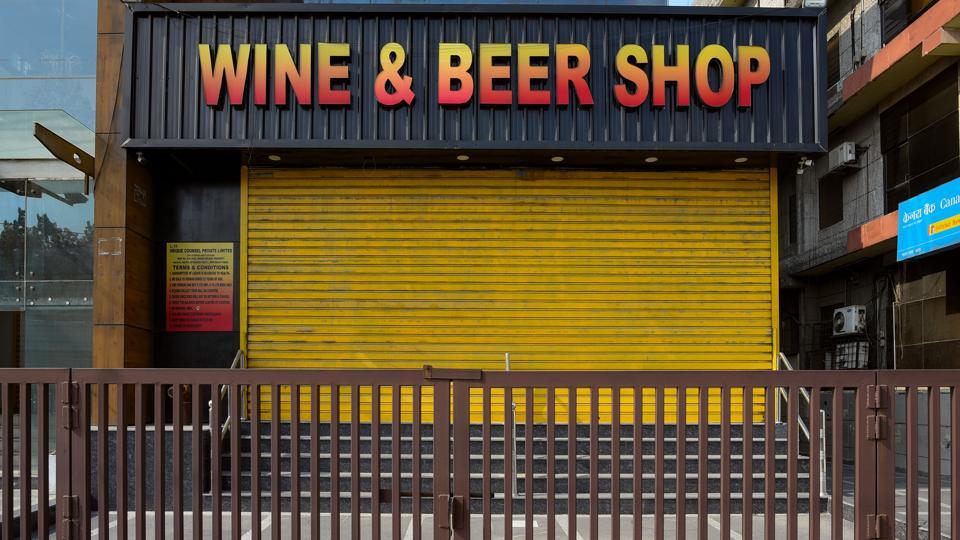
Fewer than 350 liquor shops, all run by private operators, are open in Delhi right now, with several retail licence owners having surrendered their permits, citing losses and general uncertainty around the liquor business.
Delhi government officials did not respond to requests for comment.
The agencies that were involved in the procurement, sale and distribution of liquor in the Capital are the Delhi State Industrial and Infrastructure Development Corporation (DSIIDC), the Delhi Tourism and Transportation Development Corporation (DTTDC), Delhi Consumer’s Cooperative Wholesale Store (DCCWS), and Delhi State Civil Supplies Corporation Limited (DSCSC).
The committee was headed by state labour commissioner RN Sharma. The panel has distributed Delhi’s liquor zones among the four agencies; DSIIDC has been allotted nine zones, DTTDC eight zones, DCCWS six zones and DSCSC six zones. DTTDC has been allotted the airport area and DSIIDC is in charge of areas in New Delhi and Delhi Cantonment.
DTTDC and DSIIDC have to open 150 liquor stores each by August 31, and DCCWS and DSCSC will open 100 liquor each. “In order to ensure sale of premium brands, it is submitted that out of the given target of number of vends, at least two premium vends per corporations may be opened by August 31… Three more premium vends may be opened by December 31,” said the recommendation.
The state will aim at equitably distributing stores across the city, a member of the committee told HT asking not to be named.
“We will open vends at locations closest to the non-conforming areas to ensure the underserved areas are better served and to check black marketing and smuggling of liquor from neighbouring states. It will also stop brand-pushing and overcharging, and maximise the sale of premium brands. We will try to ensure better infrastructure and better consumer experience to the buyers by ensuring that the vends are located in well-connected areas and training the staff which will be deployed at the vends,” the committee member said.
The likely absence of the private liquor vends from the plan has, however, raised concerns among consumers about a substandard buying experience.
Amod Sharma, an IT professional who works with one of the city’s private liquor stores, said the government agencies cannot provide customer service the way non-state players do.
“In case the store needs an equipment repair, private players do it faster, but the government operators will take long time because they need to follow a longer process. Government stores have a limitation on spending on infrastructure, but the private players spend more to attract more customers,” said Sharma.
Also read: Extension of excise policy approved, Delhi liquor stores, bars to reopen
Vinod Giri, director general of the confederation of Indian Alcoholic Beverage Companies (CIABC), said competition in private liquor trade leads to innovation in retailing, wide product choices and quality customer experience.
“States like Tamil Nadu and Kerala which have government monopoly in retailing are known to have very poor customer experience and few product choices. The government must balance its own presence, if it chooses to have so, with sufficient private retail. Under any circumstances, the most important thing is to have a consistent and predictable excise policy for long term to help industry plan and execute properly to the benefit of all stakeholders,” said Giri.
The excise committee has also recommended a common criterion to decide the rent that these agencies pay for spaces they operate liquor vends out of.
“The rent may not be uniform across areas, but the overall expenditure for rent is capped up to 15% of the anticipated profit on the sale of liquor,” said another member of the committee. An exception of 15% cap may be allowed in case the vend is located in any mall or other commercial complex for the purpose of opening of premium vends, the recommendation stated.
A Delhi government official said that the committee was asked to identify areas for each of the four government agencies where vends will be opened by them besides identifying and fixing the number of shops to be opened by the four agencies.


