
 E-Paper



DJB kicks off trial run of new units at Chandrawal plant
With raw water availability in the Yamuna improving during the monsoon, the Delhi Jal Board (DJB) has begun trial runs of its new Chandrawal Water Treatment Plant (WTP), a 105-million-gallons-per-day (MGD) facility expected to supply around 10% of the Capital’s water while significantly improving its ability to tackle ammonia pollution, officials aware of the development said on Thursday

 Prefer HTon Google


With raw water availability in the Yamuna improving during the monsoon, the Delhi Jal Board (DJB) has begun trial runs of its new Chandrawal Water Treatment Plant (WTP), a 105-million-gallons-per-day (MGD) facility expected to supply around 10% of the Capital’s water while significantly improving its ability to tackle ammonia pollution, officials aware of the development said on Thursday.
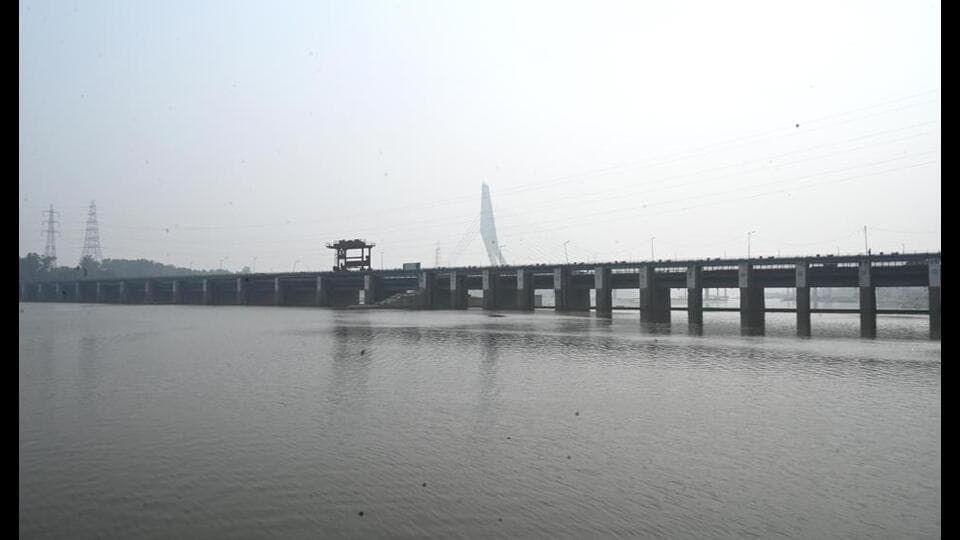
The plant, which is slated for commissioning in September, will replace Delhi’s oldest water treatment units, commissioned in 1935 and 1955, and is expected to provide the majority of water supply to central and north Delhi.
A senior government official said trial runs commenced after the rise in Yamuna flows following monsoon rains increased the availability of raw water.
“Raw water availability has improved due to higher upstream flows. We have started testing various components of the plant to identify and rectify any teething issues. The high turbidity levels at present will also help us calibrate the treatment units under real operating conditions. Once the trials are completed, supply will gradually be shifted from the two old plants to the new facility,” the official, who asked not to be identified, said.
The official added that the plant would increase Delhi’s capacity to handle ammonia pollution from around 1 part per million (ppm) to nearly 5 ppm, reducing frequent disruptions caused by pollution spikes in the Yamuna.
DJB currently supplies about 1,000 MGD of water, of which around 864 MGD is produced through nine water treatment plants and another 136 MGD comes from groundwater sources. The Chandrawal facility alone caters to roughly a tenth of the city’s demand.
Unlike the existing plants, which rely largely on chlorination, the new facility uses advanced treatment processes including ozonation, granular activated carbon (GAC) filtration and rapid gravity filters.
“At present, ammonia levels above 1 ppm often force curtailment of water production because chlorination can result in harmful chloramine compounds. The new technology will enable treatment of ammonia levels up to around 5 ppm, which, we estimate will cover 90% of pollution episodes witnessed in the Yamuna,” the official said.
The new plant will also increase Chandrawal’s treatment capacity from 90 MGD to 105 MGD. Spread across nearly 75,000 square metres, the project is in its final stages of completion. The plant supplies water to around 2.2 million residents.
The biggest issue the new unit will fix is improve the consistency of water supply in large parts of central, north and the New Delhi area. The ageing Chandrawal units – operational since 1935 and 1955 – have witnessed repeated breakdowns over the past two years. Water supply was affected by maintenance works in July and August last year, pipeline leakages in November, valve failures, and a major breakdown in March this year when a damaged 600 mm backwash pipeline flooded the premises and rendered electrical and mechanical systems inoperable for nine days.
Yamuna levels stabilise
Meanwhile, the Yamuna’s water level stabilised by Thursday night after rising by more than a metre over the previous day.
At the Old Railway Bridge, the river soared to 203.55 metres at 11pm on Wednesday before gradually receding to 203.5 metres by 5 am Thursday. The water level at 10pm was 203.1m
Data from the Hathnikund barrage showed relatively moderate releases upstream, although 32,845 cusecs of water was discharged at 1pm on Thursday. Officials said this could lead to a marginal rise in river levels over the next 24 hours, but the level is expected to remain below the warning mark.

Stay updated with all top Cities including, Bengaluru, Delhi, Mumbai and more across India. Stay informed on the latest happenings in World News along with Delhi Election 2025 and Delhi Election Result 2025 Live, New Delhi Election Result Live, Kalkaji Election Result Live at Hindustan Times.


