
 E-Paper



ELV engine recycling cartel on the rise in Delhi
The illegal activity takes place in 2 ways: Gangs in guise of scrap dealers lure car owners with quick cash or exploit regulatory vacuum

 Prefer HTon Google


Delhi, for years now, has witnessed a scrutiny of end-of-life vehicles (ELVs) to curb air pollution — it is mandatory for 15-year-old petrol vehicles and 10-year-old diesel vehicles to undergo fitness tests, failing which they are sent for scrapping. Recently too, chief minister Rekha Gupta announced the strict implementation of this policy from April this year.
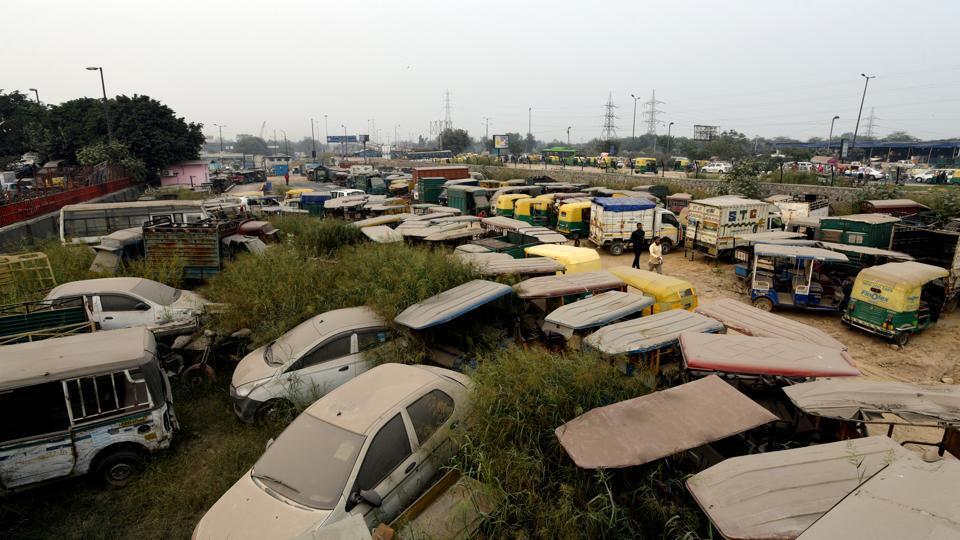
While such vehicles are supposed to be sent to only “certified facilities” for scrapping, an unintended but damaging consequence is surfacing in the form of a strategic black market run by scrap mafias, say police officers aware of the matter.
The illegal activity takes place in two ways: Organised gangs in the guise of scrap dealers either directly lure vehicle owners with quick cash, or exploit the regulatory vacuum around decommissioned vehicles at certified scrapyards. In both ways, the criminal networks have turned old and polluting vehicles into a lucrative source of illicit engine sales and spare parts trafficking, said officials aware of the matter.
“Instead of dismantling the vehicles as per pollution control norms, they extract the engines and key components, tamper with identification numbers, and resell them—often to workshops and intermediaries—without any paperwork,” a police officer said, asking not to be named.
This has led to crackdown in the recent months. According to police data, 138 complaints of alleged illegal use of ELVs have been registered in 2025 till May 15, while a total of 35 arrests have been made following raids at many locations, including Mayapuri and Seelampur.
Latest available data from financial year 2024-25 shows that about 300,000 vehicles were deregistered in the Capital, according to the Delhi transport department, while around 200,000 lost their registration in 2023-24, 618,192 in 2022-23, and 4,877,646 in 2021-22. Further, the data revealed that 14,000 vehicles were scrapped in 2023-24; 135,419 in 2022-23; and 5,000 in 2021-22.
The process
Owners can check the age of their registered vehicle on the transport department website, which also shows whether the vehicle has been deregistered upon becoming an ELV. Following this, the owner is supposed to contact a registered vehicle scrapping facility (RVSF), which will then collect and inspect the vehicle. The owner will then receive a certificate of deposit from the RVSF, stating that the vehicle has been legally decommissioned, and after scrapping of the ELV, payment will be sent to a registered bank account.
While the process reads rather simple on paper, many vehicle owners are either unaware or willingly bypass it, unknowingly feeding a thriving underground trade, say both police officers and workers at the scrapyards.
During a visit by HT to one of the certified scrapyards in west Delhi’s Mayapuri Industrial Area, where piles of rusted bikes lay stripped to their skeletons, a worker claimed that one can easily get 15,000 engines from there in a month by pulling the right strings.
Detailing the modus operandi, the worker, requested anonymity, said: “The scam begins with a seemingly routine transaction. Owners looking to offload ELVs hand them over to local scrap dealers for less than ₹2,000. But the dealers are not simply sending these vehicles for recycling. Instead, they remove the engine, erase or alter the chassis and engine numbers, and pass them down a supply chain that ends at illegal workshops.”
Another worker claimed that he can remove the engine in front of the owner, erase the serial number and make it ready to install in another bike.
“You can pick the model and the condition; we’ll get you the engine. Prices are modest: ₹600 to ₹1,500 for a used engine, depending on the demand and the model. This affordability has made such engines highly sought-after by small repair shops, particularly in rural and semi-urban areas, where enforcement is lax, and documentation rarely verified,” he explained.
Another mechanic at northeast Delhi’s Seelampur scrapyard, said that even vehicles that are sold with the intent of scrapping can find their way back on the roads— albeit in pieces.
“Engines from multiple two-wheelers, for instance, are used to cobble together functioning bikes sold under false papers or no documentation at all. There are direct linkages between local scrap shops and larger warehouses where engines and valuable parts were stockpiled,” he said.
Police too are aware of the illegal business. “We’ve received many complaints about the supply chain that stretches across three states—Delhi, Uttar Pradesh, and Haryana—and operates across at least 20 police jurisdictions,” an officer said, asking not to be named.
As many as 12 officials of municipal corporation of Delhi’s (MCD’s) Shahdara (South) zone were booked in January this year by Delhi government’s Anti-Corruption Branch (ACB) for their alleged involvement in illegal disposal of seized vehicles over an 11-year period.
Joint commissioner of police (CP) and ACB chief Madhur Verma said that a complaint was received in April 2024 alleging that vehicles seized between 2010 and 2021 were sold or removed without following due process. “Under MCD rules, such vehicles must be auctioned with prior approval. However, a subsequent verification revealed that out of 609 vehicles identified for auction, only 281 were legally sold, and just nine were found in the MCD’s stores. The fate of the remaining 319 vehicles remains unknown,” Verma said.
“Based on the findings, a proposal to investigate the officials under the Prevention of Corruption Act was approved in January 2025. The ACB is also awaiting permission to probe two more accounts officers,” he added.
‘Most owners do not reclaim scrap deposit’
What’s aiding this illegal economy is a surprising statistic: nearly 90% of owners who part with their ELVs never follow-up on their final status, a transport department official informed. This lack of oversight creates a grey zone, where unscrupulous scrap operators flourish.
“These owners don’t file a formal de-registration or demand a certificate of destruction,” said a Delhi Police officer familiar with the matter. “They’re content with selling the vehicle for scrap and moving on.”
Officials in the transport department too admit that enforcement gaps exist. “Monitoring the end-use of scrapped vehicles and unregistered yards remains a challenge,” said a senior transport official, asking not to be named.
Police, however, have recently stepped up efforts. “Raids have been conducted in Mayapuri and Seelampur—well-known scrap hubs—and a few arrests have been made. However, the decentralised and mobile nature of the racket makes it difficult to crack down effectively,” said a senior police officer, who did not wish to be named.
Special commissioner of police (traffic) Ajay Chaudhry has advised vehicle owners to ensure deregistration of their vehicle with the local RTO and to demand and retain a certificate of destruction from a certified scrapper. “The owners must also avoid selling vehicles without proper transfer of ownership or scrapping paperwork,” he said.


Stay updated with all top Cities including, Bengaluru, Delhi, Mumbai and more across India. Stay informed on the latest happenings in World News along with Delhi Election 2025 and Delhi Election Result 2025 Live, New Delhi Election Result Live, Kalkaji Election Result Live at Hindustan Times.


