
 E-Paper



Genome checks for Covid patients in Delhi hospitals
At present, only samples from Covid-19 patients with severe symptoms and those with a history of international travel are sent for genotyping in the city.

 Prefer HTon Google


The Delhi government is likely to carry out genome sequencing of samples from every Covid-19 patient admitted in the city’s hospitals in a bid to identify if any particular variant was driving admission rates.
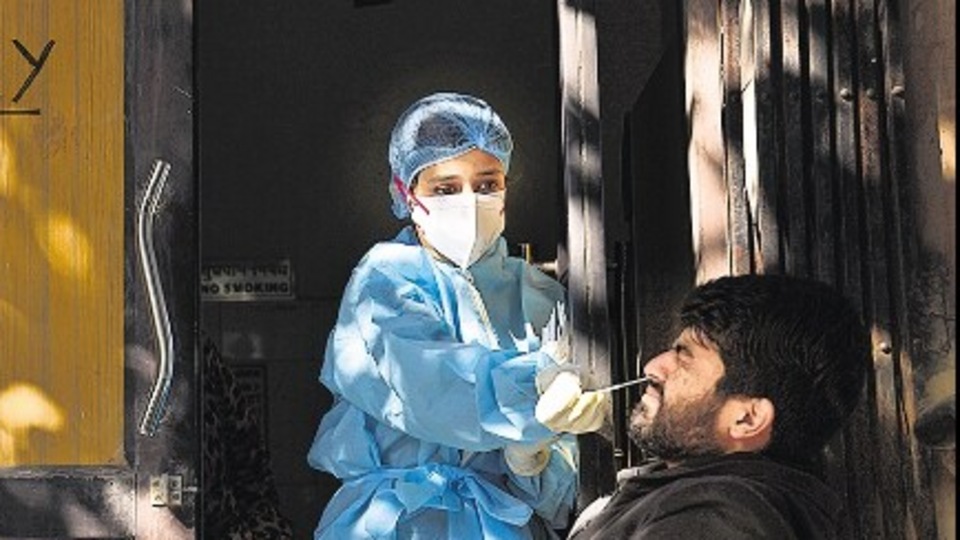
As things stand, only samples from Covid-19 patients with severe symptoms and those with a history of international travel are sent for genotyping in Delhi.
The move comes after the Delhi Disaster Management Authority (DDMA) on Thursday advised the state health department to undertake necessary epidemiological analysis of all hospitalised Covid-19 patients in the city.
Covid-19 hospitalisations in the Capital have continued to dip, in sync with a downturn in the case trajectory. As on Saturday, 1,771 of the city’s 13,567 Covid-19 hospital beds were occupied, state government data showed.
Despite the prevalence of the Omicron variant, a significant number of infections may still be due to the more virulent Delta variant, a fact alluded to by Union government officials last week.
An official said an order requiring hospitals to carry out genome sequencing of all admitted Covid-19 patients will be issued soon.
Delhi government typically sends such samples to Lok Nayak hospital, the Institute of Liver and Biliary Sciences (ILBS) and the National Centres for Disease Control (NCDC) centre.
Chief minister Arvind Kejriwal on December 20 announced that Delhi will send all positive Covid-19 samples for genome sequencing in order to track the spread of the Omicron variant of the coronavirus. However, infections at the time were relatively low, even as the uptick was visible. Delhi reported 107 fresh Covid-19 cases on December 19 last year, a day before Kejriwal’s announcement.
Till then, positive samples of only those who arrived in Delhi from at-risk countries, and those coming from other countries but testing positive during random tests at the airport, were sent for genome sequencing.
But, infections began to soar within days, rendering it unfeasible for the state to sequence every positive infection. On January 5, when the Capital reported 10,665 fresh cases, state health minister Satyendar Jain said sequencing all samples is not possible given the number of Omicron cases. He added that 300-400 samples were being sent for sequencing a day.
Between December 1 and 31, the government sequenced 1,553 samples, of which the Omicron variant was detected in 28%, Delta in 34% samples, while other variants made up the remainder.
An analysis in the last week of December showed that Omicron had started spreading rapidly. Of 863 samples genome sequenced between December 25 and 31, just over half (433) were Omicron infections, while 34% were Delta.
Sequencing between January 1 and 23 showed that 79% were infected with Omicron, while 13.7% were Delta infections.
Dr Suresh Kumar, medical director of Lok Nayak Hospital, the state government’s largest facility, said the sequencing will help define a line of treatment for each patient depending on the variant they were infected by.
“For instance, those infected with Delta usually require more oxygen than those infected with Omicron. It may assist in reducing mortality further,” said Dr Kumar.


